
Shipping's Net-Zero Framework Moves From Pledge to Price Signal
The IMO's approved net-zero rules pair a global fuel standard with a remedial-unit charge, putting a real cost on emissions for large ocean vessels from 2027.
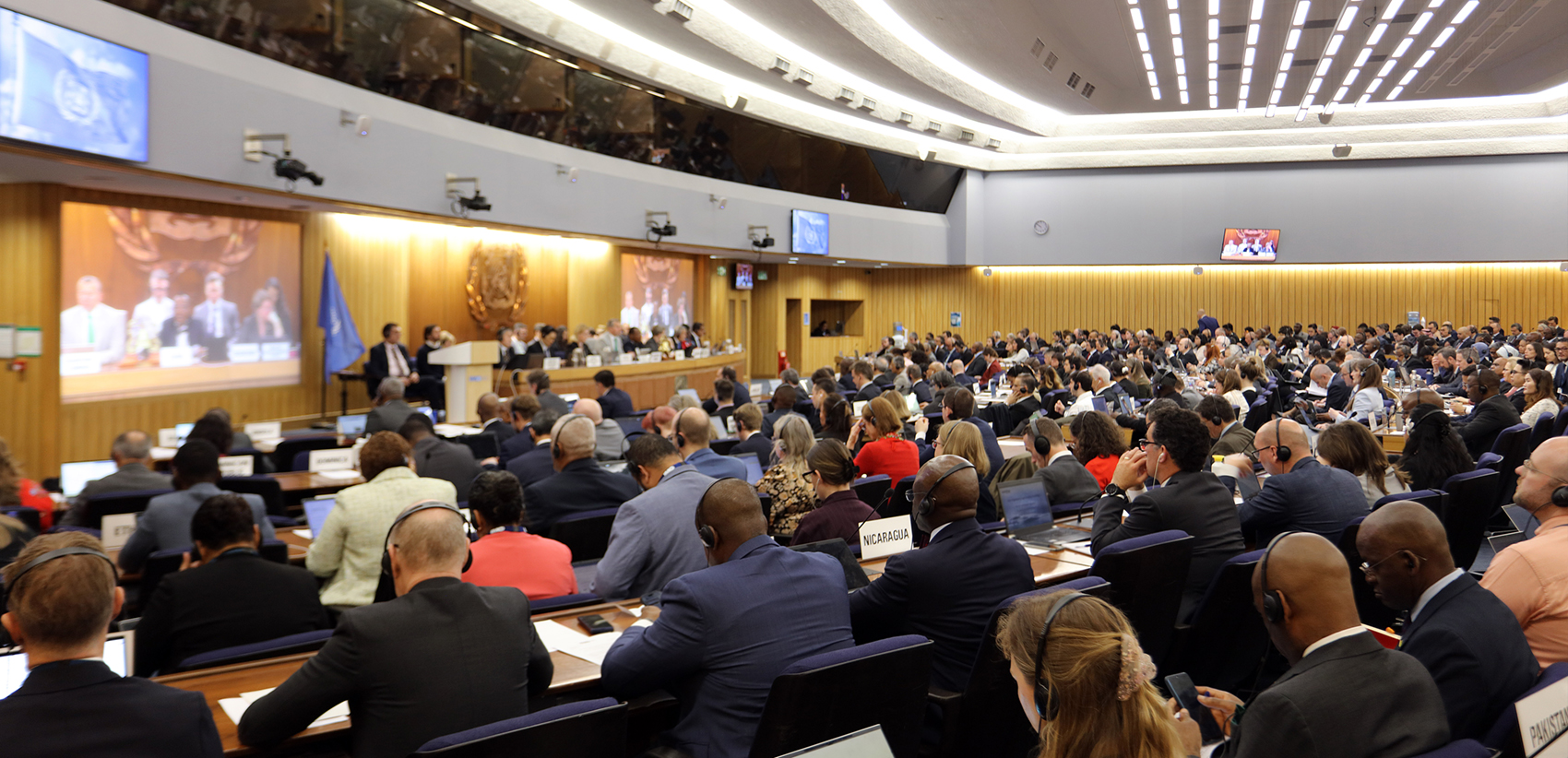
Shipping has long been described as the hardest sector to decarbonise: globally dispersed, capital-intensive, and dependent on fuel infrastructure that took decades to build. In April 2025, the International Maritime Organization took what it characterised as a definitive step toward resolving that challenge, when its Marine Environment Protection Committee approved draft regulations forming the IMO Net-Zero Framework — the first mandatory greenhouse gas regime to combine both an industry-wide fuel standard and a pricing mechanism for excess emissions.
What MEPC 83 Actually Approved
The framework was approved at MEPC 83, held 7–11 April 2025, and is set for formal adoption in October 2025 before entry into force in 2027. It will apply to all large ocean-going vessels over 5,000 gross tonnage — a threshold that captures the ships responsible for approximately 85% of total CO₂ emissions from international shipping.
The regulations will be incorporated into a new Chapter 5 of MARPOL Annex VI, which currently counts 108 parties covering 97% of the global merchant fleet by tonnage. The geographic coverage is therefore close to comprehensive from day one, which distinguishes this framework from voluntary initiatives or regional schemes that create compliance arbitrage.
The Two-Pillar Structure
The framework rests on two interlocking mechanisms. The first is a global fuel standard that mandates a progressive reduction in greenhouse gas fuel intensity (GFI) — measured on a well-to-wake basis, meaning emissions from fuel production are included, not just combustion. Ships must reduce their annual GFI over time against declining thresholds, incentivising the adoption of low-carbon or zero-carbon fuels and efficiency technologies.
The second pillar is a global economic measure. Ships that emit above their applicable GFI threshold must acquire remedial units to balance the deficit. These units can be sourced from other ships generating surpluses — creating a tradeable credit mechanism — or purchased through contributions to the IMO Net-Zero Fund. Ships operating well below the threshold by deploying zero or near-zero GHG technologies are eligible for financial rewards, funded from the same pool.
Compliance Tiers and the IMO Net-Zero Fund
The regulations establish two compliance levels: a Base Target and a more stringent Direct Compliance Target. Operators meeting or beating the Direct Compliance Target earn surplus units that can be banked or traded. Those between the two targets must offset their deficit through unit transfers or fund contributions. Those falling short of even the Base Target face the steepest remedial costs.
Revenues collected by the IMO Net-Zero Fund will be deployed across four purposes: rewarding low-emission operators, supporting innovation and infrastructure in developing countries, funding technology transfer and training, and mitigating disproportionate impacts on Small Island Developing States and Least Developed Countries. This last element was among the most contested in negotiations, as smaller economies with high shipping dependency argued — correctly — that fuel transition costs fall hardest on those with the least capacity to absorb them.
Market Signals and Fuel Investment
The significance of the framework extends beyond compliance costs. For the shipping industry's fuel investment cycle, a binding price signal on emissions changes the calculus for newbuild decisions fundamentally. Methanol, ammonia, hydrogen, and biofuel projects that previously struggled to compete with subsidised conventional bunker pricing now have a regulatory floor that improves their projected economics. Several major carriers have already ordered dual-fuel newbuilds capable of running on methanol; the framework provides the demand signal that makes the supporting bunkering infrastructure more bankable.
Shipowners operating older, less efficient fleets face a more immediate challenge. Retrofitting for alternative fuels is not always technically feasible, and the remedial unit costs could add meaningfully to operating expenses on routes where margins are already thin. For smaller operators without access to capital markets, the transition pathway will require the kind of technical assistance and concessional financing the IMO Net-Zero Fund is designed to channel. Industry analysts estimate that remedial unit costs could represent between 2% and 8% of voyage operating costs for the most emission-intensive vessels by the early 2030s — a significant enough burden to accelerate fleet retirement decisions ahead of the original schedule many owners had planned.
IMO Secretary-General's Assessment
IMO Secretary-General Arsenio Dominguez framed the outcome as evidence that the organisation can deliver on its stated ambitions. "The approval of draft amendments to MARPOL Annex VI mandating the IMO net-zero framework represents another significant step in our collective efforts to combat climate change, to modernize shipping," he stated at the close of MEPC 83, while acknowledging that sustained dialogue among member states would be essential for successful formal adoption.
Operational and Visibility Implications
For shippers and 3PLs operating multi-carrier networks, the framework introduces a new layer of carrier performance data worth tracking: fuel intensity scores, compliance tier positions, and remedial unit exposure across the vessel types in their contracted service mix. Over time, as bunker surcharges evolve to reflect GFI compliance costs, these metrics will feed into total-cost-of-shipment models in ways that simple freight-rate comparisons will miss. Platforms that aggregate carrier operational data — emissions intensity, fuel type, route efficiency — alongside milestone tracking will offer a more complete picture of true shipment cost and carbon exposure than those that treat visibility as a purely logistical function.