
Hydrogen Horizon: Toyota's Cellcentric Entry Reshapes Heavy-Duty Supply Chains
Toyota's strategic entry as an equal shareholder into cellcentric, alongside Daimler Truck and Volvo Group, signals a pivotal moment for the heavy-duty vehicle sector. This collaboration is set to accelerate the development and deployment of hydrogen fuel cell technology, fundamentally altering global supply chains, financial landscapes, and operational strategies for logistics and transportation.
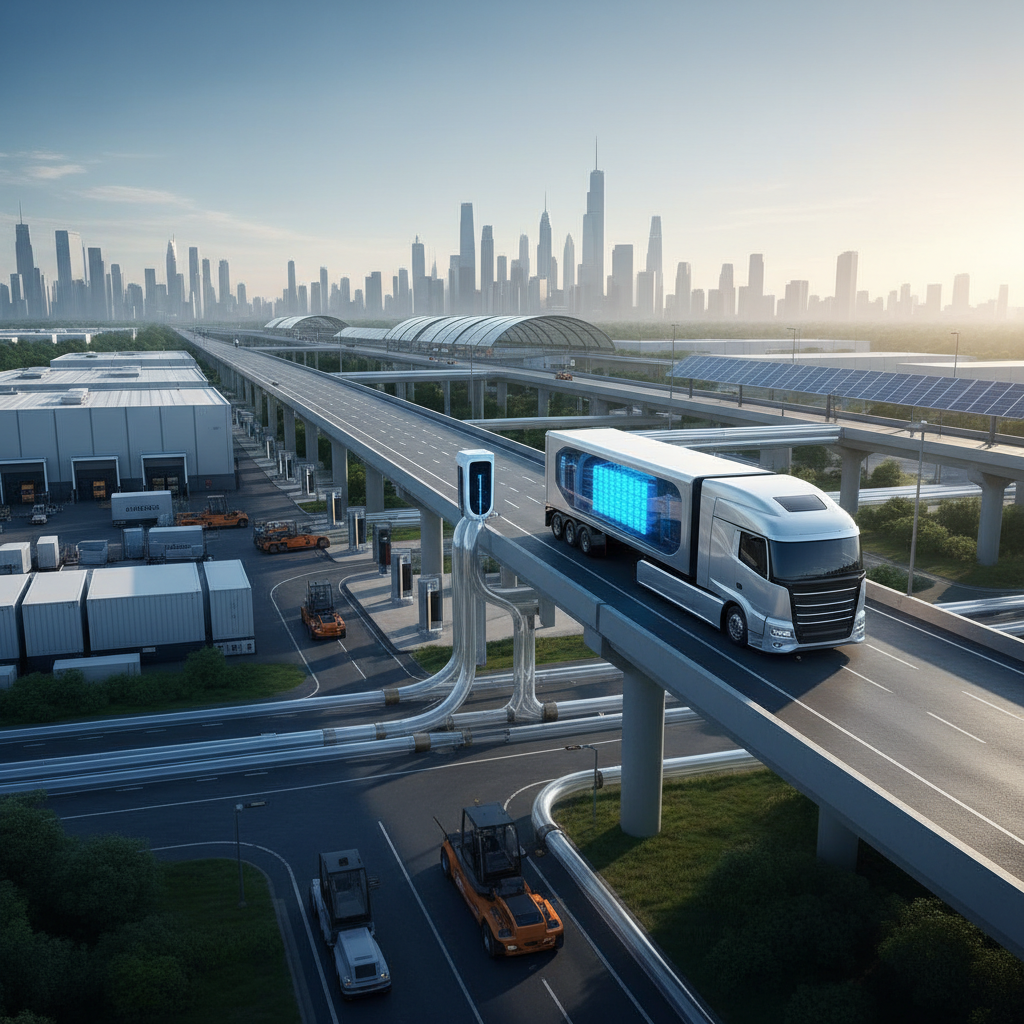
How this impacts the global supply chain
Toyota Motor Corporation's decision to join Daimler Truck and Volvo Group as an equal shareholder in cellcentric marks a significant inflection point for the global supply chain, particularly within the heavy-duty vehicle sector. This strategic alliance, bringing together three of the world's largest automotive manufacturers, is poised to accelerate the industrialization and widespread adoption of hydrogen fuel cell technology for trucks. The implications for global supply-chain flows, routes, capacity, and operations are profound.
Firstly, in terms of flows, we can anticipate a dramatic shift in the types of materials and components moving through the global logistics network. The demand for traditional internal combustion engine (ICE) components for heavy-duty vehicles will gradually be supplanted by an increasing need for specialized fuel cell components, hydrogen storage systems, and the raw materials required for their production (e.g., platinum group metals, specialized polymers, carbon fiber for tanks). This will necessitate the establishment of entirely new, complex supply chains, often spanning multiple continents, to source, manufacture, and assemble these advanced components. Furthermore, the hydrogen itself will become a critical commodity, requiring dedicated supply chains for its production (e.g., electrolyzers, renewable energy sources), liquefaction or compression, and distribution.
Routes will also experience significant evolution. As fuel cell heavy-duty vehicles become more prevalent, the existing refueling infrastructure, primarily designed for diesel, will need to be augmented or replaced by hydrogen refueling stations. This will likely lead to the development of specific 'hydrogen corridors' along major freight routes, influencing where logistics hubs are established and how long-haul journeys are planned. The transport of hydrogen itself, whether via pipelines, specialized cryogenic tankers, or high-pressure gas trailers, will introduce new logistical challenges and dedicated routes, potentially creating new bottlenecks or opportunities depending on regional infrastructure development.
Capacity across various segments of the supply chain will need to adapt. Manufacturing capacity for fuel cell stacks, hydrogen tanks, and associated power electronics will have to scale up rapidly to meet the combined production volumes of Daimler Truck, Volvo Group, and Toyota. This will require substantial investment in new factories and specialized equipment. Concurrently, there will be a need to build out the capacity for hydrogen production, storage, and distribution, which is a massive undertaking involving energy companies, industrial gas suppliers, and infrastructure developers. On the operational side, logistics providers will need to invest in new fleets of fuel cell trucks, and potentially specialized handling equipment for hydrogen, impacting their asset capacity and utilization strategies.
Finally, operations for logistics and transportation companies will undergo fundamental changes. Fleet management will need to account for different refueling procedures, maintenance requirements, and performance characteristics of fuel cell vehicles. Drivers will require specialized training. The entire planning and execution of freight movements will be influenced by the availability of hydrogen refueling infrastructure and the operational range of these new vehicles. This transition will demand meticulous planning, real-time data, and agile decision-making to manage the complexities of a hybrid or fully hydrogen-powered fleet. The integration of such a high-stakes, technologically advanced component into global production lines will also demand new levels of precision and visibility in tracking critical parts from origin to assembly. This is where MGS can provide invaluable support by offering end-to-end visibility across these newly formed, intricate supply networks, helping to identify and mitigate potential disruptions in the flow of critical fuel cell components and hydrogen infrastructure materials.
Global financial impact
The entry of Toyota into cellcentric, alongside Daimler Truck and Volvo Group, carries substantial global financial and cost implications for shippers, carriers, and trade at large, signaling a significant investment shift towards a decarbonized heavy-duty transport sector.
For shippers, the financial impact will be multifaceted. In the short to medium term, there will be an initial capital expenditure associated with transitioning their fleets to hydrogen fuel cell trucks. This investment will include the cost of the vehicles themselves, which are currently more expensive than their diesel counterparts, and potentially the development of on-site hydrogen refueling capabilities or partnerships with hydrogen suppliers. However, in the long term, shippers stand to benefit from potentially lower operational costs, particularly if hydrogen production scales up and becomes cost-competitive with diesel, and if carbon taxes or emissions regulations increase the cost of fossil fuels. Reduced maintenance costs for fuel cell vehicles, due to fewer moving parts compared to ICEs, could also contribute to long-term savings. The ability to demonstrate a commitment to sustainability through zero-emission logistics could also yield financial benefits through enhanced brand reputation and access to 'green' contracts.
Carriers face similar, if not more pronounced, financial considerations. The capital outlay for acquiring new fuel cell truck fleets will be substantial, requiring significant financing and strategic planning. Investment in training for maintenance personnel and drivers will also be necessary. However, this transition also presents significant opportunities. Carriers who are early adopters of fuel cell technology could gain a competitive advantage, offering premium 'green' logistics services and attracting environmentally conscious clients. Operational efficiencies, such as potentially faster refueling times compared to battery electric trucks for long-haul routes, could improve vehicle utilization. Furthermore, by investing in this technology, carriers can future-proof their operations against tightening emissions regulations and potential penalties associated with fossil fuel use, mitigating future financial risks. The collaboration of these three automotive giants de-risks the technology itself, making investment by carriers more attractive by ensuring a viable product and supporting ecosystem.
For trade at large, the financial implications are enormous. This alliance will stimulate massive investment in research and development, manufacturing, and infrastructure across the hydrogen economy. New industries will emerge around hydrogen production, storage, distribution, and fuel cell manufacturing, creating jobs and driving economic growth. There will be significant capital flows into renewable energy projects to produce green hydrogen, impacting energy markets globally. The development of international standards for hydrogen production, safety, and refueling will be crucial, influencing trade policies and agreements. Countries and regions that invest early in hydrogen infrastructure and technology development could become leaders in this new energy landscape, attracting foreign direct investment and fostering innovation. Conversely, regions slow to adapt might face economic disadvantages. The collective power of Daimler Truck, Volvo Group, and Toyota entering this space signals a strong market signal for investors, potentially unlocking billions in capital for the hydrogen transition, thereby reshaping global trade dynamics and investment flows.
How MGS can help navigate today's global trade environment
The shift towards hydrogen fuel cell technology, spearheaded by the cellcentric collaboration, introduces new layers of complexity and criticality to global supply chains. In this evolving environment, a shipment-visibility control tower like MGS becomes an indispensable tool for operators seeking to maintain efficiency, mitigate risks, and adapt to new operational paradigms.
Firstly, the emergence of entirely new supply chains for fuel cell components and hydrogen infrastructure demands unparalleled end-to-end visibility. MGS can provide this by integrating data from diverse suppliers, manufacturers, and logistics partners involved in the production and delivery of specialized parts like fuel cell stacks, hydrogen tanks, and electrolyzer components. This includes tracking high-value, sensitive shipments from their origin (e.g., raw material mines for platinum, specialized manufacturing facilities for carbon fiber) through multiple modes of transport, customs, and assembly plants. Without such granular visibility, the risk of delays, misroutings, or damage to critical components, which could halt production lines for fuel cell vehicles, is significantly elevated.
Secondly, as new logistics networks for hydrogen distribution and refueling infrastructure develop, MGS can offer crucial insights. Operators will need to monitor the flow of equipment for hydrogen production facilities, storage units, and refueling stations. MGS can track these complex project cargo shipments, ensuring timely delivery to construction sites, which is vital for building out the necessary ecosystem for fuel cell trucks. Any delays in infrastructure development directly impact the viability and adoption rate of the new vehicles. By providing real-time location and status updates, MGS helps project managers anticipate and react to potential bottlenecks.
Furthermore, the transition to new technologies often involves working with new suppliers and potentially less established logistics routes. MGS helps in vetting and monitoring the performance of these new partners by providing data on lead times, delivery performance, and adherence to schedules. This is particularly important for critical components where supplier reliability is paramount. The platform can highlight deviations from planned schedules, allowing operators to proactively engage with suppliers or explore alternative sourcing options before minor issues escalate into major disruptions. For instance, if a specific fuel cell membrane component from a new supplier is consistently delayed, MGS data would flag this, enabling intervention.
Finally, the global nature of this collaboration means components and raw materials will cross numerous international borders, subject to varying customs regulations and trade policies. MGS can integrate with customs systems and provide visibility into the status of international shipments, helping to identify and resolve customs clearance issues promptly. This is crucial for maintaining the flow of goods and avoiding costly delays, especially for high-tech components that may be subject to specific import/export controls or certifications. By providing a unified view of all shipments, MGS empowers operators to navigate the complexities of this new global trade environment with greater control and efficiency, ensuring the smooth rollout of hydrogen-powered heavy-duty transport.
Demand–supply analysis & improvement
The strategic alliance between Daimler Truck, Volvo Group, and Toyota Motor Corporation for cellcentric fundamentally reshapes the demand-supply dynamics within the heavy-duty vehicle sector and the broader energy landscape. This collaboration signals a strong, unified commitment from major global players to accelerate the adoption of hydrogen fuel cell technology, thereby creating a significant and sustained demand for fuel cell systems and, critically, for green hydrogen.
Demand Dynamics: The combined market power and production capabilities of these three automotive giants will create an enormous and predictable demand for fuel cell components and systems. This is not merely an incremental increase; it represents a concerted effort to industrialize and scale a nascent technology for a high-volume, high-value market segment. This alliance effectively de-risks the investment for suppliers, as they can anticipate large, long-term orders. Beyond the fuel cell systems themselves, this will drive substantial demand for related infrastructure, including hydrogen production equipment (electrolyzers), storage solutions, and refueling stations. The demand for raw materials, such as platinum group metals, specialized carbon fiber, and advanced polymers, will also surge, putting pressure on existing supply chains for these critical inputs.
Supply Dynamics: The current supply chain for fuel cell components and green hydrogen is relatively nascent and fragmented. While there are existing suppliers, they operate at a much smaller scale than what will be required to meet the future demands of cellcentric's shareholders. This collaboration will necessitate a rapid expansion and maturation of the supply side. New manufacturing facilities for fuel cell stacks and hydrogen tanks will need to be built, and existing ones scaled up dramatically. The supply of green hydrogen, in particular, presents a massive challenge and opportunity. It requires significant investment in renewable energy generation (solar, wind) and electrolysis capacity to produce hydrogen without carbon emissions. The development of a robust, efficient, and cost-effective hydrogen distribution network (pipelines, specialized transport) is also a critical supply-side challenge.
Improvement Levers: To effectively meet this anticipated demand, several key improvement levers must be activated:
- Industrial Scale-Up and Standardization: The collaboration itself is a major lever, pooling R&D and manufacturing expertise. The focus should be on standardizing fuel cell components and manufacturing processes to achieve economies of scale, reduce costs, and improve reliability. This will require close collaboration with suppliers to ensure they can meet the required specifications and volumes.
- Investment in Green Hydrogen Infrastructure: This is perhaps the most critical lever. Governments, energy companies, and private investors must accelerate investment in renewable energy projects and large-scale electrolyzer facilities. Developing a comprehensive and efficient hydrogen distribution network is paramount. Incentives for green hydrogen production and consumption will be essential.
- Raw Material Security and Diversification: Given the potential surge in demand for critical raw materials, securing stable and ethical supply chains will be crucial. This may involve investing in new mining projects, developing recycling processes for fuel cell components, and exploring alternative materials to reduce reliance on scarce resources.
- Supplier Development and Partnerships: Cellcentric and its shareholders will need to actively engage with and develop a robust ecosystem of suppliers for various fuel cell components. This includes providing technical assistance, long-term contracts, and potentially joint ventures to ensure suppliers can meet the required quality, volume, and cost targets.
- Logistics Optimization for New Materials: As the supply chain for fuel cell components and hydrogen becomes more complex, optimizing logistics will be key. This includes developing specialized transport solutions for hydrogen and sensitive components, optimizing warehousing, and leveraging advanced visibility platforms like MGS to track and manage these new flows. MGS can provide the critical data and real-time insights needed to manage the intricate logistics of these new components, identify potential supply bottlenecks, and optimize routing and inventory strategies across the expanded global network.
By proactively addressing these demand-supply dynamics and activating these improvement levers, the industry can ensure a smoother and more rapid transition to a hydrogen-powered heavy-duty transport future.
ROI-focused resilience
The strategic partnership formed by Daimler Truck, Volvo Group, and Toyota Motor Corporation in cellcentric inherently builds a layer of resilience into the nascent hydrogen fuel cell ecosystem for heavy-duty vehicles. Framing resilience actions in terms of Return on Investment (ROI) is crucial for justifying the significant capital allocation required for this transformative shift.
One primary area for ROI-focused resilience is diversified sourcing for critical fuel cell components. Relying on a single supplier for a key component, such as the fuel cell stack membrane or a specialized hydrogen storage tank, introduces significant risk. An investment in developing and qualifying multiple suppliers across different geographic regions, even if it entails higher initial costs or slightly more complex logistics, offers a substantial ROI by mitigating the risk of production line shutdowns. For instance, a 10% investment in qualifying a secondary supplier for a critical component could protect against a potential 50% production loss for a month due to a primary supplier disruption. The quantified risk here is the lost revenue and reputational damage from vehicle delivery delays, which can easily run into millions or even billions for companies of this scale. MGS plays a vital role here by providing the visibility to monitor the performance of multiple suppliers, track inventory across different locations, and quickly pivot to alternative sources in the event of a disruption, thereby maximizing the ROI of such diversification efforts.
Another critical resilience investment is in building robust and redundant hydrogen supply lines and infrastructure. The availability of hydrogen is the lifeblood of fuel cell vehicles. Investing in multiple hydrogen production sites (e.g., green hydrogen facilities powered by different renewable sources) and diverse distribution methods (e.g., pipeline, truck, rail) ensures that a disruption at one point in the supply chain does not cripple an entire fleet. For example, an investment of 15% more in a dual-source hydrogen supply network could prevent a 75% reduction in fleet operational capacity if a single hydrogen production facility or distribution route is compromised. The ROI is measured in avoided operational downtime, maintained delivery schedules, and sustained customer satisfaction, which directly impacts carrier profitability. The cost of a single day of fleet-wide inactivity for a major logistics provider could be astronomical, making the resilience investment highly justifiable.
Furthermore, investing in predictive analytics and real-time visibility platforms like MGS is a resilience action with a clear ROI. In a complex, global supply chain involving new technologies and infrastructure, the ability to anticipate and react to disruptions is paramount. By integrating data from various points – supplier production schedules, transit information, customs status, and hydrogen availability – MGS can provide early warnings of potential issues. For instance, an investment in MGS, representing a fraction of annual logistics costs, could identify a critical component delay weeks in advance, allowing for proactive rerouting or expedited shipping that prevents a production stoppage. The ROI is the avoided cost of expediting last-minute shipments, preventing costly production line halts, and maintaining on-time delivery performance. Quantified risk includes inventory write-offs due to obsolescence from delays, lost sales, and contractual penalties. The ability to quickly identify and mitigate these risks through enhanced visibility directly translates into improved financial performance and sustained operational continuity, making the investment in MGS a strong ROI proposition for navigating the complexities of this new hydrogen economy.
Source: Courier News — https://couriernews.co.uk/blog/daimler-truck-volvo-group-and-toyota-motor-corporation-sign-binding-agreement-for-toyota-to-join-cellcentric-as-equal-shareholder/