
Hapag-Lloyd's New Asia-Mexico Service Bolsters Gemini Hub Network
Hapag-Lloyd is launching a new standalone Asia-Mexico container service (AMX) in January 2027, deploying 8,000 TEU vessels. While branded as standalone, this service strategically functions as a crucial spoke within the broader Gemini hub network, enhancing direct capacity and optimizing trade flows between key Asian manufacturing centers and Mexico's Pacific coast.
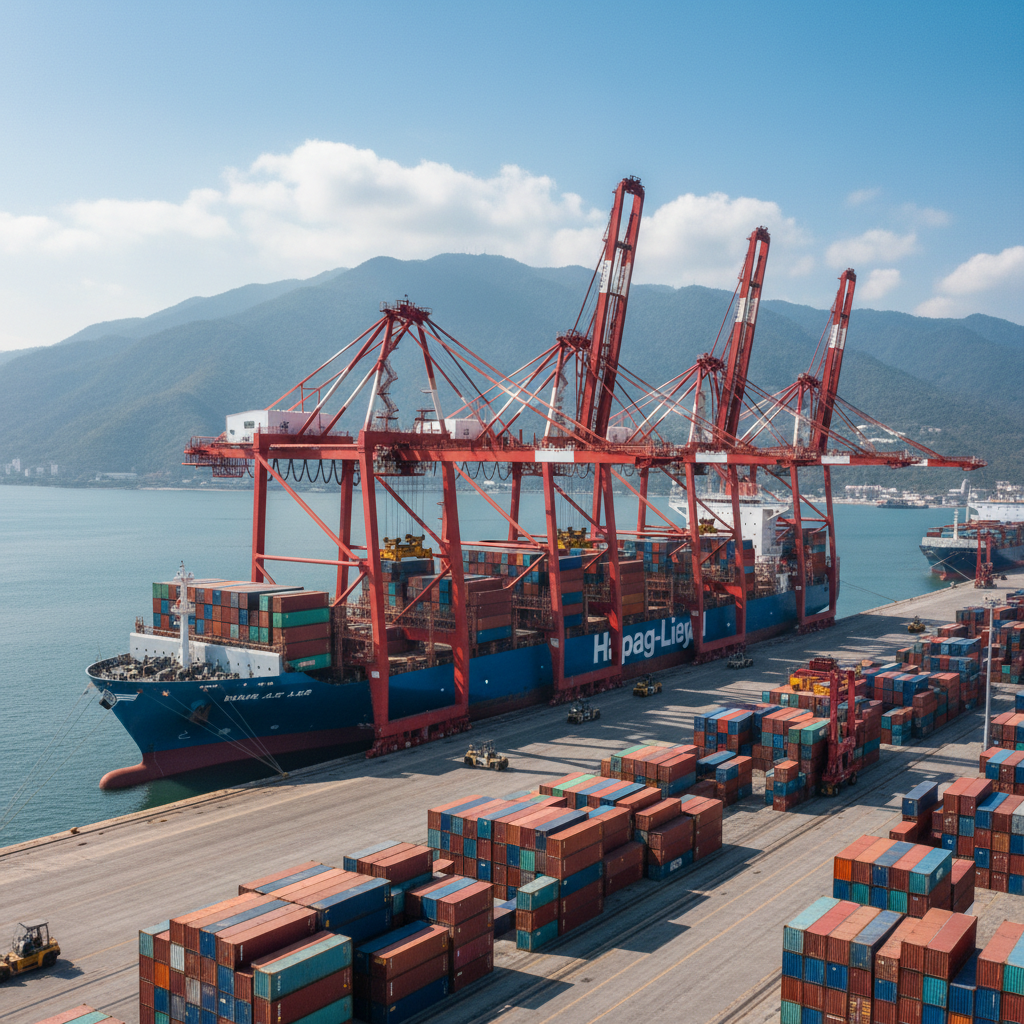
Hapag-Lloyd's AMX Service: A Strategic 'Spoke' in the Gemini Network
Hapag-Lloyd's announcement of its new Asia-Mexico (AMX) service, set to commence in January 2027, marks a significant development in trans-Pacific shipping. The carrier emphasizes the service's 'standalone' nature, utilizing its own 8,000 TEU vessels on a direct rotation connecting Ningbo, Qingdao, and Busan with Ensenada, Manzanillo, and Lázaro Cárdenas before returning to Ningbo. However, a deeper analysis reveals that this 'standalone' operation is strategically integrated as a vital spoke within the forthcoming Gemini hub network, a joint venture with Maersk.
This approach fundamentally impacts global supply chain flows by creating a dedicated, direct artery for cargo between major Asian manufacturing hubs and the rapidly growing Mexican market. For shippers, the introduction of a focused string like AMX means potentially reduced transit times and enhanced schedule reliability compared to services that might combine Mexico with other, less direct Latin American calls. The ability to fill an 8,000 TEU vessel on this route underscores a robust demand, which Hapag-Lloyd aims to capture and service efficiently. By positioning AMX as a spoke, the Gemini network can leverage its larger mainline services to feed and evacuate cargo from these key Mexican ports, optimizing overall vessel utilization and network efficiency. This integration allows for a more flexible and resilient network, where the dedicated AMX service handles the specific high-volume Asia-Mexico corridor, while the broader Gemini infrastructure provides global connectivity and redundancy. It's a testament to the evolving strategies of major carriers, moving towards specialized services that are nonetheless deeply interconnected within a larger operational framework, thereby enhancing the overall capacity and operational reach of the alliance.
Enhancing Asia-Mexico Trade Capacity and Operational Efficiency
The deployment of 8,000 TEU vessels on the AMX service represents a substantial injection of dedicated capacity into the Asia-Mexico trade lane. This capacity is critical given the increasing trade volumes, driven by factors such as nearshoring initiatives and Mexico's burgeoning manufacturing sector, particularly in automotive and electronics. For the global supply chain, this translates into a more robust and direct shipping option, potentially alleviating pressure on existing, often more circuitous routes or services that might involve transshipment through other North American or Central American ports. The direct port calls at Ensenada, Manzanillo, and Lázaro Cárdenas are strategically chosen, as these are key gateways for Mexican imports and exports, providing direct access to the country's industrial heartlands and consumer markets.
Operationally, a standalone string, even as a network spoke, offers Hapag-Lloyd greater control over scheduling, port rotation, and vessel deployment specific to this trade. This focused management can lead to improved on-time performance and reduced operational complexities that often arise in services with numerous, disparate port calls. From a demand-supply perspective, this move indicates a clear recognition by Hapag-Lloyd of sustained and growing demand for direct Asia-Mexico connections. The 8,000 TEU capacity is a strategic choice, balancing the need for significant volume with the operational realities of port infrastructure and cargo flow on this specific route. It suggests an optimization effort to match supply precisely with the identified demand, thereby maximizing vessel utilization and operational efficiency. For shippers, this means a more predictable and potentially faster supply chain, allowing for better inventory management and reduced lead times, which are crucial competitive advantages in today's dynamic market.
Financial Dynamics of Dedicated Asia-Mexico Container Services
The financial implications of Hapag-Lloyd's AMX service are multifaceted, impacting shippers, carriers, and the broader trade landscape. For shippers, the introduction of a dedicated, direct service like AMX can lead to more stable and potentially competitive freight rates due to increased capacity and reduced reliance on less direct, multi-leg routes. The promise of more reliable transit times translates directly into financial savings through lower inventory carrying costs, reduced warehousing needs, and minimized risks associated with delays or disruptions. Furthermore, by offering a direct link to key Mexican ports, shippers can bypass potential congestion or additional handling charges at intermediate transshipment hubs, leading to overall cost efficiencies.
For Hapag-Lloyd and its Gemini partners, this investment in a dedicated string aims to capture a larger share of the lucrative and growing Asia-Mexico trade. While deploying 8,000 TEU vessels represents a significant capital outlay, the strategic integration into the Gemini hub network is designed to maximize the return on this investment. By ensuring high vessel utilization through efficient cargo feeding from the broader network, the carrier can achieve economies of scale and optimize operational costs. The 'standalone' branding, while a nuance, could also be a marketing strategy to attract direct bookings and cultivate loyalty from shippers specifically targeting the Mexico market, potentially commanding premium rates for the perceived reliability and directness of the service. This move also intensifies competition on the Asia-Mexico corridor, which could benefit shippers in the long run through improved service offerings and pricing. Ultimately, this strategic expansion facilitates greater trade fluidity and supports economic growth in both Asia and Mexico by providing essential logistical infrastructure for the movement of goods, underpinning global supply chain resilience and financial stability in these key trade lanes.
Gemini's Strategic Advantage in Asia-Mexico Trade
Hapag-Lloyd's AMX service, while presented as standalone, is a clear manifestation of the strategic advantages inherent in the Gemini hub network. The decision to launch this service in January 2027, coinciding with the likely full operationalization of Gemini, underscores a deliberate strategy to build a robust and interconnected global network from the outset. For shippers, this means accessing a service that combines the focus and reliability of a dedicated string with the extensive reach and flexibility of a major alliance. The ability of the Gemini network to consolidate cargo from various origins and efficiently distribute it through its hub-and-spoke model allows for optimized vessel deployment and improved schedule integrity across its entire offering.
This integrated approach offers a concrete improvement lever for both carriers and shippers. For carriers, it enables more efficient asset utilization, reducing the likelihood of empty legs and maximizing the revenue potential of each 8,000 TEU vessel. For shippers, it provides a more comprehensive solution, where the AMX service acts as a reliable direct link, seamlessly connected to a wider network for both origin and destination flexibility. This strategic move highlights how alliances are evolving beyond simple slot-sharing agreements to deeply integrated operational models that leverage economies of scale and network effects to deliver enhanced service quality and cost efficiency. The AMX service is not just a new route; it is a meticulously planned component designed to strengthen the overall competitive posture of the Gemini network in a critical and expanding global trade lane.
Source: The Loadstar — https://theloadstar.com/hapags-standalone-asia-mexico-string-adds-another-spoke-to-gemini-hub-network/