
Global Trade's Q3 Surge: Navigating Opportunity and Complexity with Visibility
Kuehne + Nagel's strong Q3 performance signals robust demand in key trade lanes and high-value sectors. This brief analyzes the implications for global supply chains, financial dynamics, and how advanced visibility platforms like MGS are crucial for strategic navigation.
How this impacts the global supply chain
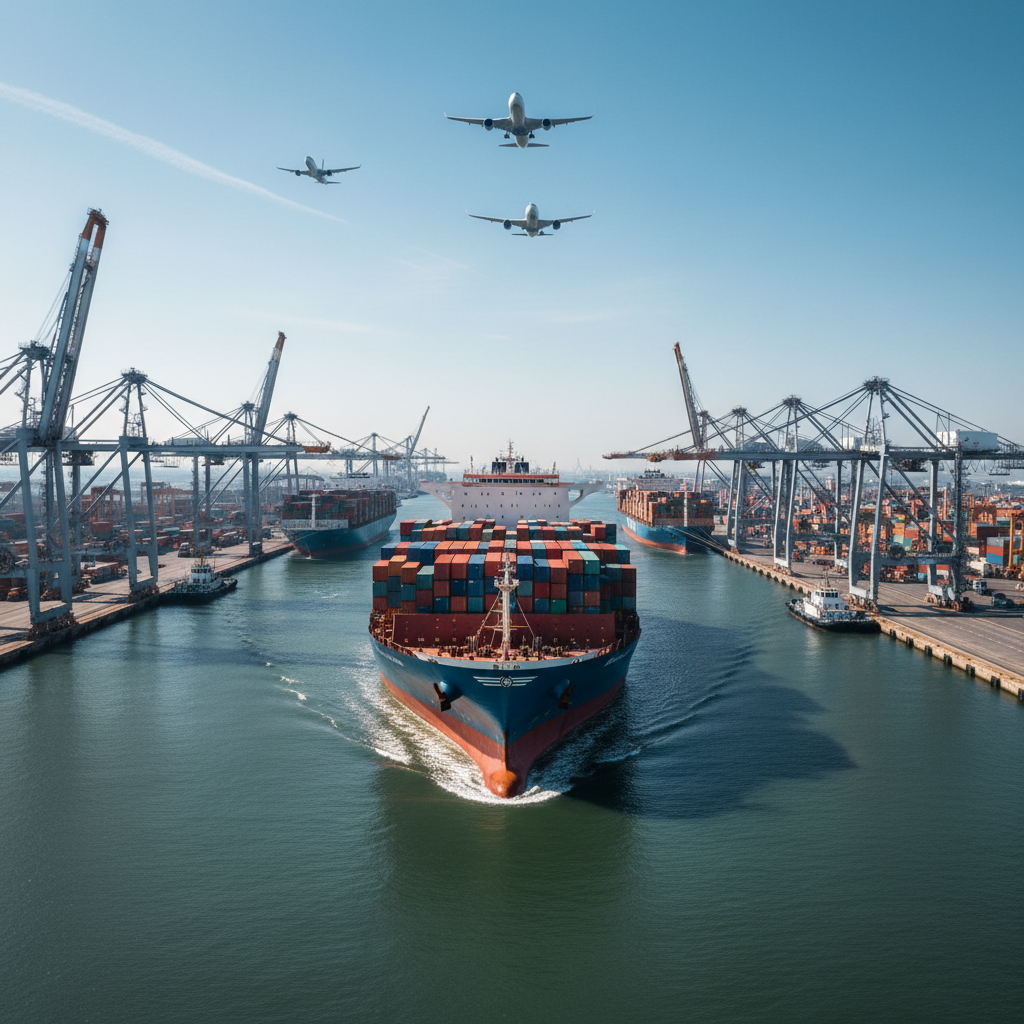
Kuehne + Nagel's robust Q3 growth in sea and air freight signals a concentrated surge in global supply chain activity. This intensified flow is particularly evident on the China-U.S. and transatlantic trade lanes, driven by strong demand for data center logistics and semiconductors. The immediate impact is significantly increased volumes through these critical arteries, placing greater pressure on key port infrastructure and air cargo hubs. This concentration elevates the potential for congestion, longer dwell times, and increased operational complexity across transshipment points and inland networks.
Regarding capacity, strong demand implies a tightening market, especially for specialized air freight and specific container types required for high-value cargo. Carriers face higher utilization rates, making spot capacity scarcer and favoring contractual agreements. This dynamic pushes logistics providers to optimize existing assets and networks, demanding greater efficiency from origin to destination.
Operationally, the surge in sensitive, high-value cargo necessitates heightened precision. Logistics operations must be meticulously coordinated, involving complex multi-modal transfers, specialized handling, and stringent security. Increased flows also strain warehousing, distribution centers, and last-mile delivery. Any disruption has amplified ripple effects across these high-stakes supply chains, underscoring the critical need for agile and responsive operational frameworks.
Global financial impact
The financial implications of Kuehne + Nagel's strong Q3 performance are significant. For carriers and major logistics service providers, "lifted volumes and profits" translate into healthier revenues and stronger pricing power. This financial buoyancy can incentivize investments in fleet, technology, and network expansion, enhancing future supply chain capabilities.
However, for shippers, this environment often means increased logistics expenditures. Those involved in China-U.S. trade, transatlantic shipping, data center logistics, and semiconductor supply face upward pressure on freight rates. While high-value cargo like semiconductors might mean freight costs are a smaller percentage of total product value, the absolute cost increase can be substantial. Critically, the cost of disruption for these components can be immense, leading to halted manufacturing, lost revenue, and penalties. Shippers may opt for premium services or long-term contracts to secure capacity and mitigate risk, incurring higher price tags.
For global trade, robust activity in these key sectors signals economic strength, particularly in technology and digital infrastructure. Yet, sustained high logistics costs could eventually impact consumer prices or erode profit margins downstream. The current financial landscape underscores logistics as a strategic enabler, where efficient and resilient supply chains directly contribute to competitive advantage.
How MGS can help navigate today's global trade environment
In a market defined by strong demand, tight capacity, and the critical need for precision in high-value logistics, a shipment-visibility control tower like MGS is invaluable. The robust Q3 growth highlights both opportunity and inherent complexity in managing global freight, especially on busy China-U.S. and transatlantic routes, and for sensitive cargo like semiconductors and data center equipment.
MGS directly addresses challenges from increased volumes and potential congestion by providing unparalleled real-time visibility. For high-demand corridors, operators track containers, vessels, and aircraft, receiving proactive alerts on delays, port congestion, or route deviations. This enables immediate intervention, such as rerouting critical semiconductor shipments, mitigating severe financial impacts from production stoppages. Without such granular visibility, operators remain reactive, learning about issues only after significant delays and costs accumulate.
Furthermore, MGS enhances operational efficiency for the precise demands of data center logistics and semiconductor supply chains. Consolidating data from multiple carriers and modes into a single platform empowers teams to monitor key milestones from factory to final delivery. This ensures flawless execution for sensitive components, flagging any anomaly – like a customs hold – for rapid resolution and preventing costly downtime. Financially, MGS helps manage rising costs by providing accurate ETAs and early warnings, reducing demurrage, detention, and the need for expensive expedited shipping. MGS transforms reactive problem-solving into proactive, data-driven decision-making, essential for thriving in today's dynamic trade landscape.
Demand–supply analysis & improvement
Kuehne + Nagel's strong Q3 growth, fueled by China-U.S. trade, transatlantic shipping, data center logistics, and semiconductor demand, clearly reveals robust demand in these specific segments. "Lifted volumes and profits" indicate demand is either closely matching or outpacing available supply, creating a favorable market for logistics providers. This suggests efficient capacity utilization and pricing power, reflecting strong economic activity in technology manufacturing and digital infrastructure.
For shippers, this dynamic necessitates strategic improvements. Enhanced forecasting, leveraging real-time market intelligence, is crucial. Diversifying sourcing and establishing stronger, long-term contractual relationships with multiple logistics providers can secure capacity and more stable rates, reducing exposure to volatile spot markets. For high-value cargo like semiconductors, maintaining strategic safety stock, despite capital investment, can buffer against unforeseen delays and prevent costly production halts.
Carriers and LSPs can refine operations by improving network efficiency through digital optimization, such as advanced route planning. Investing in specialized equipment and services for data center logistics and semiconductor transport can differentiate offerings. Leveraging data analytics to predict demand trends informs fleet expansion decisions. Collaboration and data sharing across the supply chain, facilitated by platforms like MGS, improve overall efficiency, allowing agile responses to shifts in demand and supply, ultimately optimizing resource allocation.
ROI-focused resilience
The strong Q3 performance, while positive, underscores the critical importance of resilience, especially for high-value, time-sensitive cargo like semiconductors and data center components moving through high-demand lanes. "Lifted volumes and profits" indicate a robust market, but also a scenario where disruptions can have amplified financial consequences. Framing resilience actions in terms of Return on Investment (ROI) helps prioritize strategies that protect against quantifiable risks.
Investment in Advanced Visibility (e.g., MGS):
- Risk Protected Against: Production downtime due to delayed critical components. A single day of halted production in high-tech manufacturing can cost millions in lost output.
- ROI: MGS provides real-time tracking and predictive analytics, enabling proactive intervention (e.g., rerouting) to prevent or significantly reduce delays. Avoiding just one 24-hour production stoppage per year, potentially saving millions in lost revenue, can justify the platform's investment many times over. It quantifiably reduces the probability and impact of high-cost disruptions, alongside reducing demurrage and detention charges.
Investment in Multi-Modal Contingency Planning:
- Risk Protected Against: Over-reliance on a single mode or route leading to unavoidable delays.
- ROI: Establishing pre-negotiated contracts for air freight or alternative sea routes for critical components. If a major sea freight disruption occurs, the ability to switch to air freight, even at a higher cost, to prevent a multi-million-dollar production halt, makes the contingency planning a sound investment. The cost of maintaining these options is significantly less than the cost of a complete shutdown.
These resilience investments are strategic financial decisions that protect against quantifiable risks, ensuring that the benefits of strong market conditions, as seen in Q3, are not eroded by unforeseen disruptions. They shift the focus from reactive damage control to proactive risk mitigation with a clear financial upside.
Source: AJOT — https://www.ajot.com/insights/full/ai-kuehne-nagel-chief-upbeat-on-market-outlook-after-strong-q3