
Geopolitical Tides: Navigating Disruption in Global Cargo Movement
Geopolitical events are fundamentally reshaping global cargo movement, forcing rerouting, increasing costs, and demanding unprecedented agility from supply chains. This brief explores the consequences for trade and transport, highlighting the critical role of real-time visibility.
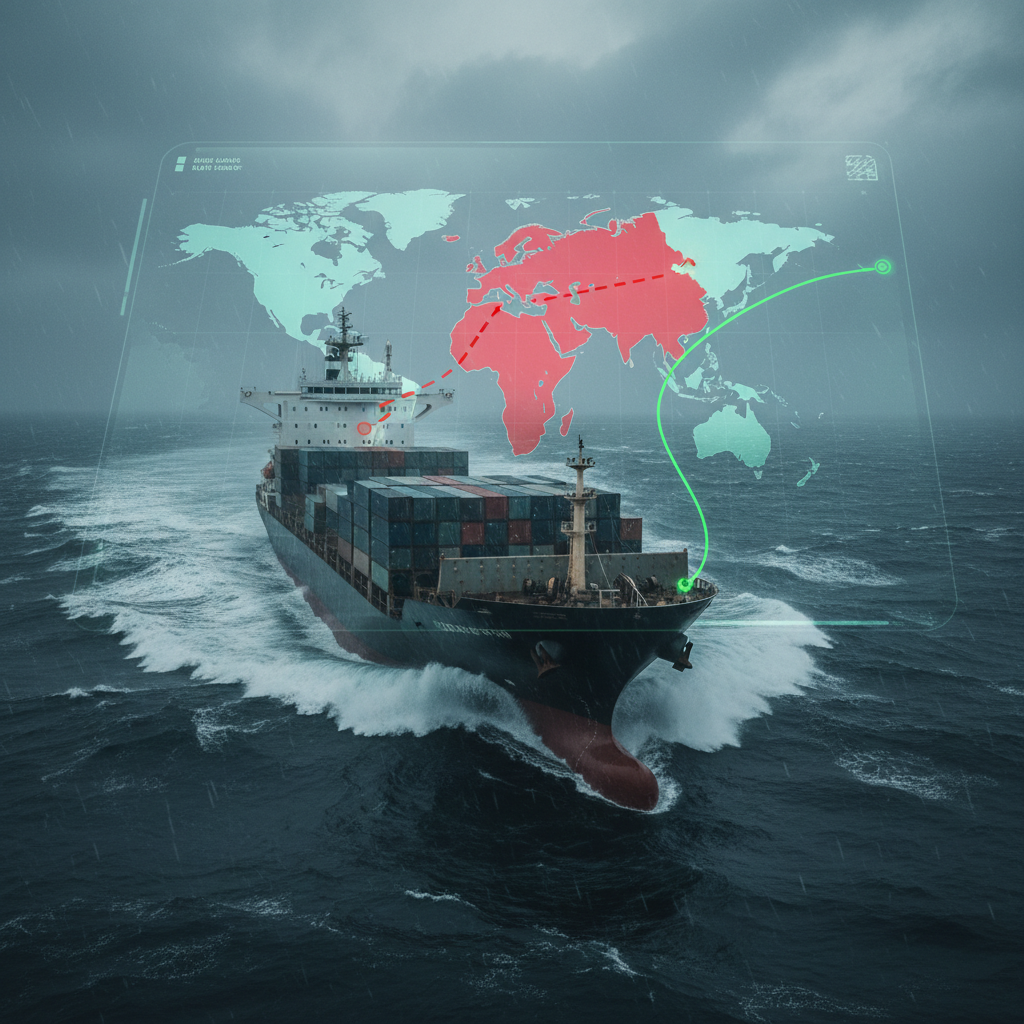
The global supply chain, once optimized for efficiency and cost-effectiveness, now operates under a constant shadow of geopolitical volatility. From regional conflicts to trade disputes, external factors are increasingly dictating the flow of goods, challenging established routes, and introducing significant uncertainty. For businesses reliant on the timely and predictable movement of cargo, understanding and adapting to these disruptions is no longer a strategic advantage but a fundamental requirement for survival. This analysis delves into the tangible consequences of these geopolitical shifts on trade and transport, examining how they manifest across maritime, air, and policy domains.
Disrupted Maritime Routes and Waterways
The maritime sector, the backbone of global trade, is particularly vulnerable to geopolitical flashpoints. Recent events in critical waterways, such as the Red Sea and the Strait of Hormuz, exemplify this fragility. Disruptions in these chokepoints force container carriers to abandon traditional, shorter routes in favor of significantly longer detours. For instance, vessels rerouting around the Cape of Good Hope add thousands of nautical miles to journeys between Asia and Europe. This extended transit time directly translates to increased fuel consumption, higher operational costs, and a substantial delay in cargo delivery. Furthermore, the concentration of vessels on alternative routes can lead to congestion at ports not originally designed for such volumes, exacerbating delays and creating ripple effects across intermodal networks. Insurance premiums also surge for vessels transiting high-risk areas, adding another layer of cost to shippers. The cumulative effect is a reduction in available shipping capacity on key trade lanes, driving up freight rates and creating a volatile pricing environment that carriers, despite benefiting from increased revenue, struggle to manage predictably due to the external nature of the disruption.
Airspace Restrictions and Air Cargo Impact
Geopolitical tensions often lead to the closure of national airspaces, compelling air cargo operators to undertake extensive rerouting. When direct flight paths become inaccessible, aircraft must navigate around restricted zones, significantly increasing flight distances and durations. This not only consumes more fuel but also reduces the effective payload capacity for certain routes, as additional fuel weight displaces cargo. The immediate consequence for air freight is a sharp rise in operational costs, which are inevitably passed on to shippers in the form of higher freight rates. Furthermore, extended flight times can strain crew duty limits and aircraft maintenance schedules, impacting overall network efficiency and reliability. For time-sensitive and high-value goods, which typically rely on air transport, these disruptions translate into longer lead times and increased supply chain risk. Businesses face challenges in meeting delivery commitments, managing inventory levels, and maintaining the freshness or efficacy of perishable or critical components. The agility required to adapt to sudden airspace closures demands sophisticated planning and real-time operational adjustments.
Tariffs, Sanctions, and Trade Flow
Beyond physical routes, geopolitical events manifest as economic barriers through the imposition of tariffs and sanctions. Tariffs, essentially taxes on imported goods, directly increase the cost of products, making them less competitive in the target market. This can lead to a re-evaluation of sourcing strategies, pushing companies to diversify their supplier base or even reshore production to avoid punitive duties. Sanctions, on the other hand, are more restrictive, often prohibiting trade with specific countries, entities, or individuals. These measures can completely sever established trade relationships, forcing businesses to find alternative markets for their products or alternative sources for their raw materials and components. The compliance burden associated with sanctions is substantial, requiring rigorous due diligence to avoid inadvertently violating complex international regulations. Both tariffs and sanctions introduce significant uncertainty into trade flows, disrupting long-term planning, distorting market dynamics, and potentially leading to the fragmentation of global supply chains as companies seek to insulate themselves from geopolitical risks. The result is often increased complexity, higher administrative costs, and a less efficient global trading system.
Broader Supply Chain Consequences
The cumulative impact of disrupted routes, airspace restrictions, tariffs, and sanctions extends far beyond immediate transport costs. Globally, businesses are grappling with extended lead times, making just-in-time inventory strategies increasingly precarious. The need to buffer against unpredictability leads to higher safety stock levels, tying up capital and increasing warehousing costs. Supply chain resilience has become paramount, prompting companies to de-risk by diversifying their manufacturing locations and supplier networks, often at a higher cost. This shift away from hyper-efficiency towards redundancy and robustness fundamentally alters cost structures and operational models. Furthermore, the unpredictability of freight rates and transit times makes accurate forecasting and budgeting incredibly challenging. The global economy experiences inflationary pressures as the cost of moving goods rises, impacting consumer prices and corporate profitability. The intricate web of interconnected global trade is being rewoven, with geopolitical considerations now weighing as heavily as economic efficiency in strategic decision-making.
Leveraging Visibility for Resilience
In this era of persistent geopolitical disruption, real-time shipment visibility is no longer a luxury but a critical operational imperative. A robust shipment-visibility control tower, like MGS, provides an integrated, end-to-end view of all cargo movements, regardless of mode or origin. When maritime routes are diverted, or airspaces are closed, the MGS platform can immediately flag affected shipments, provide updated estimated times of arrival (ETAs), and allow for proactive intervention. This means logistics teams can identify alternative routes, arrange for transshipments, or communicate delays to customers before they become critical. For businesses navigating the complexities of tariffs and sanctions, a control tower can help track compliance-sensitive shipments and ensure necessary documentation is in place. By aggregating data from various carriers, ports, and customs agencies, MGS empowers supply chain professionals with the actionable intelligence needed to make rapid, informed decisions, mitigate risks, and maintain operational continuity amidst unforeseen geopolitical challenges. It transforms reactive problem-solving into proactive risk management, safeguarding supply chain integrity and customer satisfaction.
Source: Container News — https://container-news.com/explainer-the-shipping-industrys-borrowed-tailwind/