
Geopolitical Tensions Escalate: Navigating the Shifting Tides of Global Cargo Movement
Recent events, including a tanker attack in the Strait of Hormuz, underscore the volatile nature of global geopolitics and their profound impact on supply chain stability. This brief analyzes the cascading consequences for maritime routes, air cargo, trade flows, and the critical role of real-time visibility platforms in mitigating these disruptions.
Impact on Maritime Routes and Shipping Costs
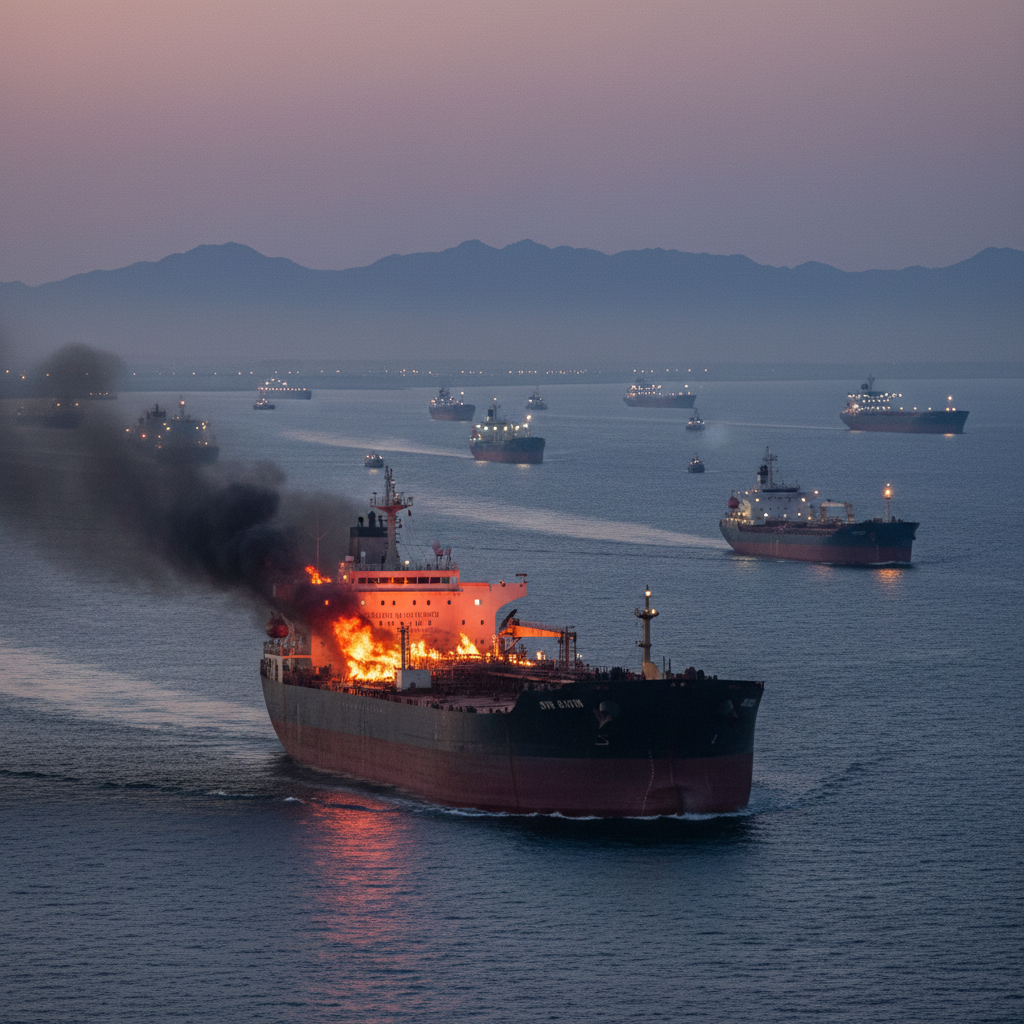
The global supply chain operates on a delicate balance, heavily reliant on the unimpeded flow of goods through strategic maritime chokepoints. The recent report of a tanker attack in the Strait of Hormuz, occurring at 17:50 UTC on a Thursday and resulting in a fire onboard the vessel, serves as a stark reminder of the inherent vulnerabilities within this system. The Strait of Hormuz is arguably the world's most critical oil transit chokepoint, through which a significant portion of the world's seaborne oil and liquefied natural gas (LNG) passes daily. Any disruption here has immediate and far-reaching consequences for global energy markets and, by extension, all forms of cargo movement.
Such incidents compel shipping companies to reassess risk and often lead to immediate rerouting decisions. Vessels may opt for longer, alternative routes, such as circumnavigating the entire Arabian Peninsula, adding thousands of nautical miles and days, if not weeks, to transit times. This not only increases fuel consumption significantly but also drives up operational costs. Insurance premiums, particularly war risk surcharges, escalate sharply in affected regions, directly impacting carrier profitability and, inevitably, freight rates passed on to shippers. The availability of vessels can also tighten as ships are tied up for longer durations, leading to higher charter rates. Furthermore, these longer routes can strain port infrastructure at alternative hubs, potentially causing congestion and further delays in cargo offloading and onward distribution. For a shipment-visibility control tower like MGS, real-time tracking of these reroutes, coupled with predictive analytics on their impact on estimated times of arrival (ETAs) and associated costs, becomes invaluable for clients to make informed decisions and communicate effectively with their customers.
Airspace Restrictions and Air Cargo Dynamics
While the recent incident specifically concerned maritime transport, geopolitical tensions frequently manifest in the form of airspace restrictions, closures, or the declaration of no-fly zones. These measures, often implemented swiftly in response to escalating conflicts or security concerns, have a direct and substantial impact on air cargo operations. Airlines are forced to divert flights, sometimes adding thousands of kilometers to their routes to avoid restricted areas. This leads to significantly increased flight times, greater fuel consumption, and higher operational costs, which are then reflected in elevated air freight rates.
Beyond the immediate cost implications, rerouting can also lead to capacity constraints on specific routes. As multiple carriers converge on a limited number of safe corridors, air traffic control systems can become overwhelmed, causing further delays. For time-sensitive and high-value cargo, such as pharmaceuticals, electronics, or automotive parts, these delays can be particularly damaging, potentially spoiling goods or disrupting critical production lines. The ability of an MGS platform to provide real-time flight path deviations, updated ETAs, and proactive alerts about potential airspace closures allows shippers to anticipate delays, explore alternative air freight options, or even consider modal shifts to mitigate risks. This level of visibility is crucial for maintaining supply chain fluidity in an increasingly complex air logistics landscape.
Supply Chain Resilience and Diversification Strategies
The recurrent nature of geopolitical disruptions, exemplified by events like the tanker attack reported on October 2, 2026, highlights a fundamental need for enhanced supply chain resilience. For too long, many global supply chains have prioritized efficiency and cost-cutting, often leading to a reliance on single-source suppliers or highly concentrated production hubs. Geopolitical flashpoints expose the fragility of these "just-in-time" models, demonstrating that minor disruptions can have cascading effects across entire networks.
Companies are now increasingly compelled to adopt diversification strategies. This includes broadening their supplier base across different geographies, establishing redundant manufacturing capabilities, and exploring multiple logistics routes for critical components and finished goods. The goal is to build "just-in-case" capabilities that allow for agility and adaptability when primary routes or sources become compromised. An MGS control tower plays a pivotal role here by offering comprehensive network mapping, identifying potential single points of failure, and providing the data necessary to evaluate the viability and cost implications of alternative sourcing and routing strategies. By visualizing the entire supply chain, from raw material to final delivery, businesses can proactively stress-test their networks against various geopolitical scenarios and build in the necessary redundancies to withstand future shocks.
Tariffs, Sanctions, and Trade Flows
Beyond direct physical disruptions to cargo movement, geopolitical events frequently trigger economic countermeasures such as tariffs and sanctions. These measures, while often aimed at specific nations or entities, inevitably ripple through global trade flows, altering established patterns and introducing new layers of complexity for international commerce. New tariffs can instantly increase the cost of goods, making certain markets less competitive or forcing companies to absorb higher costs, impacting profit margins. This often necessitates a re-evaluation of sourcing strategies, pushing companies to find new suppliers in unaffected regions or to shift production to avoid punitive duties.
Sanctions, on the other hand, can be even more disruptive. They can restrict trade in specific goods, prohibit financial transactions with certain entities, or even lead to entire regions becoming inaccessible for trade. This can strand inventory, complicate payment processes, and force companies to completely withdraw from previously lucrative markets. The emergence of "shadow fleets" or alternative, less transparent trade mechanisms can also arise in response to stringent sanctions, posing compliance risks and ethical dilemmas for businesses. For an MGS control tower, the ability to integrate real-time regulatory updates and sanction lists is crucial. It allows clients to screen shipments, partners, and routes for compliance risks, ensuring that their operations remain within legal boundaries and avoiding severe penalties. This proactive monitoring helps companies navigate the intricate web of international trade regulations that are constantly being reshaped by geopolitical forces.
Visibility and Proactive Risk Management
In an era defined by persistent geopolitical volatility, the ability to maintain real-time, end-to-end visibility across the supply chain is no longer a luxury but a fundamental necessity. The incident in the Strait of Hormuz on October 2, 2026, serves as a powerful illustration of how quickly unforeseen events can disrupt established logistics pathways. A shipment-visibility control tower, such as MGS, provides the critical intelligence needed to not only react to these disruptions but to anticipate and mitigate their impact proactively.
By aggregating data from various sources—vessel tracking systems, airline schedules, port operations, weather forecasts, and geopolitical intelligence feeds—an MGS platform offers a unified, real-time view of all cargo in transit. This allows for immediate detection of incidents, such as a vessel fire, and rapid assessment of its potential impact on specific shipments. Beyond mere tracking, a robust control tower leverages predictive analytics to forecast potential delays due to rerouting, port congestion, or airspace closures. This enables logistics managers to make informed decisions: rerouting shipments, activating alternative transport modes, adjusting inventory levels, or proactively communicating revised ETAs to customers.
Furthermore, an MGS control tower facilitates robust risk management by identifying critical chokepoints and vulnerable segments within the supply chain. It can highlight dependencies on specific routes or suppliers that are prone to geopolitical instability, empowering businesses to build more resilient networks. In essence, a control tower transforms raw data into actionable insights, providing the agility and foresight required to navigate the complex and often unpredictable landscape of global trade, ensuring that businesses can continue to deliver on their promises even when the geopolitical tides shift unexpectedly.
Source: Ship & Bunker — https://shipandbunker.com/news/emea/780348-new-tanker-attack-reported-in-strait-of-hormuz-ukmto