
Geopolitical Tensions Drive Ocean Freight Rates Towards Record Highs
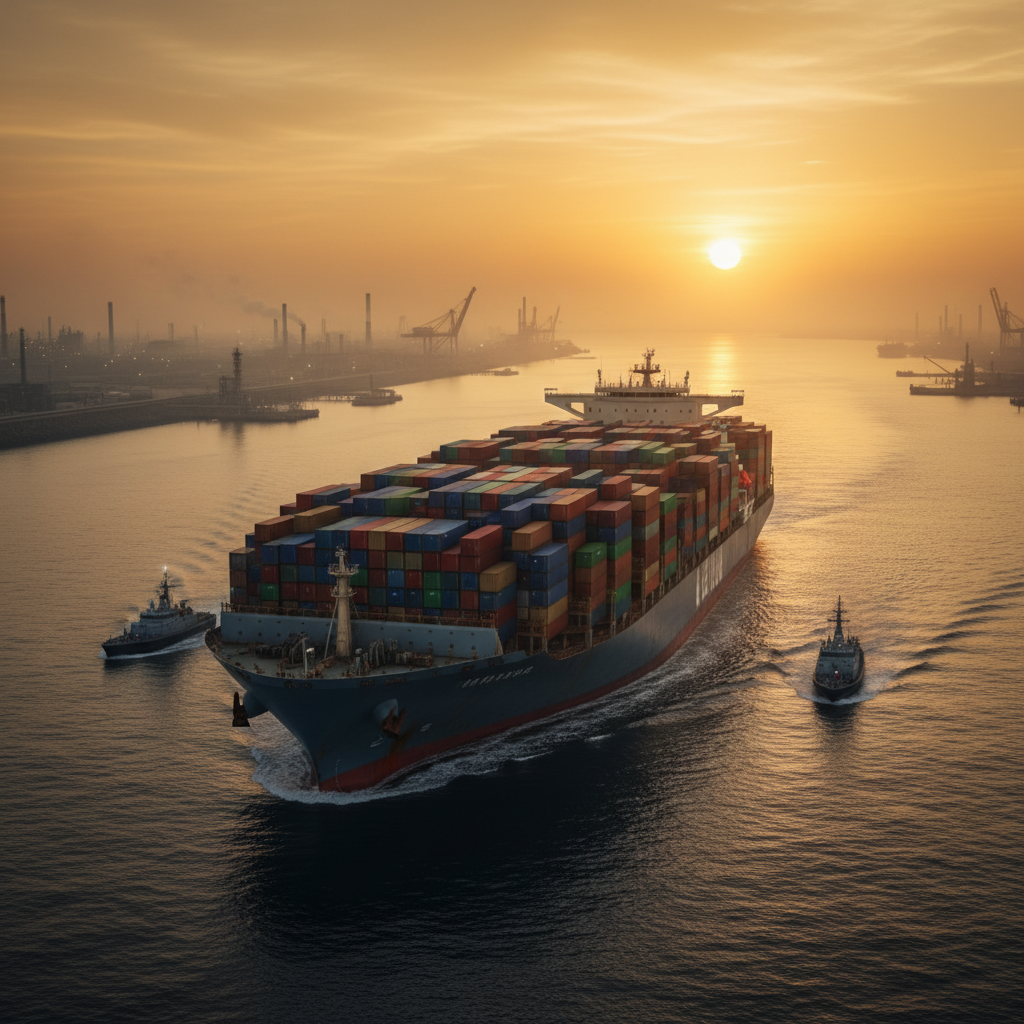
Ocean freight rates from the Far East to the U.S. have surged dramatically due to geopolitical disruptions, nearing pandemic-era peaks and signaling significant challenges for global supply chains and trade finances.
How this impacts the global supply chain
The escalating ocean freight rates, driven by significant geopolitical disruptions, are fundamentally reshaping global supply chain dynamics. The "U.S. and Israel’s war on Iran" and the associated "pre-Hormuz crisis" have introduced a profound layer of instability, directly influencing shipping routes, available capacity, and operational efficiency.
Firstly, the threat or actualization of conflict in critical maritime chokepoints, such as the Strait of Hormuz, compels carriers to reassess traditional shipping lanes. While the source doesn't explicitly detail rerouting, the dramatic increase in rates—324% for the Far East to US West Coast and 325% for the Far East to US East Coast since February—strongly indicates that the perceived risk or actual operational constraints are forcing changes. Vessels may be compelled to take longer, alternative routes to avoid high-risk zones, such as circumnavigating Africa instead of transiting the Suez Canal (though Hormuz is distinct from Suez, the principle of avoiding conflict zones applies). Such rerouting significantly extends transit times, adding weeks to voyages and disrupting meticulously planned delivery schedules. This directly impacts lead times for goods, pushing them out further and creating ripple effects across manufacturing, retail, and inventory management.
Secondly, the effective capacity within the global shipping network is being severely strained. Longer transit times, whether due to rerouting or increased security protocols, mean that individual vessels spend more days at sea for each journey. This effectively reduces the number of available vessel slots on a given trade lane over a specific period, even if the physical number of ships remains constant. Carriers may also choose to slow steam to conserve fuel amidst soaring bunker prices, further exacerbating capacity constraints. The combination of reduced effective capacity and high demand (implied by the rates) creates a seller's market, where shippers struggle to secure space, particularly for time-sensitive cargo.
Finally, daily operations for shippers and logistics providers become significantly more complex and unpredictable. The volatility in rates and transit times makes forecasting and planning exceptionally challenging. Companies accustomed to reliable, scheduled services now face potential last-minute changes, delays, and unexpected costs. This necessitates a more agile and responsive operational model, with increased safety stock levels, diversified sourcing strategies, and a greater emphasis on real-time information to navigate the turbulent environment.
Global financial impact
The current surge in ocean freight rates, with increases of 324% and 325% on key Far East to U.S. routes, carries profound financial implications for all stakeholders in global trade. This dramatic escalation, pushing rates to within 18% and 11% of their all-time COVID-19 highs, coupled with rising bunker prices, is creating a perfect storm of cost pressures.
For shippers, the immediate and most direct impact is a substantial increase in their landed cost of goods. A more than threefold increase in shipping expenses on critical routes directly erodes profit margins, particularly for businesses operating on tight financial frameworks. This cost burden will inevitably be passed on to consumers in many instances, contributing to inflationary pressures across various economies. Companies that rely heavily on imports from the Far East, ranging from consumer electronics to apparel and industrial components, will see their supply chain budgets stretched thin. Furthermore, the unpredictability of these rates makes financial forecasting and budgeting a formidable challenge, hindering long-term investment and strategic planning. The added burden of higher fuel surcharges, which have surpassed pandemic levels, layers on another significant and often variable cost component.
Carriers, while benefiting from higher spot rates, are not immune to the financial complexities. The same geopolitical tensions that drive up rates also introduce higher operational risks and costs. Increased insurance premiums for vessels operating in or near conflict zones, potential rerouting expenses, and the soaring bunker prices directly impact their bottom line. While revenue per container might be significantly higher, their operational expenditure is also elevated, potentially offsetting some of the gains. Managing capacity effectively in such a volatile environment, balancing the pursuit of high spot rates with maintaining service reliability for contract customers, becomes a delicate act. The long-term sustainability of such high rates is also a concern, as they can eventually stifle demand or accelerate shifts towards nearshoring.
For trade at large, the financial ramifications are systemic. Elevated shipping costs act as a de facto tariff, making imported goods more expensive and potentially dampening overall trade volumes. This can slow economic growth, particularly in import-dependent nations. The increased cost of raw materials and components impacts manufacturing sectors globally, leading to higher production costs and potentially reduced competitiveness. The uncertainty surrounding freight costs also deters new investments in international supply chains, encouraging a more localized approach to sourcing and production. This environment fosters a higher degree of financial risk across the entire global economic ecosystem, making it harder for businesses to plan, invest, and grow.
How MGS can help navigate today's global trade environment
In an environment where ocean freight rates have surged by over 300% and geopolitical disruptions constantly threaten supply chain stability, a robust shipment-visibility control tower platform like MGS becomes an indispensable tool for operators. MGS provides the critical intelligence needed to transform reactive responses into proactive strategies, mitigating the financial and operational risks inherent in today's global trade.
Firstly, real-time, end-to-end visibility is paramount when routes are volatile and transit times are extended. With MGS, shippers gain immediate insight into the precise location and status of their ocean freight, from port of loading to final destination. In scenarios where vessels are rerouted due to geopolitical events or experience significant delays, MGS allows operators to see these deviations as they happen. This means instead of waiting for a carrier update, which might be delayed, businesses can proactively identify impacted shipments, understand revised estimated times of arrival (ETAs), and assess the downstream impact on their inventory and production schedules. This granular visibility is crucial for managing customer expectations and avoiding costly stockouts or production line stoppages.
Secondly, MGS empowers proactive decision-making and rapid response. When faced with a 324% or 325% increase in freight costs, every operational inefficiency becomes magnified. By providing early warnings of potential delays or disruptions, MGS enables logistics teams to explore alternative solutions before a crisis fully materializes. For instance, if a critical shipment is identified as significantly delayed, operators can use MGS data to evaluate the feasibility and cost of expediting a portion of the cargo via air freight, or re-prioritizing other inbound shipments. This ability to make informed, data-driven decisions helps to minimize the financial fallout of unexpected events, optimizing inventory levels and reducing the need for costly last-minute interventions.
Furthermore, MGS aids in cost management and optimization in a high-rate environment. While it doesn't directly lower freight costs, it helps mitigate associated expenses. By accurately tracking vessel movements and port activities, MGS can help prevent demurrage and detention charges, which can quickly accrue when containers are delayed or not picked up promptly. Better visibility allows for more precise inventory planning, reducing the need for excessive safety stock that ties up capital, or conversely, preventing costly stockouts that lead to lost sales. The platform provides the data necessary to analyze carrier performance against agreed-upon transit times, helping shippers identify the most reliable partners and negotiate more effectively, even in a challenging market. In essence, MGS transforms raw shipping data into actionable intelligence, allowing businesses to navigate the current landscape with greater control and financial prudence.
Demand–supply analysis & improvement
The current environment, characterized by ocean freight rates tripling on key routes, offers a stark illustration of how geopolitical events can dramatically skew the delicate balance of demand and supply in global shipping. While the source primarily highlights the impact on pricing, it implicitly reveals critical dynamics at play.
On the supply side, the "geopolitical disruptions" and the specific mention of the "U.S. and Israel’s war on Iran" and the "pre-Hormuz crisis" are the primary drivers of the constrained capacity. Such conflicts introduce significant risk into major maritime arteries. Even if routes are not entirely closed, the perceived threat of disruption, increased insurance premiums, and potential for longer transit times (due to rerouting or heightened security measures) effectively reduce the available and reliable shipping capacity. When vessels are forced to take longer routes, they spend more time at sea for each journey, meaning fewer voyages can be completed within a given period. This 'effective' capacity reduction, combined with the soaring "bunker prices pushing fuel surcharges higher," further strains carriers' operational models and costs, potentially leading to slower steaming or service rationalization, further tightening supply.
On the demand side, while the source doesn't explicitly detail a surge in demand, the massive rate increases suggest that demand remains robust relative to the significantly reduced and risk-laden supply. Even with higher prices, shippers are evidently still willing to pay, indicating an underlying need for goods to move from the Far East to the U.S. This could be driven by persistent consumer demand, the need to replenish lean inventories, or the seasonal peaks that typically characterize global trade. The fact that rates are just 18% and 11% short of COVID-19 highs implies a similar level of supply-demand imbalance, albeit driven by different root causes.
To navigate these dynamics, several concrete improvement levers can be pulled. Firstly, strategic route and carrier diversification becomes paramount. Relying on a single route or a limited set of carriers exposes shippers to disproportionate risk when geopolitical events impact specific regions. Exploring alternative, albeit potentially longer or more expensive, routes can provide a crucial contingency. Secondly, enhanced collaboration and communication with carriers and logistics partners are vital. Real-time information sharing helps both parties anticipate and react to disruptions more effectively, potentially securing capacity or priority for critical shipments. Thirdly, inventory optimization strategies must be re-evaluated. While just-in-time (JIT) models are efficient in stable times, the current volatility necessitates considering strategic safety stock for critical components, balancing the cost of holding inventory against the risk of production halts or lost sales. Finally, leveraging advanced analytics and visibility platforms (like MGS) can provide the intelligence needed to monitor these dynamics, identify emerging bottlenecks, and make data-driven decisions to optimize supply chain flows and costs in real-time.
ROI-focused resilience
In an era where ocean freight rates can skyrocket by 324% to 325% within months due to geopolitical instability, framing supply chain resilience in terms of Return on Investment (ROI) is no longer a luxury but a strategic imperative. The substantial financial risks associated with disruptions necessitate investments that demonstrably protect against quantified losses.
One of the most impactful resilience investments, with a clear ROI, is the adoption of a shipment-visibility control tower platform like MGS.
- Quantified Risk: The risk here is multi-faceted:
- Unforeseen Expedited Shipping Costs: Without real-time visibility into delays, companies often resort to costly air freight for critical components to prevent production stoppages or meet delivery deadlines. A single air freight shipment can cost tens of thousands, potentially hundreds of thousands, more than ocean freight.
- Demurrage and Detention Charges: When vessels are delayed or rerouted, or port operations are disrupted, containers can sit at ports for extended periods, incurring significant daily penalties. These costs can quickly add up to thousands per container.
- Lost Sales and Customer Dissatisfaction: Delays in inbound finished goods lead to stockouts, resulting in lost revenue and damage to brand reputation. The cost of a lost customer can be substantial and long-lasting.
- Production Line Stoppages: Delays in critical raw materials or components can halt manufacturing, leading to idle labor, missed production targets, and contractual penalties.
- ROI: By providing real-time tracking and predictive analytics, MGS allows operators to anticipate delays, communicate proactively with customers, and implement mitigation strategies before costs escalate. Preventing just a few instances of expedited shipping, avoiding a handful of demurrage charges, or averting a single production line stoppage can easily offset the investment in such a platform. The ability to accurately predict ETAs also optimizes inventory levels, reducing carrying costs and improving working capital efficiency.
Another critical resilience investment is strategic inventory management, moving beyond a purely lean approach for certain critical goods.
- Quantified Risk: The risk is the complete disruption of supply for essential components or finished products due to geopolitical events, leading to prolonged production halts or inability to serve market demand. The cost of a multi-week factory shutdown or losing significant market share due to unavailability far outweighs the cost of holding additional inventory.
- ROI: Investing in a strategic buffer of safety stock for high-risk, high-impact items provides a tangible shield against sudden supply shocks. The cost of holding this inventory (warehousing, insurance, capital tied up) can be directly measured against the potential financial losses from production downtime, lost sales, and the cost of emergency sourcing in a highly volatile spot market. When rates are soaring by over 300%, the cost of not having inventory can be catastrophic.
Finally, diversification of sourcing and carrier relationships offers a quantifiable return.
- Quantified Risk: Over-reliance on a single geographic region for sourcing or a limited number of carriers for transport exposes a company to concentrated risk. If that region or carrier is impacted by a geopolitical event, the entire supply chain can collapse.
- ROI: While establishing new supplier relationships or contracting with additional carriers involves upfront effort and potentially slightly higher costs, this investment provides a quantifiable hedge. The ability to pivot to an alternative source or carrier during a major disruption can ensure business continuity, protecting revenue streams and avoiding the exorbitant costs of emergency procurement or complete operational shutdown.
Source: DC Velocity — https://www.dcvelocity.com/transportation/maritime-ocean/ocean-freight-rates-head-towards-record-levels-from-far-east-to-u-s