
Geopolitical Impact: Assessing the Financial and Operational Fallout of Impaired Refining Capacity
The reported incapacitation of over half of Russia's oil refining capacity signals profound financial and operational challenges. This analysis delves into the significant disruptions to efficiency, cash flow, revenue generation, and the imposition of substantial new costs, offering insights for leaders navigating complex global supply dynamics.
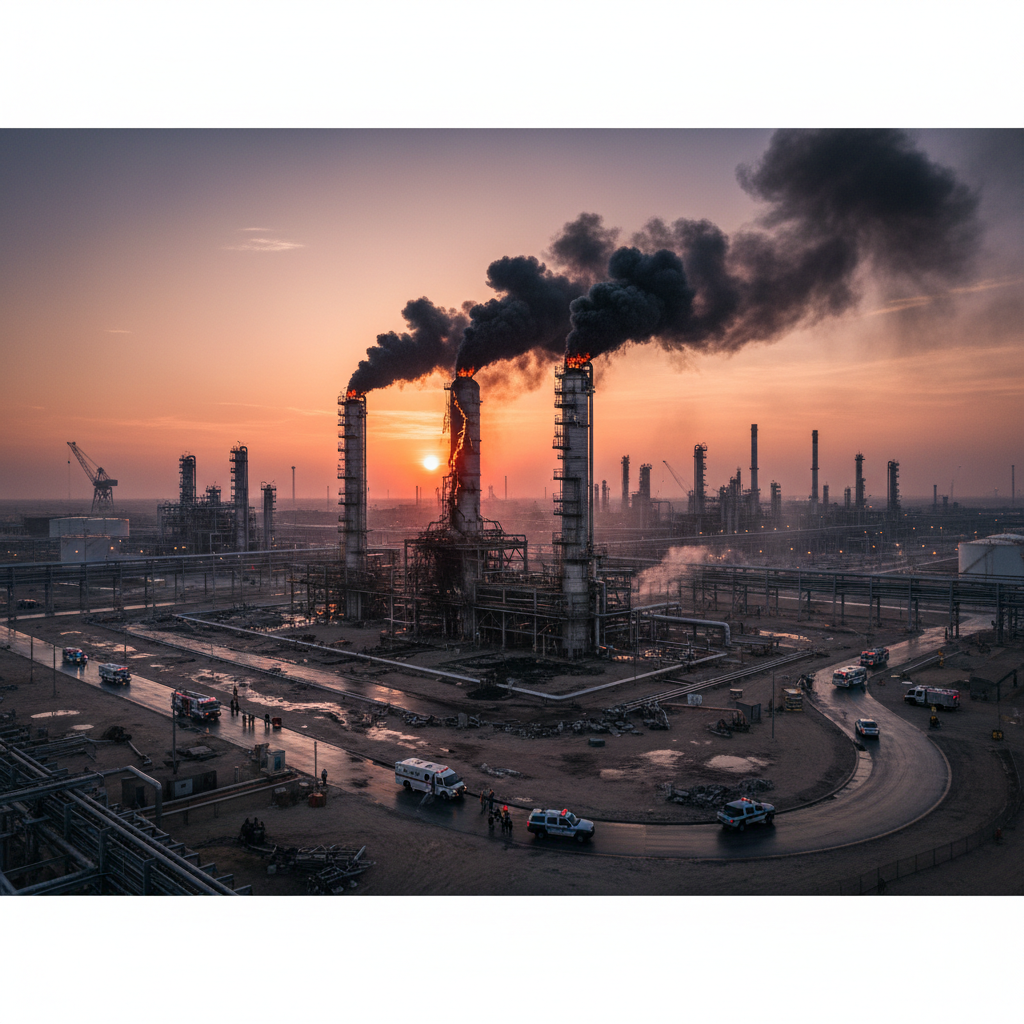
Operation efficiency
The reported incapacitation of more than half of Russia's oil refining capacity represents a catastrophic blow to operational efficiency within a critical industrial sector. For business leaders, this scenario underscores the fragility of complex supply chains and the profound impact of external shocks on core production capabilities. The immediate consequence is a dramatic reduction in throughput. Refineries are capital-intensive assets designed for continuous, optimized operation. When a significant portion, specifically "more than half," of this capacity is rendered inoperable, the entire system suffers a severe and immediate loss of its ability to convert crude oil into higher-value refined products.
This impairment means that a substantial volume of crude oil, which would ordinarily be processed into products like gasoline, diesel, and jet fuel, can no longer be refined domestically. This forces a fundamental shift in the supply chain, creating a bottleneck upstream. Crude oil that cannot be refined must either be stored, potentially incurring additional holding costs and logistical challenges, or diverted for export, often at a lower value than its refined counterparts. This directly undermines the efficiency of the upstream sector, which now faces a constrained domestic market for its primary output and increased pressure on export infrastructure.
Furthermore, the remaining operational capacity may be forced to operate under suboptimal conditions. Facilities might be run at higher utilization rates than designed, increasing wear and tear and the risk of further breakdowns, or they might be isolated from integrated supply networks, leading to inefficiencies in transport and logistics. The intricate network of pipelines, storage facilities, and distribution channels built to support a fully functional refining complex is now disrupted, leading to bottlenecks and increased operational friction. The effort required to manage this drastically reduced and fragmented capacity, including rerouting supplies and coordinating emergency repairs, represents a significant drain on management and technical resources, further eroding overall operational efficiency. In such a disrupted environment, real-time visibility becomes paramount. A robust shipment-visibility control tower (like MGS) could provide crucial insights into the movement of available crude oil, the status of emergency refined product imports, or the tracking of vital repair components, enabling rapid, informed decision-making to mitigate further operational losses.
Cost reduction
The severe damage to more than half of Russia's oil refining capacity will inevitably lead to a dramatic surge in costs across multiple dimensions, effectively reversing any prior cost reduction initiatives and imposing substantial new financial burdens. The most immediate and significant cost will be for repair and reconstruction. Restoring complex industrial facilities like oil refineries, especially when a substantial portion is affected, requires immense capital expenditure, specialized equipment, and skilled labor. These are not routine maintenance costs but rather extraordinary outlays that will strain national and corporate budgets.
Beyond direct reconstruction, there will be significant operational cost increases. With domestic refining capacity severely curtailed, Russia may be compelled to import refined petroleum products to meet internal demand. These imports are likely to be more expensive than domestically produced equivalents, especially when purchased in large volumes and potentially from distant markets, incurring higher transportation costs. This shift from producer to importer for a significant portion of its refined product needs will fundamentally alter its cost structure.
Moreover, the disruption will likely lead to increased logistical costs. Crude oil that cannot be refined domestically must be rerouted, potentially through less efficient or more expensive transportation methods, or stored for longer periods, incurring additional holding costs. The remaining operational refineries might face higher input costs due to supply chain fragmentation or be forced to process different crude grades, leading to less efficient operations. There is also the potential for contractual penalties if supply agreements for refined products cannot be met, adding another layer of financial strain. The cumulative effect is a substantial increase in the cost base, making any traditional cost reduction strategies virtually impossible in the short to medium term, as the focus shifts entirely to damage control and restoration.
Organizational productivity
When more than half of a nation's oil refining capacity is rendered inoperable, the impact on organizational productivity is profound and multifaceted. Productivity, often measured by output per unit of input (such as per employee or per facility), will experience a precipitous decline across the affected refining enterprises. Facilities that are out of action contribute zero output, effectively idling a significant portion of the workforce assigned to those sites. While some personnel might be redeployed to repair efforts, this often represents a shift from productive output generation to capital expenditure-related activities, which, while necessary, do not immediately contribute to the core business output of refined products.
For the operational refineries, productivity may also suffer. They might be forced to operate under increased pressure, with potential for equipment strain, or with disrupted supply chains for crude input and product distribution, leading to less efficient workflows. The overall coordination and planning for the entire refining sector become significantly more complex, diverting management and technical resources from optimizing existing operations to crisis management. Decision-making processes slow down, and strategic initiatives are often put on hold, further impacting long-term productivity growth.
Furthermore, the morale and focus of the workforce can be negatively affected by such widespread disruption, potentially leading to reduced efficiency even in unaffected areas. The organizational structure built around a fully functional and integrated refining network will be stressed, requiring rapid adaptation and potentially leading to inefficiencies as roles and responsibilities shift. The loss of such a substantial portion of capacity means that the overall output of refined products per person employed in the sector will drop dramatically, highlighting a severe impairment to the collective organizational productivity of Russia's oil refining industry.
Cash flow optimization
The reported incapacitation of more than half of Russia's oil refining capacity will have a devastating impact on cash flow, fundamentally disrupting any efforts towards cash flow optimization and instead creating significant negative pressures. Cash inflows from the sale of refined petroleum products, both domestically and for export, will experience a drastic reduction. With a substantial portion of refining capacity offline, the volume of high-value products available for sale will plummet, directly translating into a significant decline in revenue and, consequently, cash receipts.
Simultaneously, cash outflows will surge dramatically. The immediate need for repairs and reconstruction of damaged facilities will necessitate massive capital expenditures, requiring substantial cash outlays. Furthermore, to meet domestic demand for essential fuels, Russia will likely be forced to increase imports of refined products, leading to significant cash outflows for these purchases. These imports often come with higher price tags and additional logistical costs, further exacerbating the cash drain.
The disruption also impacts the working capital cycle. If crude oil cannot be processed, it may accumulate as inventory, tying up capital without generating immediate returns. Alternatively, if it is sold as crude rather than refined product, it generates less cash. The overall effect is a severe squeeze on liquidity, increasing the risk of cash shortages and potentially forcing difficult financial decisions, such as drawing down reserves, seeking emergency financing, or reprioritizing other expenditures. The ability to optimize cash flow through efficient management of receivables, payables, and inventory is severely hampered when the core revenue-generating assets are largely incapacitated, turning the focus from optimization to mere survival and resource allocation under duress. A robust MGS could, in this scenario, aid in optimizing the remaining cash flows by providing clear visibility into inventory movements and supply chain costs, allowing for more precise financial forecasting and resource allocation during a crisis.
Revenue optimization
The reported loss of more than half of Russia's oil refining capacity presents an insurmountable challenge to revenue optimization within this critical sector, leading instead to a substantial and unavoidable decline in revenue generation. The primary function of oil refining is to add significant value to crude oil by transforming it into a range of higher-priced products such as gasoline, diesel, jet fuel, and petrochemical feedstocks. When "more than half" of this capacity is out of action, the ability to capture these value-added margins is severely curtailed.
Consequently, the volume of refined products available for sale, both in domestic and international markets, will dramatically decrease. This direct reduction in sales volume translates immediately into a significant loss of revenue. Furthermore, if Russia is compelled to export a larger proportion of its crude oil production due to insufficient domestic refining capacity, it will be selling a lower-value commodity compared to its refined derivatives. This shift in the export mix inherently reduces the overall revenue generated per barrel of oil extracted, undermining the entire revenue optimization strategy of its energy sector.
The inability to meet domestic demand with local production could also lead to market share erosion in key internal markets, potentially opening doors for imported products and further diminishing the revenue base for domestic refiners. While global refined product prices might temporarily increase due to reduced supply, Russia's diminished capacity means it is largely unable to capitalize on such price spikes. Instead, it faces the double burden of reduced sales volumes and a potential shift towards lower-value exports, making any strategy for revenue optimization virtually impossible in the short to medium term. The focus shifts from maximizing revenue to simply mitigating the colossal revenue losses incurred by the destruction of such a significant portion of its industrial infrastructure.
Source: ABC News Business — https://abcnews.com/Business/wireStory/ukraine-claims-half-russias-oil-refining-capacity-136996327