
Geopolitical Headwinds: Navigating Disrupted Cargo Movement with Strategic Resilience and Visibility
Geopolitical events are fundamentally reshaping global cargo movement, impacting traditional routes, airspace, waterways, and trade policies. This MGS Insight brief analyzes the cascading consequences for global trade and transport, highlighting how strategic infrastructure investments, like Canada's C$254 million commitment to the Saint John Trade Corridor, and advanced shipment visibility platforms are becoming indispensable tools for building supply chain resilience in an increasingly volatile world.
The Evolving Geopolitical Landscape and Supply Chain Vulnerabilities
The global supply chain, once optimized for efficiency and cost-minimization, now operates within an increasingly complex and volatile geopolitical landscape. Recent years have seen a marked shift from a relatively stable, interconnected global economy to one characterized by heightened tensions, regional conflicts, and strategic competition among nations. These geopolitical dynamics are no longer abstract political discussions; they manifest directly as tangible risks and disruptions for cargo movement across all modes of transport. From major shipping lanes becoming flashpoints to airspace restrictions and trade disputes escalating into economic warfare, the predictability that once underpinned global logistics has eroded significantly. This shift forces supply chain professionals to contend with a new paradigm where resilience and adaptability are paramount, moving beyond traditional risk assessments to incorporate geopolitical foresight. The consequences extend far beyond mere inconvenience, impacting transit times, operational costs, and ultimately, the reliability of goods reaching their intended destinations. Understanding these macro-level shifts is crucial for any organization aiming to maintain robust and efficient supply chains in the modern era.
Impacts on Traditional Cargo Routes and Transit Points
Geopolitical events are directly redrawing the maps of global cargo movement, forcing fundamental changes to established routes and critical transit points. Conflicts in key maritime regions, for instance, can render traditional shipping lanes unsafe or prohibitively expensive due to increased insurance premiums and security risks. This has led to vessels undertaking significantly longer voyages, bypassing conventional choke points, which in turn inflates fuel consumption, extends transit times, and strains vessel availability. Similarly, airspace closures or restrictions, often imposed in response to regional conflicts or diplomatic disputes, compel air freight carriers to reroute, adding hours to flight paths and increasing operational costs. Land-based corridors are not immune, with border closures or security concerns impacting cross-border trucking and rail freight. These disruptions create a cascading effect: increased congestion at alternative ports, delays in delivery schedules, and a general erosion of supply chain efficiency. The cumulative impact is a global transport network under immense pressure, where the shortest or most direct path is frequently no longer the most viable or secure.
The Rise of Tariffs, Sanctions, and Trade Barriers
Beyond physical disruptions to routes, geopolitical tensions are increasingly weaponizing economic tools, leading to a proliferation of tariffs, sanctions, and non-tariff barriers that fundamentally alter trade flows. Tariffs, imposed by nations as a form of economic leverage or protectionism, directly increase the cost of imported goods, forcing companies to re-evaluate sourcing strategies, potentially shifting production or procurement to less efficient but politically safer regions. Sanctions, often targeting specific countries, entities, or individuals, create complex compliance challenges, restricting market access and necessitating the complete overhaul of supply chains to avoid prohibited transactions. This requires meticulous due diligence and real-time monitoring to ensure adherence. Furthermore, non-tariff barriers, such as quotas, stringent import licensing requirements, or politically motivated customs delays, add layers of bureaucratic complexity and unpredictability to international trade. These economic measures, stemming from geopolitical friction, introduce significant financial risk and operational complexity, compelling businesses to navigate a fragmented global trading system where political alignment can dictate commercial viability.
Strategic Responses: Diversification and Infrastructure Investment
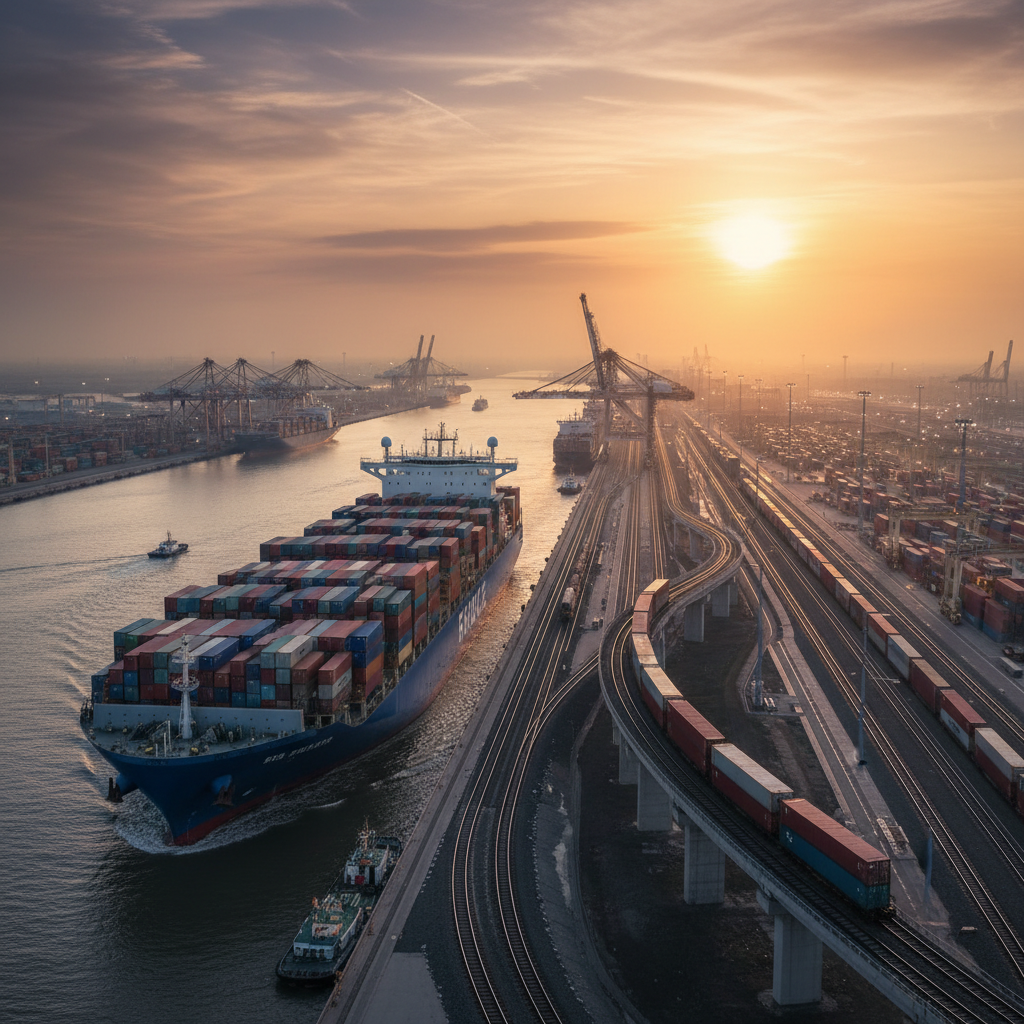
In response to this volatile environment, nations and businesses are prioritizing supply chain resilience through strategic diversification and robust infrastructure investment. The goal is to mitigate dependencies on single points of failure, whether they are specific manufacturing hubs, critical transit routes, or politically sensitive regions. A prime example of such a proactive measure is the Canadian government's commitment of up to C$254 million towards the Saint John Trade Corridor expansion. This substantial investment, channeled through the Trade Diversification Corridors Fund, is not merely about enhancing existing capacity; it represents a strategic move to strengthen alternative trade pathways and improve cargo flows through Port Saint John. By expanding trade infrastructure, Canada aims to offer a more resilient and efficient option for global cargo, reducing reliance on potentially vulnerable or congested routes elsewhere. Such investments are critical for creating redundancy and flexibility within the global logistics network, ensuring that even when traditional arteries face disruption, viable alternatives exist to maintain the flow of goods and support economic stability. This forward-looking approach is essential for building adaptive supply chains capable of weathering future geopolitical storms.
The Role of Shipment Visibility in a Volatile World
Navigating the complexities introduced by geopolitical disruptions, tariffs, and sanctions makes real-time, end-to-end shipment visibility an indispensable asset for modern supply chains. An MGS shipment-visibility control tower platform provides the critical intelligence needed to transform reactive responses into proactive strategies. In an environment where routes can change overnight, and compliance requirements evolve rapidly, having immediate access to granular data on cargo location, status, and estimated time of arrival (ETA) is paramount. Such platforms enable businesses to identify potential disruptions — whether it’s a vessel rerouting around a conflict zone, an unexpected delay at a sanctioned port, or a customs hold due to new tariff regulations — often before they escalate. This early warning capability allows for agile decision-making, facilitating rapid rerouting, mode switching, or inventory adjustments to mitigate delays and avoid costly penalties. By consolidating data from multiple sources, an MGS platform offers a singular, comprehensive view, empowering supply chain managers to maintain control, ensure compliance, and minimize the financial and operational impact of geopolitical volatility on their cargo movements.
Consequences for Global Trade and Transport
The cumulative effect of geopolitical disruptions is a fundamental reshaping of global trade and transport dynamics. We are witnessing a systemic increase in the cost of moving goods, driven by longer routes, higher fuel consumption, elevated insurance premiums, and the complexities of tariff and sanction compliance. Predictability, a cornerstone of efficient logistics, has significantly diminished, leading to longer and more variable transit times that challenge traditional just-in-time inventory models. This uncertainty compels businesses to reconsider their inventory strategies, often increasing safety stock levels, which ties up capital and adds to warehousing costs. Furthermore, the geopolitical landscape is accelerating a trend towards supply chain regionalization, or "friend-shoring," where companies prioritize sourcing and manufacturing within politically aligned or geographically proximate regions to reduce exposure to geopolitical risks. This shift, while enhancing resilience, can also lead to higher production costs and potentially limit access to specialized resources. Ultimately, the current environment demands a paradigm shift in supply chain management, emphasizing resilience, redundancy, and advanced technological solutions like real-time visibility platforms to navigate an increasingly fragmented and unpredictable global economy.
Source: Container News — https://container-news.com/canada-backs-saint-john-trade-corridor-expansion/