
Geopolitical Crosscurrents: Navigating Disrupted Global Cargo Flows
Geopolitical events are fundamentally reshaping the landscape of global trade and transport. From rerouted shipping lanes to restricted airspaces and escalating trade barriers, the consequences for supply chains are profound, demanding unprecedented agility and real-time visibility.
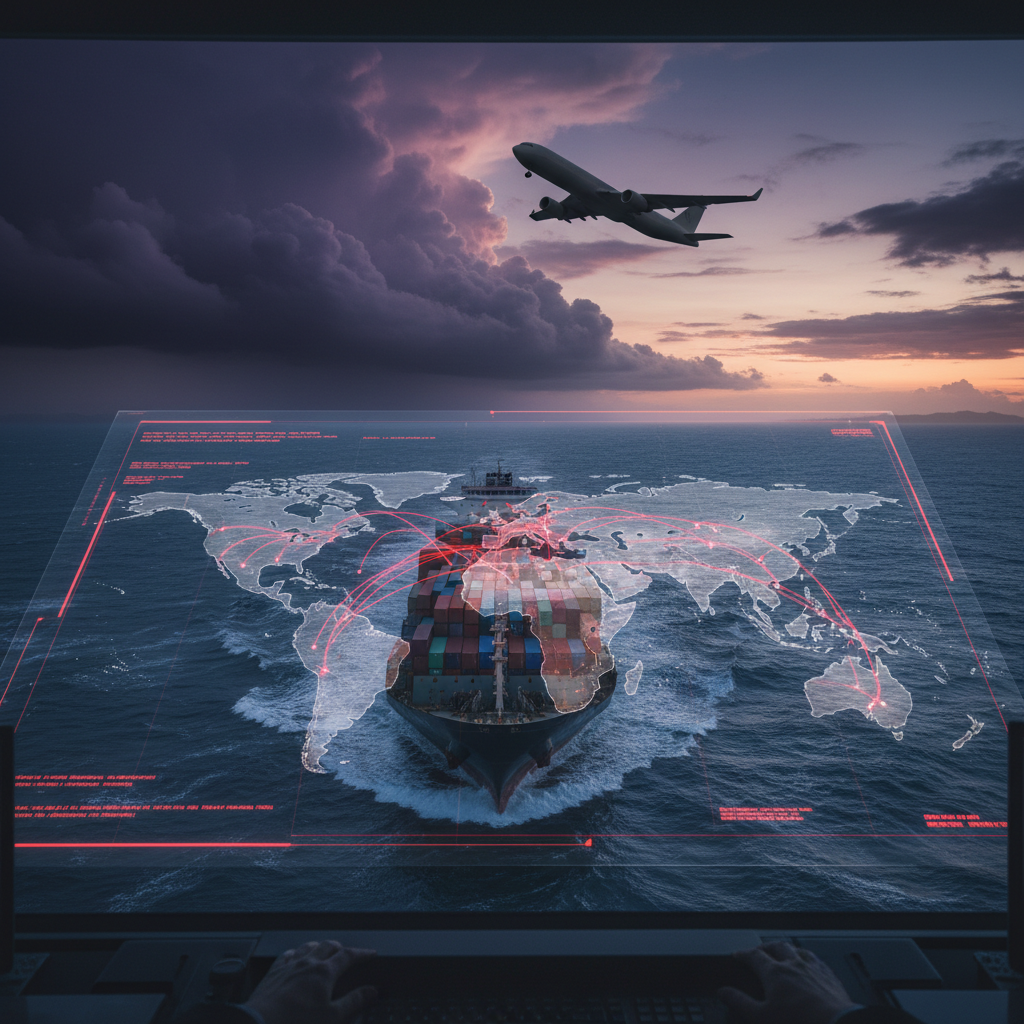
The New Normal: Geopolitical Volatility and Global Trade
The global supply chain, once optimized for efficiency and cost-effectiveness, is now operating under an unprecedented layer of geopolitical volatility. Far from being a distant political concern, these events are directly translating into tangible disruptions across cargo movement, impacting routes, airspace, waterways, tariffs, and sanctions. The very forces driving significant gains in certain sectors, such as the roughly 68% climb in shipping stocks in 2026, with crude-tanker equities leading at over 120% year-to-date, are simultaneously introducing severe operational challenges. For logistics professionals, this means a constant reassessment of risk, cost, and lead times, as traditional trade arteries become unpredictable or inaccessible. The era of predictable, open global logistics has given way to one defined by rapid change and the imperative for robust, adaptable strategies.
Redrawing Maritime Routes and Waterway Access
Maritime shipping, the backbone of global trade, is particularly susceptible to geopolitical friction. Key waterways, often chokepoints, can become areas of high risk, leading to significant route diversions. When a critical sea lane is deemed unsafe due to conflict, piracy, or political instability, vessels are forced to undertake much longer journeys. This directly translates to increased transit times, higher fuel consumption, and elevated operational costs. For instance, rerouting around entire continents adds thousands of nautical miles and weeks to a voyage, impacting inventory levels, delivery schedules, and customer commitments. Furthermore, the heightened risk in certain areas leads to soaring insurance premiums, directly passed on to shippers. These diversions create ripple effects across the entire maritime network, causing congestion at alternative ports, straining port infrastructure, and disrupting vessel schedules globally. The predictability of ocean freight has been severely eroded, necessitating dynamic planning and real-time tracking to mitigate delays and manage expectations.
Constricted Skies: Airspace Restrictions and Overflight Challenges
Air cargo, typically relied upon for its speed and reliability, faces its own set of geopolitical hurdles, primarily through airspace restrictions. When conflicts erupt or political tensions escalate, national airspaces can be abruptly closed to certain carriers or all commercial traffic. This forces airlines to reroute flights, often adding thousands of miles and several hours to journey times. The consequences are immediate and substantial: increased fuel burn, higher operational costs, and reduced capacity as aircraft are tied up for longer durations. For time-sensitive and high-value cargo, such as pharmaceuticals, electronics, or perishable goods, these delays can be critical, impacting product integrity and market availability. The resulting reduction in available air freight capacity, coupled with increased operational expenses, inevitably drives up air freight rates. Supply chain planners must contend with a more complex air logistics landscape, where optimal routes can change overnight, demanding flexible booking strategies and constant monitoring of global airspace advisories.
The Weaponization of Trade: Tariffs and Sanctions
Tariffs and sanctions represent direct geopolitical tools that profoundly disrupt cargo movement and trade flows. Sanctions, whether targeting specific entities, goods, or entire nations, create immediate and stringent barriers to trade. They can prohibit the export or import of certain commodities, block financial transactions, and restrict access to specific markets. This necessitates complex compliance checks, often leading to the re-evaluation of supplier networks and the search for alternative sourcing or sales channels. The risk of inadvertently violating sanctions can lead to severe penalties, making due diligence paramount. Tariffs, on the other hand, act as an economic barrier, increasing the landed cost of goods and making certain trade routes or products less competitive. They can trigger shifts in manufacturing locations, re-shoring efforts, or the diversification of supply bases to avoid punitive duties. Both tariffs and sanctions introduce significant administrative burdens, require specialized legal and customs expertise, and fundamentally alter the economic viability of established trade relationships, forcing businesses to continuously adapt their global trade strategies.
Broader Consequences for Global Supply Chains
The cumulative effect of these geopolitical disruptions is a profound transformation of global supply chains. The shift from direct, optimized routes to longer, more complex alternatives directly translates into extended lead times, making just-in-time inventory strategies increasingly precarious. Businesses are forced to either carry larger buffer stocks, incurring higher warehousing costs and capital tie-up, or risk stockouts and production delays. Freight costs across all modes are escalating due to increased fuel consumption, higher insurance premiums, and reduced capacity. This inflationary pressure ultimately impacts consumer prices and corporate profitability. Furthermore, the heightened regulatory complexity associated with sanctions and tariffs demands greater investment in compliance, risk management, and legal counsel. The overall predictability and resilience of supply chains are diminished, pushing companies to prioritize diversification, regionalization, and the adoption of advanced technologies to gain real-time insights into their global operations.
Navigating Uncertainty with Shipment Visibility
In this volatile environment, a robust shipment-visibility control tower like MGS becomes an indispensable asset. Real-time, end-to-end visibility across all modes of transport allows businesses to immediately identify shipments impacted by route diversions, airspace closures, or port congestion. This proactive insight enables rapid decision-making, such as rerouting cargo, adjusting inventory plans, or communicating revised delivery estimates to customers. For instance, if a vessel is forced to divert around a continent, the MGS platform can instantly update its ETA, highlight potential downstream impacts on connecting logistics, and flag any compliance risks related to new transit countries. It also aids in navigating the complexities of tariffs and sanctions by providing a consolidated view of cargo origin, destination, and transit points, facilitating compliance checks and ensuring that goods are not inadvertently routed through or to restricted areas. By aggregating data from various sources – carriers, ports, customs – the MGS control tower empowers supply chain managers to move from reactive crisis management to proactive risk mitigation, maintaining agility and resilience amidst geopolitical turbulence.
Source: Dryad Global — https://channel16.dryadglobal.com/how-portfolio-managers-use-maritime-risk-data