
Extended Peak Season: Navigating Tight Capacity Amidst AI Demand and Global Disruptions
Global freight markets are experiencing an unusually long peak season, driven by robust demand from AI and semiconductor sectors, coupled with persistent operational challenges. This analysis delves into the multifaceted impacts on global supply chains and trade, and how advanced visibility platforms can offer critical support.
How this impacts the global supply chain
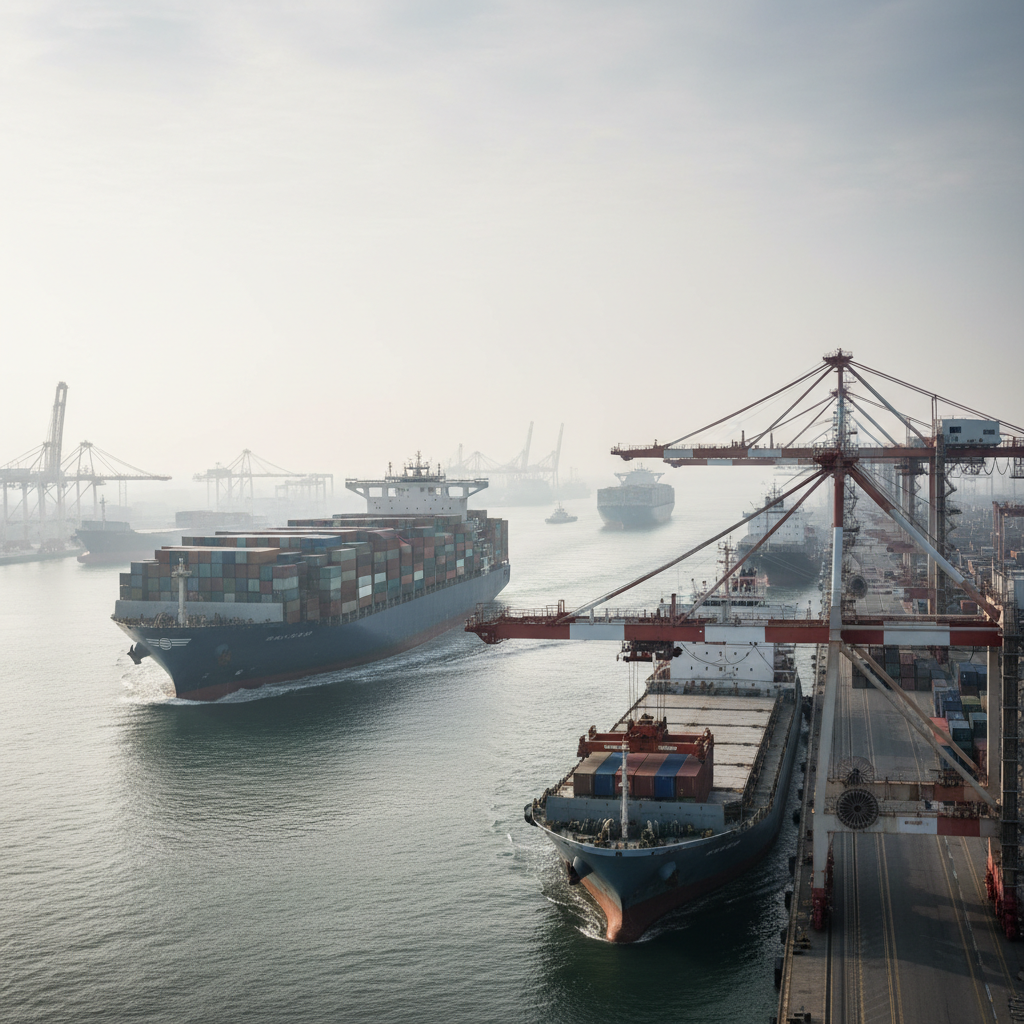
The global supply chain is currently grappling with an extended peak season, a phenomenon that significantly alters established flows, routes, capacity, and operational strategies. The confluence of high manufacturing output, reaching a three-month high, and sustained demand from high-growth sectors like AI hyperscalers and semiconductors, alongside traditional year-end retail volumes, is creating intense pressure on both air and ocean freight. This robust demand is meeting a supply side riddled with constraints.
Operational disruptions are manifold. Typhoon backlogs in key regions are causing significant delays, forcing vessels to wait or reroute, thereby extending transit times and disrupting carefully planned schedules. Simultaneously, port congestion exacerbates these delays, creating bottlenecks at critical maritime gateways and further slowing the movement of goods. The re-introduction of Suez Canal services, while seemingly a return to normalcy, is noted to be splitting freight trends across major lanes, suggesting a rebalancing of traffic that introduces new complexities and potentially uneven capacity distribution across different routes. Furthermore, planned events like Golden Week capacity cuts, coupled with short-notice capacity reductions by carriers, mean that available shipping space remains acutely tight, particularly across vital Asian trade lanes. This environment necessitates a more agile and responsive approach to logistics, as traditional lead times become unreliable and the risk of unexpected diversions or prolonged transit increases. Shippers must contend with a landscape where predictability is diminished, and the need for dynamic route optimization and contingency planning is paramount to maintain operational continuity.
Global financial impact
The extended peak season and its underlying challenges carry substantial financial implications for all stakeholders in global trade. For shippers, the most immediate impact is likely to be an increase in freight costs. The tight capacity across both air and ocean freight, driven by high demand and constrained supply, creates a seller's market where carriers can command higher rates. Beyond direct shipping costs, shippers face potential financial penalties such as demurrage and detention charges if their cargo is delayed at congested ports or terminals. Prolonged transit times also lead to increased inventory holding costs, as goods spend more time in transit or waiting, tying up capital. Crucially, delays can result in lost sales opportunities, especially for time-sensitive retail goods or components needed for manufacturing, directly impacting revenue streams and market competitiveness.
Carriers, while benefiting from higher rates, are not immune to financial pressures. Operating costs can escalate due to vessels waiting at congested ports, increased fuel consumption from longer routes or idling, and the need to manage complex schedules amidst disruptions. The "split freight trends" also suggest an uneven distribution of profitability, as some lanes may become more lucrative while others face increased operational challenges without commensurate rate increases. For global trade at large, these accumulated costs translate into higher prices for consumers, contributing to inflationary pressures. The overall unpredictability in logistics can deter investment, disrupt global manufacturing cycles, and ultimately slow economic growth by making international trade less efficient and more costly.
How MGS can help navigate today's global trade environment
In this complex and volatile global trade environment, a shipment-visibility control tower like MGS offers critical capabilities to help operators maintain control and make informed decisions. The core strength of MGS lies in providing real-time, end-to-end visibility of shipments, which is invaluable when routes are disrupted by unforeseen events such as typhoon backlogs or port congestion. Operators can track the exact location and status of their goods, even if a vessel is rerouted due to Suez services returning or delayed at a bottlenecked port.
This enhanced visibility empowers proactive decision-making. Instead of reacting to delays after they occur, MGS allows logistics teams to anticipate potential issues. For instance, if a vessel is seen approaching a known congested port or is caught in a weather-related delay, operators can pre-emptively adjust downstream logistics, inform customers of revised delivery windows, or explore alternative transport options for critical cargo. By consolidating data from various sources, MGS provides a single, unified view of the entire supply chain, highlighting shipments at risk due to tight capacity on specific Asian lanes or scheduled Golden Week cuts. This capability helps mitigate financial risks associated with delays, such as avoiding costly expedited shipping at the last minute or reducing potential demurrage charges. Ultimately, MGS transforms raw data into actionable insights, enabling businesses to navigate the current extended peak season with greater resilience and operational efficiency.
Demand–supply analysis & improvement
The current global freight landscape is characterized by a significant imbalance between robust demand and constrained supply, driving the extended peak season. On the demand side, the market is experiencing a powerful surge. Global manufacturing output has reached a three-month high, indicating strong industrial activity. This foundational demand is amplified by specific high-value sectors: AI hyperscalers and semiconductor industries are fueling substantial air and ocean volumes, reflecting ongoing technological expansion and investment. Additionally, the perennial year-end retail demand further contributes to the overall pressure on logistics networks.
Conversely, the supply side is under severe strain from multiple factors. Natural phenomena like typhoon backlogs create immediate and cascading disruptions, delaying vessel movements and cargo processing. Human-induced constraints, such as Golden Week capacity cuts, intentionally reduce available space during a period of high demand. Furthermore, systemic issues like port congestion, where vessels face prolonged waiting times, directly reduce the effective capacity of the global shipping fleet. Short-notice capacity cuts by carriers further restrict options, particularly on key Asian lanes. The re-introduction of Suez services, while offering alternative routes, also contributes to a "splitting" of freight trends, meaning capacity might not be evenly distributed or optimized across all lanes.
To improve this dynamic, businesses can focus on several levers. Enhancing supply chain resilience through diversified sourcing and routing strategies can mitigate the impact of localized disruptions like port congestion or weather events. Investing in predictive analytics, often powered by platforms like MGS, can help forecast potential bottlenecks and capacity shortages, enabling proactive adjustments to shipping plans. Furthermore, fostering stronger, more flexible relationships with carriers and 3PLs can provide access to alternative capacity during periods of tight supply. Strategically building buffer inventory for critical components or finished goods can also absorb the shocks of extended transit times, reducing the immediate impact of supply chain delays on production or sales.
Source: DC Velocity — https://www.dcvelocity.com/supply-chain/other-services/global-logistics/peak-season-runs-long-as-ai-demand-and-port-congestion-keep-capacity-tight