
Escalating Maritime Incidents in Hormuz: A Supply Chain Alert
Recent reports of three additional tanker attacks in the Strait of Hormuz highlight growing geopolitical uncertainty, posing significant risks to global energy flows and demanding enhanced supply chain visibility and strategic mitigation from shippers.
The Evolving Security Landscape in the Strait of Hormuz
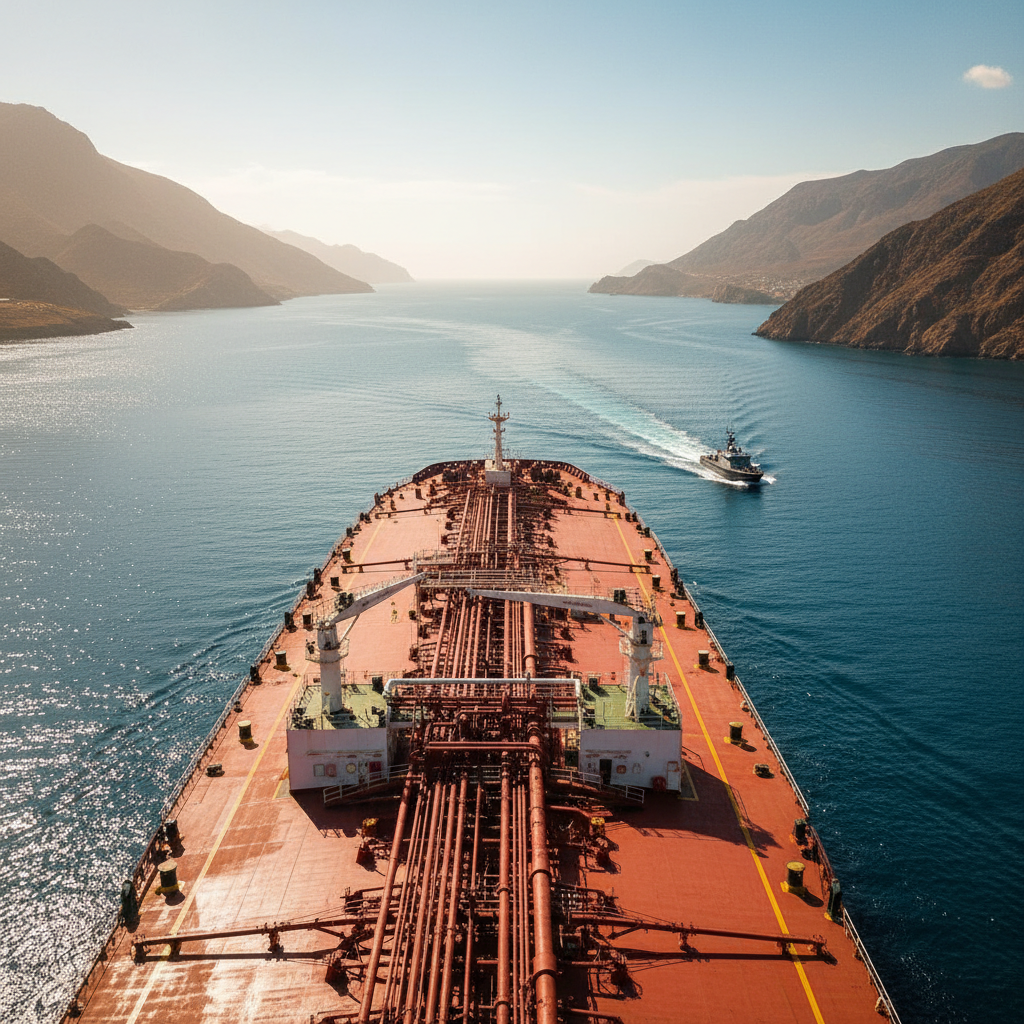
The global supply chain landscape is navigating heightened volatility, underscored by recent disclosures from UK Maritime Trade Operations. These reports have brought to light three additional tanker attacks within the critical Strait of Hormuz. These incidents, due to their delayed surfacing, amplify an already palpable sense of growing uncertainty across maritime trade routes. The Strait of Hormuz, an indispensable conduit for a substantial portion of the world's seaborne oil and liquefied natural gas (LNG) shipments, holds immense strategic importance. Any disruption, perceived or actual, sends immediate ripples through global energy markets and, consequently, across all sectors reliant on stable energy prices and predictable transit times. The nature of these "delayed reports" itself contributes to instability, eroding confidence and complicating risk assessment for maritime operators and cargo owners. This environment of escalating, albeit belatedly reported, incidents necessitates a proactive and informed approach to supply chain management, embracing predictive analytics and robust contingency planning. The sheer volume of traffic through this choke point, combined with its geopolitical sensitivities, means that even minor security concerns can have disproportionately large impacts on global logistics networks, demanding constant vigilance and adaptability from all stakeholders.
Impact on Key Shipping Lanes and Modes
The immediate and profound impact of these security incidents is felt most acutely within the maritime sector, particularly for vessels transiting the Strait of Hormuz. Tankers, as carriers of high-value and often volatile commodities, face the most direct threat. The "three more tanker attacks" directly translate into increased operational risks for crude oil and LNG carriers, which form the backbone of energy supply to numerous economies worldwide. This escalating risk profile inevitably leads to a re-evaluation of shipping costs. Insurance premiums for vessels operating in the region are likely to surge, reflecting heightened danger. Furthermore, shipowners may introduce war risk surcharges, directly impacting freight rates for shippers. The "growing uncertainty" can compel carriers to consider alternative, longer routes to bypass the Strait entirely, such as sailing around the Arabian Peninsula. While this might mitigate security risks, it significantly extends transit times, increases fuel consumption, and adds considerable operational expenses. Such rerouting would strain vessel availability on other lanes and could lead to congestion in alternative ports. The knock-on effect extends to port facilities at both ends of the Strait, disrupting operations and creating backlogs for onward transportation modes like pipelines, rail, and trucking networks. The interconnectedness of global trade means that even a localized maritime incident in a critical choke point can have far-reaching consequences.
Supply Chain Vulnerabilities and Risks
The revelation of "three more tanker attacks" and the "growing uncertainty" they engender expose inherent vulnerabilities within global supply chains, particularly those heavily reliant on single points of failure like the Strait of Hormuz. The primary risk is immediate disruption to the flow of critical commodities, predominantly energy. Any interruption, whether due to direct attack, increased security measures, or precautionary rerouting, can lead to significant delivery delays. For industries operating on just-in-time (JIT) principles, even minor delays can halt production lines, leading to lost revenue and contractual penalties. The uncertainty surrounding future incidents makes accurate forecasting and inventory management exceedingly difficult. Shippers face a dilemma: maintain higher safety stock levels, incurring increased warehousing costs, or risk stockouts and production stoppages. Beyond physical delays, the psychological impact of "growing uncertainty" on market sentiment is profound. Energy prices can become highly volatile, influenced by speculation and fear. This volatility directly affects manufacturing costs for a vast array of goods. Furthermore, geopolitical instability hinted at by these incidents can deter investment, affecting long-term supply chain planning. The "delayed reports" themselves introduce another layer of risk, preventing real-time assessment and response. Without immediate, accurate information, supply chain managers make critical decisions based on incomplete data, exacerbating potential missteps. The cumulative effect is a fragile supply chain, susceptible to cascading failures.
Strategic Responses for Shippers
In an environment characterized by "growing uncertainty" and the threat of "three more tanker attacks" in vital shipping lanes, shippers must adopt a multi-faceted and proactive strategy. The cornerstone is enhanced situational awareness, moving beyond traditional, static risk assessments to embrace dynamic, real-time intelligence. This includes closely monitoring geopolitical developments in regions like the Strait of Hormuz and understanding their potential implications for maritime security. One key response involves diversifying transportation strategies. Exploring alternative sourcing regions or establishing multiple supplier relationships can reduce dependence on a single, vulnerable supply lane. For critical components, shippers might consider pre-positioning inventory in strategically located hubs outside immediate risk zones, acting as a buffer against sudden disruptions. Furthermore, strengthening contractual agreements with carriers and logistics providers is crucial. These should clearly define responsibilities, contingency plans, and compensation mechanisms for security-related delays or diversions. Engaging in scenario planning, where teams simulate various disruption scenarios, allows organizations to develop pre-approved response protocols, reducing decision-making time during actual crises. Building robust communication channels with all supply chain partners ensures information flows freely and transparently, enabling collaborative problem-solving and managing expectations. Ultimately, the goal is to build resilience, transforming potential vulnerabilities into opportunities for strategic advantage through agility and informed decision-making.
Leveraging MGS for Enhanced Resilience
In the face of "growing uncertainty" and the specific threat highlighted by "three more tanker attacks" in the Strait of Hormuz, a sophisticated shipment-visibility control tower like MGS becomes an indispensable tool for supply chain resilience. MGS provides the critical, real-time intelligence necessary for shippers to navigate such complex and volatile environments. Its core capability lies in offering end-to-end visibility across the entire transportation network. For maritime operations, this means precise, real-time tracking of every vessel, including tankers, as they approach and transit high-risk areas like the Strait of Hormuz. An MGS platform can integrate data from various sources, including AIS feeds, port schedules, and, crucially, security alerts from organizations like UK Maritime Trade Operations. This consolidated view allows supply chain analysts to immediately identify if a vessel carrying critical cargo is entering a declared risk zone or if its planned route is deviating due to security concerns. Automated alerts can be configured to notify relevant personnel the moment a vessel experiences an unscheduled stop, a change in speed, or a deviation from its planned course within a sensitive area. Beyond mere tracking, MGS enables proactive risk management. By overlaying real-time vessel positions with geopolitical intelligence and incident reports, shippers can assess the immediate impact on their specific shipments. If a disruption occurs, the platform can quickly model alternative routes, calculate revised estimated times of arrival (ETAs), and identify potential bottlenecks at alternative ports. This data-driven approach supports rapid decision-making, allowing shippers to communicate proactively with customers, reallocate resources, or activate contingency plans with minimal delay. In an era where "delayed reports" can obscure the true picture, MGS provides a clearer, more immediate operational reality, transforming raw data into actionable insights and empowering shippers to mitigate the financial and reputational damage caused by unforeseen geopolitical disruptions.
Source: gCaptain — https://gcaptain.com/three-more-tanker-attacks-surface-in-delayed-hormuz-reports/