
DP World's Tartous Investment: Reshaping Eastern Mediterranean Trade Dynamics
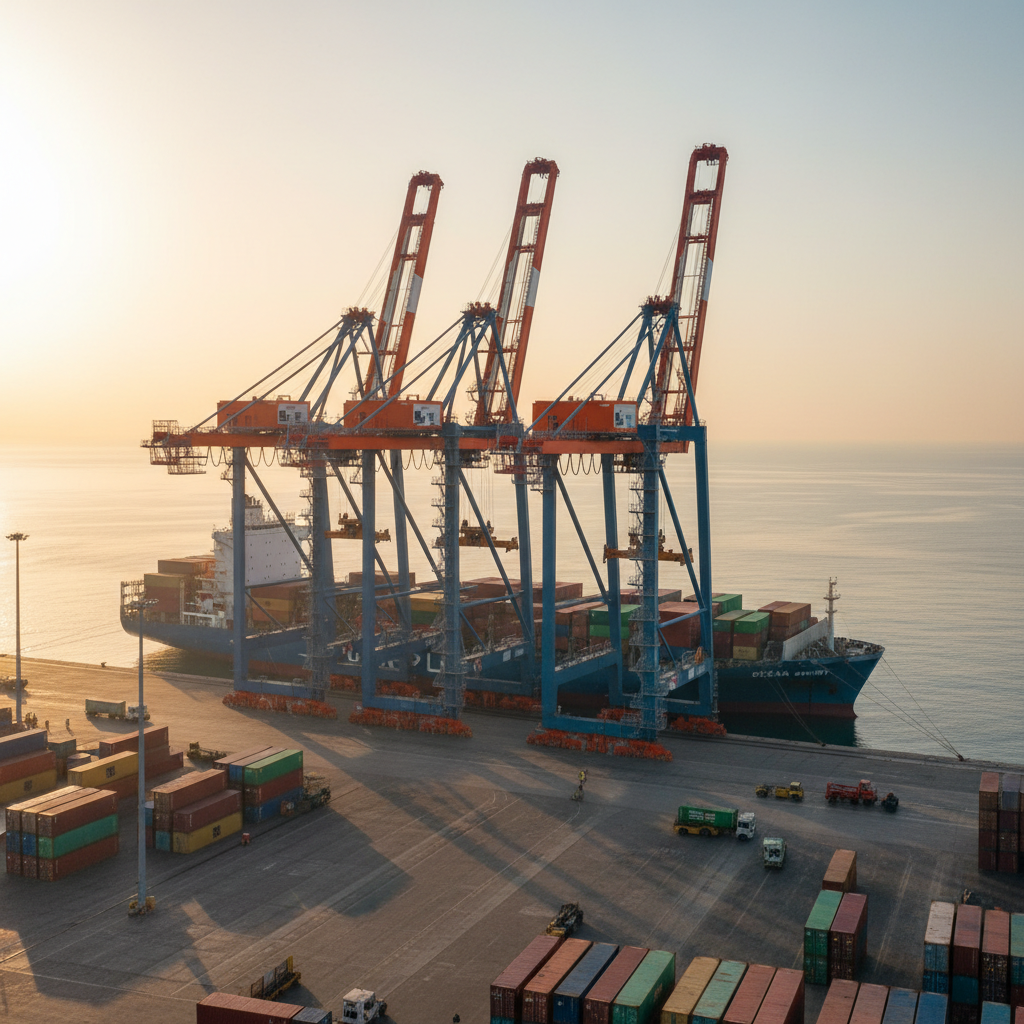
DP World's significant $800m investment in Syria's Port of Tartous, marked by the delivery of new mobile harbor cranes, is set to dramatically increase cargo-handling capacity by 40%. This brief analyzes the implications for global supply chains, trade finance, and how advanced visibility platforms like MGS can help navigate this evolving landscape.
How this impacts the global supply chain
DP World's substantial US$800m investment in modernizing the Port of Tartous, highlighted by the recent delivery of three mobile harbor cranes, signals a significant shift in the Eastern Mediterranean's logistics landscape. This development is poised to have multifaceted impacts on global supply chain flows, routes, capacity, and operations.
Firstly, the sheer increase in cargo-handling capacity, projected at approximately 40%, directly addresses a critical aspect of supply chain efficiency: throughput. A port that can process significantly more cargo means less congestion, reduced waiting times for vessels, and a greater ability to absorb peak demand. This enhanced capacity makes Tartous a more attractive and viable option for international trade, potentially drawing traffic that might otherwise route through more congested or distant ports in the region.
Secondly, the promise of faster vessel turnaround times is a game-changer for shipping schedules and overall logistics planning. Reduced time spent in port translates to more efficient utilization of vessel assets, allowing carriers to maintain tighter schedules and potentially increase the frequency of their services. This can lead to more reliable supply chains, as unexpected delays at port are a common source of disruption.
Thirdly, the ability to handle a broader range of cargo types—containerized, bulk, and breakbulk—enhances the port's versatility. This diversification allows Tartous to serve a wider array of industries and commodities, from manufactured goods in containers to raw materials or project cargo. This flexibility can consolidate trade flows, potentially reducing the need for multiple transshipment points and simplifying logistics for shippers with diverse product portfolios.
Geographically, the upgrade positions Tartous as a strengthened gateway to Syria and potentially as a more robust hub for the wider Levant region. While the primary focus is on strengthening Syria's trade infrastructure, improved efficiency and capacity can indirectly benefit neighboring landlocked countries by offering a more competitive and reliable maritime access point. This could subtly alter established trade routes, offering new options and potentially fostering regional economic integration. The long-term nature of DP World's 30-year concession agreement underscores a strategic commitment to developing this node, suggesting a sustained impact on regional and potentially broader global trade patterns as supply chain operators look for optimized routes and reliable partners.
Global financial impact
The modernization of the Port of Tartous, backed by an US$800m investment, carries significant financial and cost implications for various stakeholders across the global trade ecosystem. These impacts will be felt by shippers, carriers, and the broader economic landscape of trade.
For shippers, the primary financial benefit stems from increased efficiency and reliability. Faster vessel turnaround times and a 40% boost in cargo-handling capacity mean that goods spend less time in transit and at port. This reduction in dwell time can lead to lower demurrage and detention charges, which are often significant costs for shippers. Furthermore, improved predictability in transit times allows for better inventory management, potentially reducing the need for costly safety stock and optimizing working capital. Should the port become more competitive, it could also lead to more favorable freight rates or port service charges, ultimately lowering the landed cost of goods for importers and making exports more competitive.
Carriers stand to gain from enhanced operational efficiency. With vessels spending less time in port, they can complete more voyages within a given period, thereby increasing asset utilization and revenue potential. The ability to handle a wider array of cargo types (containerized, bulk, and breakbulk) means carriers can offer more comprehensive services, potentially attracting a broader client base and diversifying their revenue streams. The long-term nature of the 30-year concession agreement provides a stable and predictable operating environment, which is crucial for carriers making long-term strategic decisions about service routes and fleet deployment. This stability can also reduce operational risks and associated costs.
At the macro level, for trade at large, the US$800m investment represents a significant commitment to bolstering regional trade infrastructure. This can stimulate economic activity by facilitating smoother and more cost-effective movement of goods. Increased trade efficiency can lower the overall cost of goods for consumers and enhance the competitiveness of local industries exporting their products. The development could also attract further foreign direct investment into the region, as improved logistics infrastructure often acts as a catalyst for economic growth. Over the 30-year concession period, this sustained investment and operational improvement could significantly reshape the economic dynamics of the Eastern Mediterranean, fostering new trade partnerships and enhancing the region's role in global supply chains.
How MGS can help navigate today's global trade environment
In an environment where a significant port like Tartous undergoes a substantial US$800m upgrade, leading to a 40% increase in capacity and faster vessel turnaround, a shipment-visibility control tower platform like MGS becomes an indispensable tool for operators. The dynamic changes introduced by such an investment necessitate advanced capabilities to monitor, adapt, and optimize logistics operations.
Firstly, MGS provides real-time, end-to-end visibility of cargo movement. As new cranes come online and port operations accelerate, shippers and carriers need to track their goods precisely through this upgraded node. MGS can integrate data from various sources—vessel AIS, port systems, customs, and inland logistics providers—to offer a unified view of every shipment's status as it moves through Tartous, from vessel arrival to discharge and onward land transport. This is crucial for verifying the promised efficiencies and managing expectations.
Secondly, the platform's predictive analytics capabilities are vital for proactive decision-making. With faster turnaround times, the windows for action become shorter. MGS can analyze historical and real-time data to forecast potential delays or, conversely, identify opportunities for expedited processing. For instance, if a vessel is expected to clear port significantly faster, MGS can alert downstream logistics partners to prepare for earlier cargo pickup, optimizing inland transportation and reducing potential bottlenecks at the port gates.
Thirdly, MGS excels in exception management. While the goal of the upgrade is smoother operations, unforeseen issues can still arise—a crane malfunction, customs clearance delays, or unexpected weather. MGS can automatically flag these exceptions, providing immediate alerts to relevant stakeholders. This allows operators to respond swiftly, mitigating potential disruptions and minimizing their financial impact, rather than reacting to problems after they've escalated.
Finally, MGS enables performance monitoring and optimization. By collecting data on vessel turnaround times, cargo handling rates, and overall port efficiency post-upgrade, operators can benchmark the Port of Tartous's performance against their expectations and other regional ports. This data-driven insight helps in evaluating carrier performance, optimizing routing decisions, and negotiating future contracts, ensuring that the benefits of the US$800m investment are fully leveraged within their supply chain strategies. This ensures that the investment in infrastructure translates into tangible operational improvements for MGS users.
Demand–supply analysis & improvement
The US$800m investment by DP World in the Port of Tartous, culminating in the delivery of new mobile harbor cranes and a projected 40% increase in cargo-handling capacity, offers a clear illustration of demand-supply dynamics within the logistics infrastructure sector. The very act of such a substantial investment implies an underlying demand for enhanced trade infrastructure in the region, or at least a strategic foresight anticipating future demand.
On the demand side, the initiative to "strengthen the country's trade infrastructure" suggests that existing port capabilities were either insufficient to meet current trade volumes or were not adequately prepared for future economic growth. An inefficient or capacity-constrained port can act as a bottleneck, hindering both imports essential for domestic consumption and exports vital for economic development. The investment is a direct response to this perceived or actual deficit in efficient port services, indicating a demand for faster, more reliable, and higher-capacity cargo handling.
On the supply side, the delivery of three mobile harbor cranes and the overall US$800m modernization program represent a significant increase in the supply of high-quality port services. This enhancement in supply directly addresses the identified demand for improved cargo handling, offering state-of-the-art equipment designed to process containerized, bulk, and breakbulk cargo more efficiently. The 40% increase in capacity is a quantifiable expansion of the supply of port throughput.
Several improvement levers are evident in this development. Firstly, direct infrastructure investment, as demonstrated by the US$800m capital injection, is a primary lever for improving supply chain capabilities. Secondly, the adoption of modern technology, such as the mobile harbor cranes, significantly enhances operational efficiency and versatility. These cranes are designed for speed and flexibility, directly contributing to faster vessel turnaround times. Thirdly, the long-term nature of the 30-year concession agreement acts as a critical lever for sustained improvement and stability. Such a long-term commitment provides the necessary framework for continuous investment, maintenance, and operational best practices, ensuring that the initial capacity increase is not a one-off but part of an ongoing strategy to meet evolving demand.
Source: Parcel and Postal Technology International — https://www.parcelandpostaltechnologyinternational.com/news/logistics/dp-world-delivers-cranes-in-800m-port-of-tartous-upgrade.html