
DHL's €3 Billion Bet: Unpacking the New Energy Logistics Revolution and its Supply Chain Impact
DHL's ambitious projection for the new energy logistics sector signals a significant shift in global supply chains. This brief explores the profound impacts on routes, capacity, and financial dynamics, and how advanced visibility platforms like MGS are crucial for navigating this evolving landscape driven by diversified energy demand and geopolitical shifts.
How this impacts the global supply chain
The projected surge in the new energy logistics market, from €600 million to €3 billion for a major player like DHL by 2030, signals a profound reorientation of global supply chains. This growth, propelled by escalating demand for diversified energy sources and decarbonization targets, will reshape logistics operations worldwide.
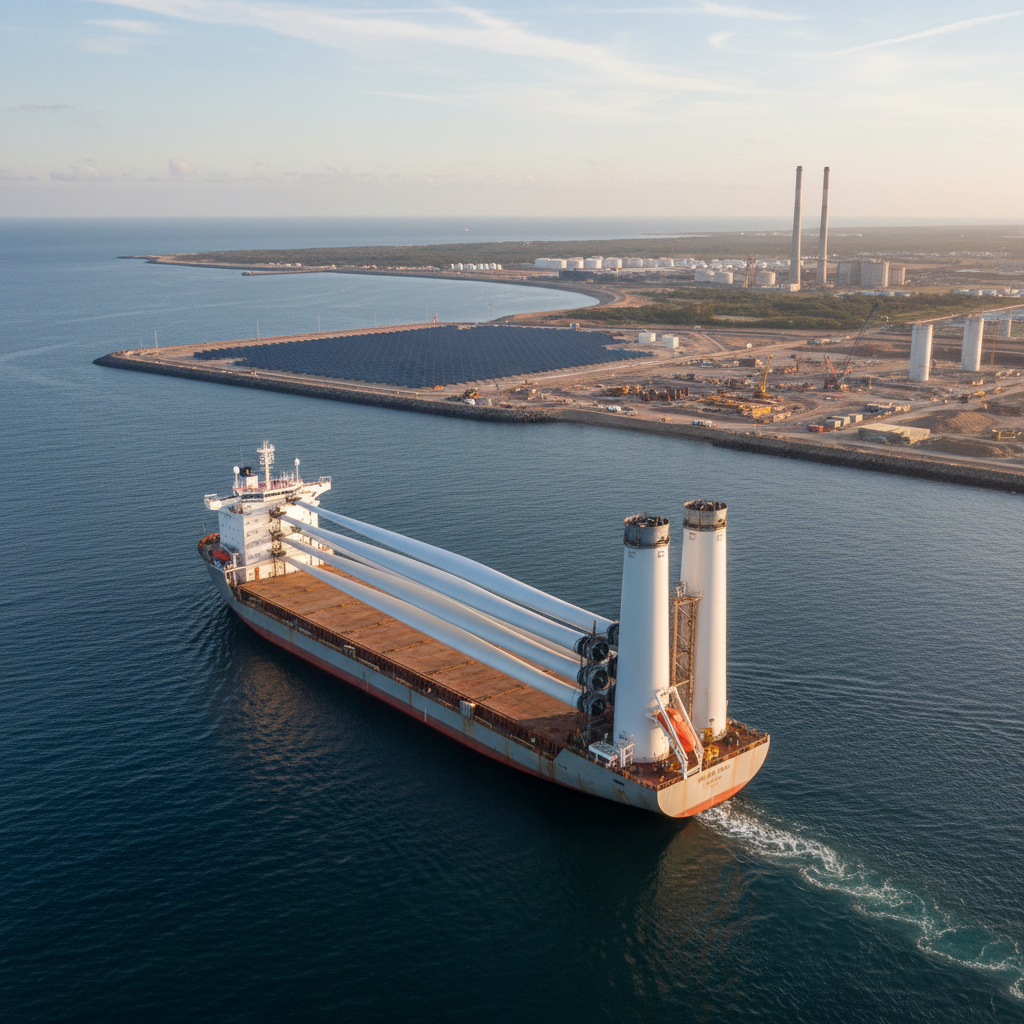
Supply-chain flows are shifting dramatically. Instead of traditional bulk fossil fuel movements, the focus is now on complex, project-based logistics for oversized wind turbine components, solar panels, battery modules, and hydrogen infrastructure. These high-value, often fragile items demand meticulous handling, originating from diverse manufacturing hubs and destined for remote installation sites globally, requiring intricate coordination.
Routes are becoming less standardized. "Project cargo" for new energy necessitates specialized heavy-lift vessels, barges, rail, and multi-axle road transporters. New routes must be engineered, considering clearances and port capabilities. Geopolitical conflicts, explicitly influencing market growth, further complicate planning, potentially forcing diversions and creating new corridors for energy security, moving away from traditional shipping lanes.
Capacity within specialized logistics faces significant strain. The rapid demand surge will intensify competition for heavy-lift ships, cranes, and oversized trucking equipment – all finite resources requiring substantial lead times and investment. This could lead to bottlenecks, particularly in regions with developing renewable infrastructure, and increase demand for specialized warehousing.
Operations are growing in complexity. Coordinating multiple, interdependent, large-scale shipments for a single energy project demands sophisticated planning, real-time tracking, and precise scheduling. Delays in one component can halt an entire construction phase, incurring substantial penalties. Decarbonization goals also push for greener transport modes, adding another layer of operational complexity and innovation.
Global financial impact
The anticipated €3 billion new energy logistics market will have significant financial implications for all participants in global trade. DHL's ambitious growth forecast underscores the substantial investment and revenue opportunities within this sector.
For shippers, primarily new energy project developers and manufacturers, logistics costs are likely to be higher due to specialized requirements for oversized, high-value cargo and project-specific transport solutions. The influence of global conflicts on market growth also suggests a premium on secure and reliable supply chains. However, efficient logistics can also be a significant cost-saving lever, preventing costly project overruns and accelerating time-to-market. The ability to "pivot during times of uncertainty" directly impacts cost control by enabling rapid adaptation to unforeseen disruptions, mitigating financial penalties.
Carriers stand to gain substantially, with DHL's projected five-fold revenue increase illustrating lucrative opportunities. This growth incentivizes significant investment in specialized assets, including heavy-lift fleets and advanced handling equipment. While capital-intensive, such investments promise attractive returns given the specialized services. This expansion will likely foster increased competition, driving innovation and specialization within the logistics sector.
For trade at large, the financial implications are systemic. The shift towards diversified energy sources will reconfigure global trade flows, increasing trade in manufactured components for renewables, raw materials for batteries, and related infrastructure. This generates new revenue streams for manufacturing nations and logistics hubs. The overall cost of the global energy transition, including its logistics component, will ultimately influence energy prices, but the long-term economic benefits of energy independence and reduced carbon emissions are expected to outweigh these initial costs. Decarbonization targets will also increasingly shape logistics decisions and associated financial incentives or penalties.
How MGS can help navigate today's global trade environment
In the rapidly evolving new energy logistics market, characterized by complex project cargo and geopolitical volatility, a sophisticated shipment-visibility control tower like MGS is an indispensable tool for operators. Its capabilities directly address the challenges and opportunities within this growing €3 billion sector.
MGS offers unparalleled, real-time, end-to-end visibility for the intricate flows and routes of new energy components. Tracking oversized, high-value, and often fragile cargo across non-standard routes requires precise knowledge of every component's location and status. MGS consolidates data from multiple carriers and transport modes into a single interface, enabling operators to track heavy-lift vessels, specialized trucks, or rail cars. This comprehensive view is critical for coordinating complex project schedules and ensuring timely delivery, mitigating costly delays.
Facing global conflicts and uncertainty, MGS significantly enhances risk mitigation. By providing predictive analytics and early warnings, the platform identifies potential disruptions like port congestion or geopolitical hotspots. This proactive insight enables rapid decision-making—rerouting shipments, adjusting schedules, or communicating delays—directly facilitating the ability to "pivot during times of uncertainty." This transforms reactive problem-solving into proactive supply chain management, safeguarding against financial penalties and project overruns.
Furthermore, MGS boosts operational efficiency crucial for managing complex, deadline-driven energy projects. Optimizing inventory at project sites and ensuring just-in-time delivery of components reduce storage costs and accelerate construction. MGS provides accurate estimated times of arrival (ETAs) and highlights exceptions, vital for high-value assets where minor delays have substantial financial consequences. By streamlining communication and offering a single source of truth, MGS improves overall supply chain performance, aligning with the industry's drive for efficiency and cost-effectiveness.
Demand–supply analysis & improvement
The projected five-fold growth in DHL's new energy logistics business, reaching €3 billion by 2030, highlights a significant imbalance in the demand-supply dynamics of this critical sector. This trajectory is fueled by "growing global demand for diversified energy sources" and stringent "decarbonization targets."
On the demand side, the impetus is robust and accelerating. Global energy needs, coupled with geopolitical events like "global conflicts" emphasizing energy independence, drive massive investments in renewable energy projects. These projects require vast arrays of specialized, often oversized and high-value, components to be transported and installed, creating a sustained and rapidly expanding demand for sophisticated project logistics services.
However, the supply side faces considerable challenges. The rapid acceleration of demand means existing global logistics infrastructure and specialized capacity are often unprepared. The supply of heavy-lift vessels, specialized rail cars, multi-axle trucks, and skilled personnel for project cargo is finite. While major players like DHL are committing substantial resources, the overall logistics ecosystem needs immense investment to match this demand, creating potential bottlenecks and driving up costs.
To ensure efficient growth and bridge this gap, several concrete improvement levers are essential:
- Strategic Investment in Specialized Assets: Logistics providers must proactively expand their fleets of heavy-lift and oversized cargo equipment.
- Enhanced Digitalization and Visibility: Tools like MGS are critical for optimizing existing capacity, improving planning, and reacting swiftly to disruptions.
- Collaborative Planning: Shippers and carriers need deeper, earlier collaboration, integrating logistics planning into initial project stages.
- Multimodal Solutions: Developing integrated sea, rail, and road solutions leverages strengths, increases flexibility.
- Workforce Development: Investing in training for project cargo logistics professionals is crucial.
ROI-focused resilience
Building resilience in new energy logistics is a strategic investment with a clear return, particularly given the "importance of being able to pivot during times of uncertainty" and the market's exposure to "global conflicts." These investments mitigate substantial quantifiable risks.
Investments in resilience include adopting advanced shipment visibility platforms like MGS, diversifying carrier partnerships, pre-qualifying alternative transport routes, and establishing strategic buffer stocks for critical components. Each requires upfront capital and ongoing commitment.
These investments protect against significant quantified risks:
- Project Delays and Cost Overruns: A single week of stalled construction on a large energy project due to a missing component can cost millions in penalties and idle resources. MGS, by providing early warnings, enables proactive intervention, directly preventing or minimizing these substantial financial losses.
- Loss of Revenue and Market Share: In this rapidly expanding market, inability to reliably deliver projects on time leads to missed opportunities and competitive disadvantage, impacting projected revenue growth like DHL's €3 billion target.
- Increased Insurance Premiums and Damage Costs: High-value, oversized components are prone to damage. Poor visibility increases incident risk, leading to higher insurance premiums and repair costs. Resilient practices, supported by real-time tracking, reduce these expenses.
- Reputational Damage and Regulatory Penalties: Failure to meet project deadlines, especially those tied to decarbonization targets, can harm reputation and incur regulatory fines.
The Return on Investment (ROI) for resilience is measured by avoiding these considerable costs and preserving revenue. Preventing a major project delay, potentially saving millions of euros, can easily justify the multi-year investment in a visibility platform or alternative logistics pathways. The ability to "pivot" effectively means maintaining project timelines and financial stability, ensuring that investment in the new energy logistics market translates into profitable, sustainable growth rather than being eroded by avoidable disruptions. Resilience is therefore a strategic enabler for capitalizing on the €3 billion opportunity.
Source: Parcel and Postal Technology International — https://www.parcelandpostaltechnologyinternational.com/podcast/episode-four-is-the-new-energy-logistics-market-really-worth-e3-billion.html