
Constanta Port Grain Exports Rise by Double Digits as Black Sea Trade Routes Shift
Geopolitical events are fundamentally reshaping global cargo movement, forcing shippers and forwarders to adapt to new routes, extended transit times, and elevated costs. The double-digit increase in grain exports through Romania's Constanta Port highlights a broader trend of trade flow realignment driven by disruptions in traditional waterways and airspaces.
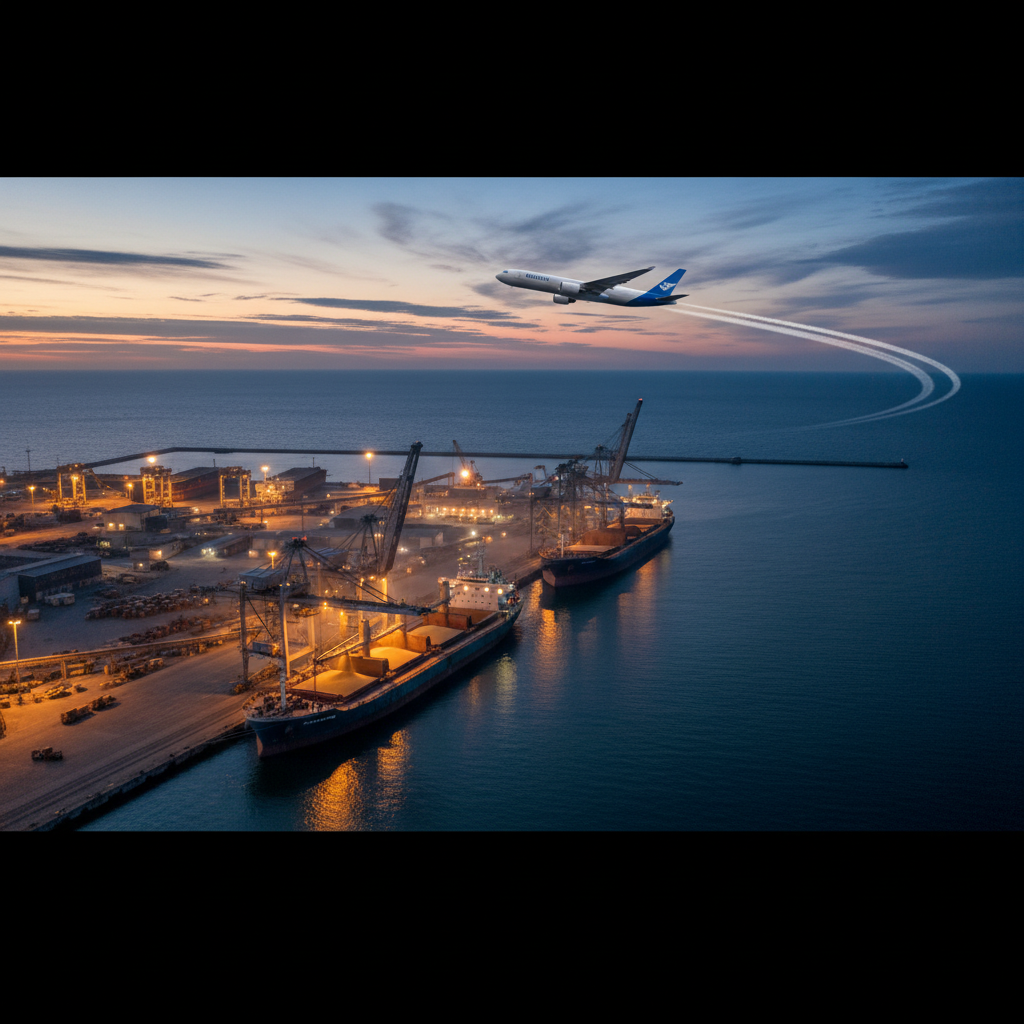
Constanta Port Grain Exports Rise by Double Digits
The double-digit increase in grain exports through Romania's Black Sea port of Constanta in the first 10 months of the year signals a significant realignment of trade flows in response to ongoing geopolitical disruptions. This surge, despite a good harvest, points to Constanta's growing role as an alternative gateway for agricultural commodities that previously relied on more direct, but now compromised, Black Sea routes. The operational consequence for the port is increased pressure on its infrastructure, including berths, storage facilities, and rail/road connections, potentially leading to congestion and slower turnaround times for vessels. For shippers, this means longer inland transport distances to reach Constanta, adding to logistics costs and transit durations. Shipping lines face altered vessel deployment strategies, potentially redeploying tonnage to service this new demand, which can impact capacity and rates on other routes. Furthermore, the perceived risk in the broader Black Sea region, even for ports like Constanta, can lead to elevated insurance premiums, directly increasing the cost of freight for all cargo moving through the area.
Airspace Closures Extend Transit Times and Fuel Costs
Beyond maritime routes, geopolitical tensions have led to extensive airspace closures, particularly across Eastern Europe and parts of the Middle East. These restrictions compel air cargo carriers to reroute flights, often adding thousands of kilometers to journeys. The direct consequences include significantly extended flight times, increased fuel consumption, and higher operational costs for airlines. For example, flights between Asia and Europe that once traversed direct routes now often detour south, adding hours to transit and requiring more fuel stops. This translates into higher air freight rates for shippers, impacting the cost-effectiveness of time-sensitive goods. The reduced efficiency of air cargo operations also means a potential decrease in available capacity on certain lanes, as aircraft spend more time in the air for the same payload, leading to tighter booking windows and less flexibility for urgent shipments. Supply chain managers must factor these extended lead times into inventory planning and consider alternative modes for less critical cargo.
Red Sea Diversions Strain Capacity and Elevate Ocean Freight Rates
Disruptions in crucial maritime chokepoints, exemplified by recent events in the Red Sea, have forced a widespread rerouting of container and tanker traffic. Vessels traditionally transiting the Suez Canal are now frequently diverting around the Cape of Good Hope, adding approximately 10-14 days to transit times between Asia and Europe. This extended journey consumes more fuel, increases operational costs for shipping lines, and effectively removes vessel capacity from circulation due to longer round trips. The immediate impact on shippers is a sharp increase in ocean freight rates, particularly for Asia-Europe services, as carriers pass on higher fuel and insurance costs. Furthermore, the longer transit times disrupt finely tuned inventory management systems, leading to potential stockouts or increased safety stock requirements, tying up working capital. The rerouting also strains port infrastructure at alternative hubs, creating congestion and further delays as vessels arrive off-schedule and in larger batches.
Sanctions and Tariffs Reshape Global Trade Flows
The imposition of sanctions and tariffs by various nations has fundamentally reshaped global trade flows, compelling businesses to re-evaluate their sourcing and distribution strategies. Sanctions against specific countries or entities restrict the movement of certain goods, financial transactions, and access to specific markets, forcing companies to find new suppliers or customers in compliant regions. Tariffs, on the other hand, directly increase the cost of goods from targeted countries, incentivizing manufacturers to shift production or procurement to avoid these duties. The consequence for transport is a realignment of demand for specific trade lanes and logistics services. New manufacturing hubs emerge in regions not subject to tariffs, leading to the development of new shipping routes and inland logistics infrastructure. This fragmentation of global supply chains increases complexity for forwarders and shippers, requiring enhanced compliance protocols and a deeper understanding of evolving trade regulations. The overall effect is a less efficient, more costly global transport network as trade patterns are dictated by geopolitical considerations rather than purely economic efficiency.
Source: Maritime Professional — https://www.maritimeprofessional.com/news/constanta-port-grain-exports-rise-424428