
Black Sea Drone Attack: Escalating Geopolitical Risks and Maritime Trade Disruption
A recent drone attack on merchant vessels in the Black Sea underscores the escalating geopolitical risks impacting global supply chains. This incident highlights critical vulnerabilities in maritime routes, vessel operations, and the broader trade landscape, demanding enhanced visibility and proactive risk mitigation strategies.
Introduction
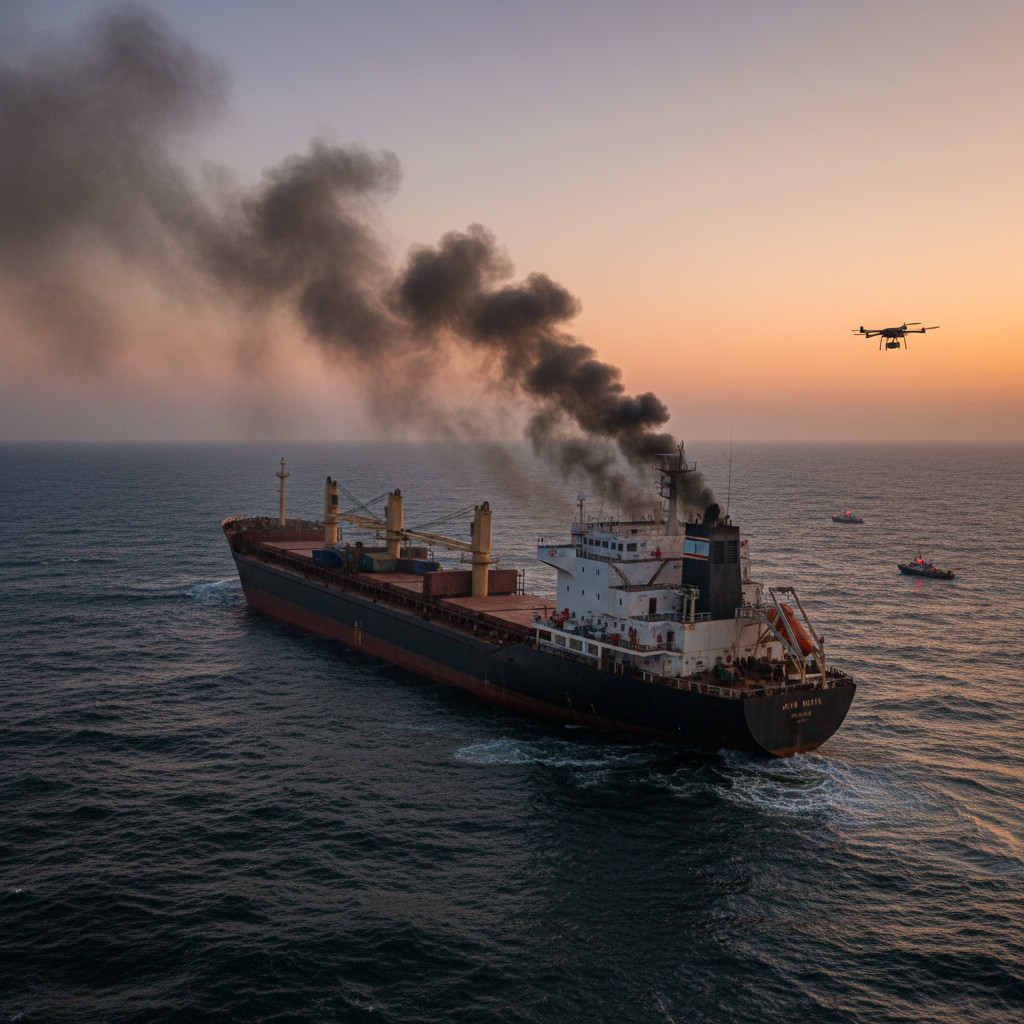
The global supply chain landscape is increasingly shaped by geopolitical volatility, with direct consequences for the movement of goods across oceans and through critical chokepoints. A recent incident in the Black Sea, where drones struck two merchant vessels, resulting in the sinking of one, serves as a stark reminder of these evolving threats. Occurring on October 6, 2026, within Bulgaria's Exclusive Economic Zone, this event involving the Togo-flagged ALFA WATAN and the Palau-flagged ABLE, both general cargo vessels, transcends mere regional conflict; it signifies a dangerous new frontier in the disruption of international trade. This MGS Insight brief analyzes the ramifications of such geopolitical events on cargo movement, focusing on routes, vessel operations, and the broader implications for trade and transport, rather than the political drivers.
Impact on Maritime Routes and Transit Times
The Black Sea incident immediately elevates the risk profile of an already sensitive maritime region. For vessels, particularly general cargo ships like those targeted, operating in the Black Sea now entails significantly higher danger. This directly translates into altered shipping routes. Carriers and charterers will increasingly opt for longer, safer passages, even if it means substantial deviations. Such rerouting inevitably extends transit times, impacting delivery schedules and increasing fuel consumption. For example, cargo that might have once traversed the Black Sea for onward connections could now be routed via more circuitous paths, potentially through the Mediterranean and around other continents, adding days or even weeks to journeys. This shift not only inflates operational costs but also strains capacity on alternative routes, leading to potential congestion in other key maritime corridors. A shipment-visibility control tower like MGS becomes indispensable in such scenarios, offering real-time tracking of rerouted vessels, dynamically adjusting estimated times of arrival (ETAs), and providing alerts for potential delays, allowing shippers to proactively communicate with consignees and manage inventory.
Consequences for Cargo Types and Vessel Operations
The direct targeting of general cargo vessels, as seen with the ALFA WATAN and ABLE, sends a chilling message across the maritime industry. While the immediate victims were general cargo ships, the precedent set by such attacks can extend to all types of commercial shipping, including bulk carriers, tankers, and even container ships. The primary consequence is a dramatic increase in operational risk and cost. Insurance premiums, particularly for war risk, will surge for vessels operating in or transiting through affected zones, making trade prohibitively expensive for some commodities or regions. Furthermore, the safety and willingness of crew members to sail in high-risk areas become a critical concern, potentially leading to crew shortages or demands for higher hazard pay. The sinking of one vessel underscores the ultimate risk: complete loss of cargo and vessel, triggering complex salvage operations and significant financial losses. For shippers, this means a heightened need to monitor the status and location of their goods, especially those on vessels traversing volatile regions. An MGS control tower can provide crucial insights into vessel movements, flag potential high-risk zones, and offer immediate alerts in the event of an incident, facilitating rapid response and mitigation efforts.
Airspace Restrictions and Overflight Challenges
While the Black Sea incident specifically involved maritime targets, it is indicative of a broader pattern of geopolitical instability that frequently spills over into airspace management. Regions experiencing heightened tensions often implement temporary or permanent airspace restrictions, no-fly zones, or advisories for commercial aviation. This forces air cargo carriers to reroute flights, leading to longer distances, increased fuel burn, and extended flight times. For time-sensitive or high-value cargo, such disruptions can be particularly detrimental, impacting just-in-time supply chains and increasing the risk of spoilage or obsolescence. The cumulative effect of these reroutes can lead to bottlenecks in alternative air corridors and increased operational costs for airlines, which are often passed on to shippers. Although not directly linked to the Black Sea maritime event, the general climate of geopolitical risk means that air cargo planners must remain vigilant. An MGS platform, by integrating air freight tracking, can help identify and navigate these airspace challenges, providing alternative route suggestions and updated ETAs for air cargo shipments, ensuring continuity even amidst aerial restrictions.
Waterway Access and Chokepoint Vulnerabilities
The Black Sea itself represents a vital waterway for regional trade, particularly for agricultural products and raw materials. The drone attack vividly illustrates the vulnerability of such critical maritime chokepoints to geopolitical aggression. Beyond the immediate area, this incident raises concerns about the security of other strategic waterways globally, such as the Strait of Hormuz, the Bab el-Mandeb Strait, or the Suez Canal. Disruptions in these narrow passages can have cascading effects on global trade, creating bottlenecks, causing massive delays, and driving up shipping costs worldwide. Increased naval presence or security measures in response to such threats can also introduce delays due to heightened inspections or convoys. The ability to monitor vessel traffic through these chokepoints in real-time is paramount for supply chain managers. An MGS control tower offers comprehensive visibility into vessel movements through these critical arteries, allowing businesses to anticipate and react to potential closures or slowdowns, thereby minimizing the impact on their supply chains.
Tariffs, Sanctions, and Trade Flow Disruptions
Geopolitical events, even those not directly involving tariffs or sanctions, often exacerbate existing trade tensions or trigger new ones. The heightened risk perception stemming from incidents like the Black Sea attack can lead to a re-evaluation of trade relationships and sourcing strategies. Countries might impose new tariffs or expand existing sanctions against nations perceived as instigating or benefiting from such instability, leading to significant shifts in trade flows. Businesses might be forced to find alternative suppliers or markets, often at higher costs and with longer lead times. Compliance with evolving sanctions regimes becomes increasingly complex, requiring meticulous tracking of goods' origins, destinations, and associated financial transactions. The uncertainty created by such a volatile environment discourages long-term trade agreements and investment. An MGS control tower can be instrumental in navigating this complexity by providing granular visibility into trade lanes, helping identify shipments potentially affected by new sanctions, and ensuring compliance by tracking changes in origin and destination countries, thus mitigating legal and financial risks.
Supply Chain Resilience and Risk Mitigation Strategies
The Black Sea incident underscores the urgent need for robust supply chain resilience. In an era of increasing geopolitical volatility, businesses can no longer rely on static, optimized-for-cost supply chains. Diversification of sourcing, manufacturing, and transportation routes becomes critical to absorb shocks. Multi-modal transportation strategies, while sometimes more complex, offer flexibility when one mode or route becomes compromised. Scenario planning, including worst-case geopolitical disruptions, must become a standard practice. Crucially, real-time, end-to-end visibility across the entire supply chain is no longer a luxury but a fundamental requirement. An MGS shipment-visibility control tower provides the foundational data and analytical capabilities necessary for these strategies. It empowers businesses to identify risks proactively, dynamically reroute shipments, assess the impact of disruptions on inventory and customer commitments, and communicate effectively with all stakeholders. By transforming raw data into actionable insights, an MGS platform enables organizations to build more agile, resilient, and responsive supply chains capable of navigating the unpredictable currents of geopolitical instability.
Source: Container News — https://container-news.com/drones-strike-two-merchant-ships-in-bulgarias-black-sea-eez-one-sinks/