
Beyond the Storm: Why Ocean Freight Rate Hikes Are 'Doomed' by Excess Capacity and Slack Season
Despite temporary rate support from events like Typhoon Champi and port congestion, the container shipping market's underlying excess capacity and the onset of the winter slack season are poised to undermine carrier efforts to raise freight rates, signaling continued downward pressure. This brief explores the implications and how MGS can help.
How this impacts the global supply chain
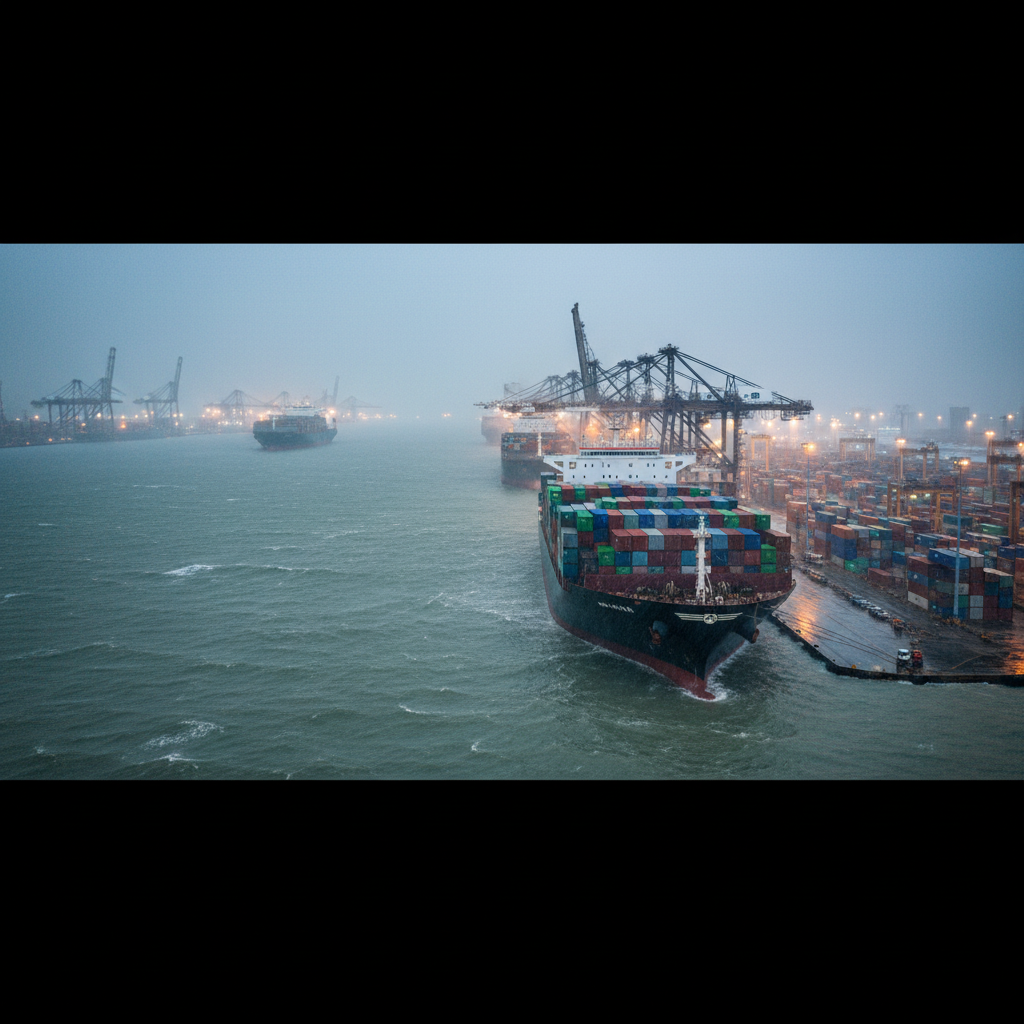
Typhoon Champi and persistent congestion in South-east and South Asian ports significantly disrupt global supply chain operations. Maritime transport faces unpredictable transit times and delays of up to three days. This impacts just-in-time systems and time-sensitive production, potentially causing bottlenecks or stockouts. While overall market capacity is abundant, localized disruptions create temporary, artificial tightening in specific trade lanes. Delayed vessels at congested ports or forced rerouting reduce effective capacity, creating bottlenecks even as global capacity remains high. Shippers might face premium rates for urgent bookings despite falling overall prices. Operational challenges include less efficient port operations and longer container dwell times. This compromises predictability for supply chain planning, forcing companies to build larger buffers or explore more expensive alternative transport. A shipment-visibility control tower like MGS becomes indispensable. By providing real-time tracking of vessels and containers, MGS empowers operators to anticipate delays. Knowing a vessel is delayed by "up to three days" allows proactive adjustments to downstream logistics. This granular visibility mitigates operational chaos, transforming uncertainty into actionable intelligence.
Global financial impact
The financial implications of these market dynamics are complex. For ocean carriers, the situation is precarious. Despite temporary rate support from Typhoon Champi and port congestion, their attempts to hike prices are "doomed." This is due to overwhelming excess capacity, aggressive price competition, and the impending winter slack season. Consequently, carriers will likely face continued downward pressure on profitability, as short-term gains are quickly eroded by fundamental market forces, necessitating stringent cost management. Shippers face a mixed financial outlook. While falling freight rates are generally favorable, immediate disruptions can be costly. Delays of "up to three days" lead to increased inventory holding costs, potential penalties, or lost sales. Unpredictability can force shippers to resort to more expensive expedited shipping options. Financial risk from supply chain uncertainty is elevated. For global trade, these disruptions introduce inefficiencies and add to the overall cost of doing business. Delayed shipments and operational complexities can subtly inflate goods costs. Businesses might need higher safety stock levels, tying up capital. A shipment-visibility control tower like MGS plays a crucial role. By offering precise, real-time data on shipment status and potential delays, MGS enables shippers to quantify financial impacts. Knowing the exact delay of a high-value container allows for accurate calculation of inventory holding costs or cost-benefit analysis of alternative transport. This data-driven approach helps avoid unnecessary demurrage and detention charges, optimizing inventory, and protecting profit margins.
How MGS can help navigate today's global trade environment
In an era marked by unpredictable weather, persistent port congestion, and fluctuating market dynamics, a sophisticated shipment-visibility control tower like MGS is a strategic imperative. MGS provides critical real-time intelligence to transform reactive responses into proactive management, especially when facing disruptions such as Typhoon Champi or prolonged port delays. Firstly, MGS offers unparalleled visibility into the entire shipping journey. When vessel schedules are disrupted and ships are delayed by "up to three days," MGS provides immediate updates on vessel positions, estimated arrival times (ETAs), and potential deviations. This granular, real-time data allows logistics teams to pinpoint exactly where shipments are and when they are expected to arrive, eliminating guesswork and manual tracking. Secondly, the platform empowers proactive decision-making. MGS users receive alerts about impending issues, enabling them to assess the impact of delays on downstream operations like manufacturing or customer commitments. With this foresight, they can initiate contingency plans—rerouting cargo, adjusting production, or communicating proactively with customers. This minimizes cascading effects and maintains satisfaction. Furthermore, MGS provides valuable data for performance analysis and strategic planning. Aggregating historical data on carrier performance, port efficiency, and transit times helps identify reliable partners and optimize future routing. In a market with excess capacity and aggressive competition, this data can be leveraged during contract negotiations, allowing shippers to secure favorable terms based on proven service levels. MGS acts as the central nervous system for global logistics, providing clarity and control in a complex trade landscape.
Demand–supply analysis & improvement
The current market illustrates a fundamental imbalance between demand and supply in container shipping, where temporary disruptions are insufficient to alter the underlying trajectory. Demand is weakening due to the impending winter slack season and broader market trends, significantly contributing to the "downward trajectory" of freight rates. While localized events like Typhoon Champi or port congestion might create a temporary surge in demand for immediate capacity, this reflects reduced effective supply due to operational bottlenecks, not a genuine increase in overall cargo volumes. Conversely, the supply side is characterized by "excess capacity." This structural oversupply means that even when a portion of the fleet is temporarily sidelined by weather or port delays, ample capacity remains globally. Carriers' attempts to leverage these temporary disruptions to hike rates are "doomed" because the fundamental market condition of too many ships chasing too little cargo persists. Short-term tightening of effective capacity cannot overcome the long-term reality of a market flooded with tonnage. For improvement, shippers are in a strong position to capitalize on this dynamic. With excess capacity prevalent, they can negotiate more favorable long-term contracts and leverage the competitive environment. The key is to maintain flexibility and avoid being locked into high rates based on temporary market anomalies. For carriers, long-term improvement requires disciplined capacity management, potentially through strategic blank sailings or slower steaming, to bring supply more in line with actual demand. A shipment-visibility control tower like MGS offers crucial insights. By providing real-time data on vessel utilization, port congestion, and historical transit times, MGS helps shippers understand true capacity constraints versus ample supply. This intelligence is invaluable for informed booking decisions, optimizing routing, and negotiating contracts that reflect true market conditions.
ROI-focused resilience
Investing in supply chain resilience through advanced visibility platforms yields significant returns by mitigating quantifiable risks. The current scenario, with its "up to three days" delays and disrupted schedules, presents clear financial exposures directly addressed by a solution like MGS. Consider the risk of increased inventory holding costs. A three-day delay for a high-value shipment means three additional days of capital tied up, insurance, and warehousing expenses. For companies managing numerous such shipments, these costs quickly accumulate. By providing early warning of delays, MGS allows proactive adjustments to inventory management, potentially reducing safety stock or optimizing distribution, thereby freeing up capital. The ROI here is quantifiable: reduction in inventory carrying costs directly offsets the platform investment. Another significant risk is the need for expedited shipping. When a critical component faces a multi-day delay, businesses often resort to expensive air freight to avoid production stoppages or missed sales. The cost difference between ocean and air freight is substantial. MGS, by providing timely and accurate delay information, enables supply chain managers to make informed decisions earlier. They can assess the impact of a "three-day delay" and, if necessary, arrange for less costly alternative transport or adjust production schedules, avoiding last-minute, premium-priced air freight. The ROI is the direct saving from preventing even a few instances of emergency air freight. Furthermore, the risk of demurrage and detention charges at congested ports is a tangible financial burden. When vessels are delayed and containers sit longer than expected, these charges escalate. MGS provides visibility to anticipate port congestion and vessel delays, allowing logistics teams to coordinate container pickup and return more efficiently, minimizing or eliminating these avoidable costs. The ROI is the direct saving from reduced demurrage and detention fees. In essence, MGS acts as an insurance policy against the financial fallout of supply chain disruptions. By quantifying the potential costs of delays, missed deadlines, and inefficient operations, and then demonstrating how MGS helps avoid or reduce these costs, the return on investment becomes clear. It's an investment that protects against specific, measurable financial risks, ensuring operational continuity and safeguarding profitability.
Source: The Loadstar — https://theloadstar.com/champis-support-wont-reverse-market-trend/