
Autonomous Revolution: Einride and Lidl's Driverless Deployment Signals New Era for Global Logistics
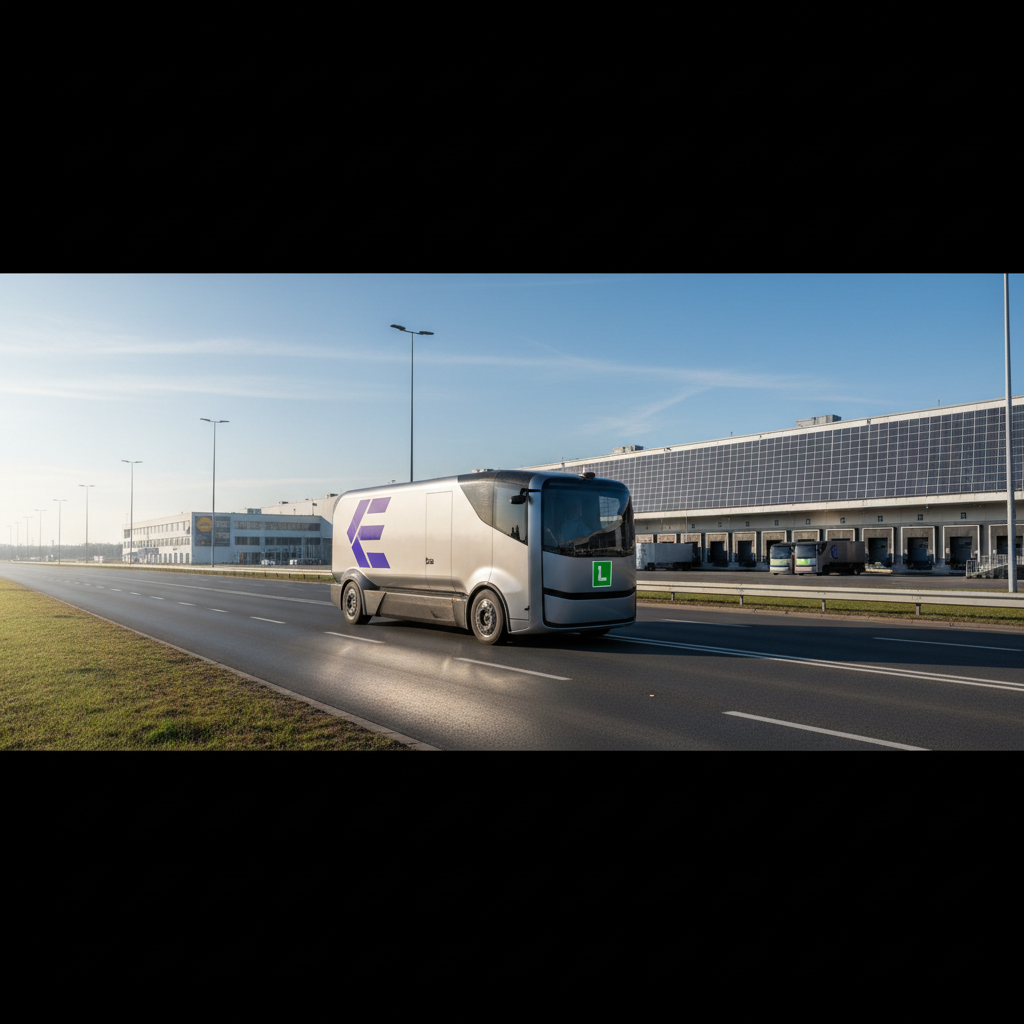
The deployment of a cab-less, SAE Level 4 autonomous truck by Einride and Lidl on German public roads marks a pivotal moment, reshaping expectations for global supply chain operations, financial models, and the critical role of real-time visibility platforms.
How this impacts the global supply chain
The recent deployment of a cab-less, SAE Level 4 autonomous truck by Einride and Lidl on public roads in Germany represents a transformative milestone for global supply chains. This pioneering move, operating under a first-of-its-kind permit from Germany’s Federal Motor Transport Authority (KBA), signals a fundamental shift in how goods will be transported, impacting flows, routes, capacity, and operational paradigms worldwide.
Firstly, the introduction of truly driverless vehicles, operating without a safety operator, directly addresses one of the most persistent challenges in road freight: labor shortages. By removing the dependency on human drivers, the potential for 24/7 operation becomes a reality, unconstrained by hours-of-service regulations or driver availability. This dramatically increases effective transport capacity within existing fleets, allowing for more frequent and faster movement of goods. For global supply chains, this translates into reduced transit times and improved schedule adherence, particularly for critical last-mile or regional distribution legs.
Secondly, the operational model itself is poised for optimization. Autonomous trucks can follow highly precise, pre-programmed routes, minimizing deviations and fuel consumption. This level of predictability allows for tighter scheduling and better integration with other logistics nodes, such as warehouses and distribution centers. We can anticipate a future where routes are dynamically optimized in real-time based on traffic, weather, and delivery priorities, all managed by sophisticated AI. This could lead to a restructuring of traditional hub-and-spoke models, potentially enabling more direct point-to-point deliveries or the creation of new, highly efficient micro-hubs. The specific use case of transporting goods between a Lidl warehouse/distribution center and a Lidl store exemplifies this optimized, dedicated-route efficiency.
Furthermore, the data generated by these autonomous vehicles will be immense. Every mile driven, every turn made, every acceleration and deceleration will be recorded. This data, when analyzed, can unlock unprecedented insights into operational efficiency, vehicle performance, and infrastructure utilization. For global supply chain managers, this means a move towards truly data-driven decision-making, allowing for continuous improvement in network design and execution. The ability to operate without a human driver also opens avenues for deploying these vehicles in environments that might be challenging or less desirable for human operators, potentially extending the reach and reliability of logistics networks.
Global financial impact
The financial and cost implications of autonomous truck deployment for shippers, carriers, and global trade are profound, promising significant shifts in economic models across the logistics sector.
For shippers like Lidl, the immediate financial benefit stems from a substantial reduction in labor costs. Driver wages, benefits, and associated overheads constitute a significant portion of road freight expenses. Eliminating the need for a driver or safety operator, as demonstrated by the Einride-Lidl deployment, directly translates into lower operational expenditure per mile. Beyond labor, autonomous vehicles are designed for optimal fuel efficiency, precise acceleration, and braking, further reducing fuel consumption and maintenance costs over their lifecycle. The potential for 24/7 operation also means faster inventory turns and reduced working capital tied up in goods in transit, improving overall cash flow and supply chain responsiveness. Over time, these efficiencies could lead to lower transportation costs, which may be passed on to consumers, impacting retail pricing and competitiveness.
Carriers face a more complex financial landscape. While they stand to gain from operational efficiencies, the initial capital expenditure for acquiring autonomous truck technology will be substantial. Investing in these advanced vehicles, along with the necessary charging infrastructure and sophisticated fleet management systems, represents a significant upfront cost. However, the long-term ROI is compelling: drastically reduced operating costs, increased asset utilization (24/7 operation), and the ability to scale operations without the constraints of driver availability. Carriers that embrace this technology early could gain a significant competitive advantage, offering more reliable, faster, and potentially cheaper services. This could lead to market consolidation as smaller carriers struggle to afford the technological transition, or it could foster new business models focused on autonomous fleet management as a service. Insurance models will also need to evolve, shifting from driver-centric risk assessment to technology-centric liability.
For trade at large, the widespread adoption of autonomous trucking could lead to a general reduction in logistics costs, making goods cheaper to move across regions and international borders. This could stimulate trade volumes and open up new markets previously deemed too expensive to serve efficiently. Countries and regions that are early adopters of autonomous vehicle regulations and infrastructure, like Germany with its KBA permit, stand to benefit from enhanced competitiveness in global supply chains. The increased efficiency and reliability could also mitigate supply chain disruptions caused by labor strikes or driver shortages, providing greater stability to global trade flows. However, the transition will require significant investment in infrastructure, regulatory frameworks, and cybersecurity to protect these interconnected autonomous networks.
How MGS can help navigate today's global trade environment
In an era increasingly defined by autonomous logistics, a sophisticated shipment-visibility control tower like MGS becomes not just beneficial, but absolutely critical for operators to effectively navigate and capitalize on these advancements. The deployment of driverless trucks, such as those by Einride and Lidl, introduces new layers of complexity and data, which MGS is uniquely positioned to manage.
Firstly, MGS provides real-time tracking and monitoring of these autonomous assets. While the trucks themselves are intelligent, operators still need a centralized platform to oversee their entire fleet. MGS can integrate directly with the telematics and operational data streams from autonomous vehicles, offering precise location, speed, route adherence, and estimated times of arrival (ETAs). This is crucial for managing a fleet that operates without human intervention, ensuring that goods between a warehouse and a store, for instance, are moving as planned.
Secondly, the sheer volume of data generated by autonomous trucks demands advanced data aggregation and analysis capabilities. MGS can ingest this rich data, combining it with other supply chain information (e.g., inventory levels, order data, weather forecasts) to provide a holistic view. This allows for predictive analytics, identifying potential delays or issues before they impact operations. For example, if an autonomous truck deviates from its optimized route or experiences an unexpected slowdown, MGS can immediately flag this, enabling proactive intervention or rerouting decisions, even if there's no human driver to report the anomaly.
Furthermore, as autonomous operations scale, compliance and performance monitoring become paramount. The KBA permit granted for the Einride-Lidl operation highlights the regulatory scrutiny these vehicles face. MGS can help ensure that autonomous trucks operate within designated geofences, adhere to speed limits, and follow approved routes, providing an auditable trail of compliance. It can also monitor key performance indicators (KPIs) specific to autonomous operations, such as uptime, efficiency per mile, and incident rates, offering insights for continuous improvement and demonstrating ROI on autonomous investments.
Finally, in a world where logistics assets are increasingly automated, the ability to manage exceptions and disruptions without human intervention at the point of transport is vital. Should an autonomous truck encounter an unforeseen obstacle, a technical issue, or a change in delivery priority, MGS can serve as the central command center. It can trigger alerts, initiate remote diagnostics, or coordinate alternative solutions, ensuring that the flow of goods remains uninterrupted. This capability transforms reactive problem-solving into proactive, data-driven decision-making, essential for maintaining the integrity and efficiency of an autonomous supply chain.
Source: Parcel and Postal Technology International — https://www.parcelandpostaltechnologyinternational.com/news/automation/einride-and-lidl-deploy-driverless-truck-on-german-public-roads.html