
Architecting Resilience: Navigating Converging Risks in Global Supply Chains
As global risks converge, supply chain resilience is shifting from isolated programs to a core architectural property. This brief explores the profound impacts on global trade, financial implications, and how MGS visibility platforms empower operators to build and manage inherently robust supply chains.
How this impacts the global supply chain
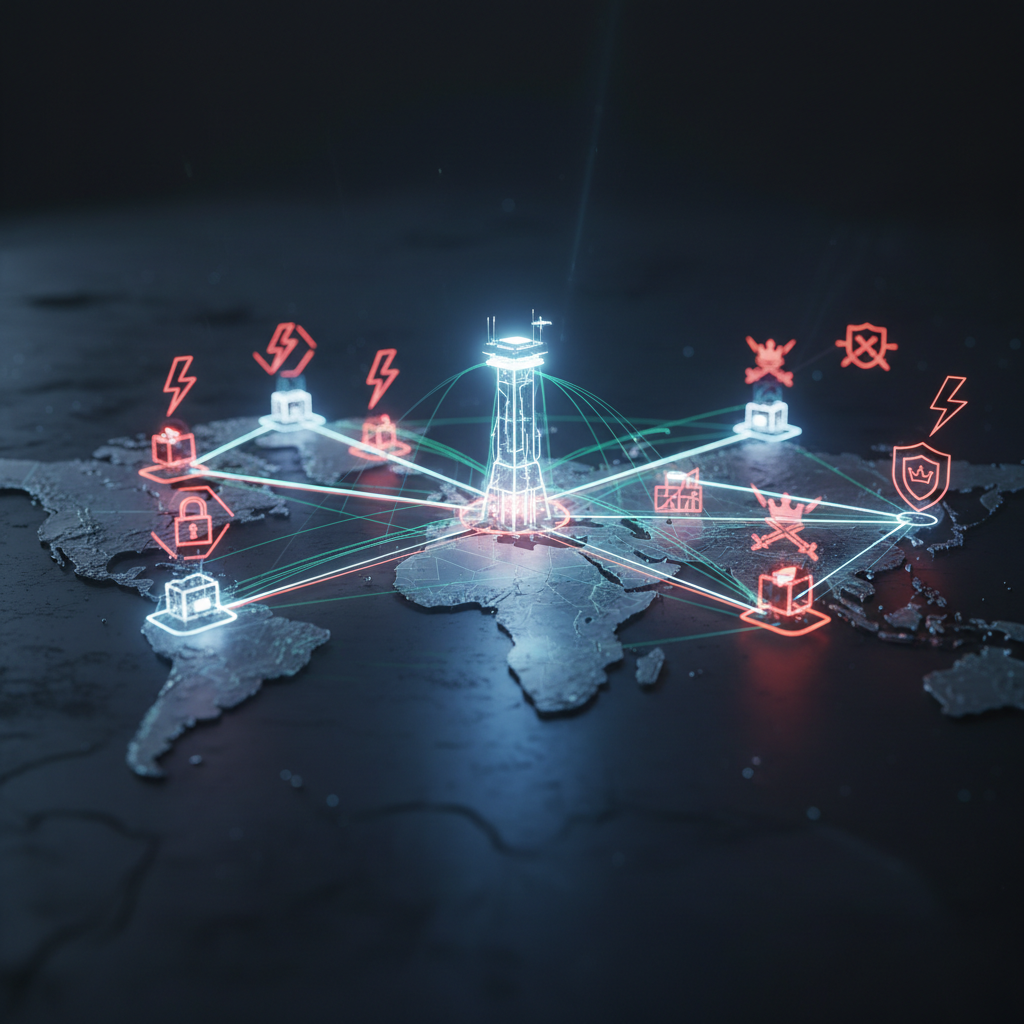
The convergence of cyber, energy, trade, sustainability, and physical network risks is fundamentally reshaping global supply chains. Treating resilience as an architectural property demands a proactive, systemic approach, profoundly impacting logistical flows, routes, capacity, and daily operations. This means moving beyond linear, cost-optimized pathways to designing for inherent redundancy. Organizations develop multiple viable sourcing and distribution channels, ensuring alternative paths are pre-qualified for dynamic re-routing if one flow is disrupted by cyberattacks, energy crises, or trade barriers. Route selection evolves beyond speed and cost, integrating geopolitical stability and infrastructure robustness. Capacity management incorporates strategic buffers like distributed warehousing or multi-sourcing. Operationally, risk management is embedded everywhere, with real-time monitoring and adaptive decision-making allowing rapid adjustments. This fosters continuous preparedness, enabling the supply chain to absorb shocks and quickly reconfigure itself.
Global financial impact
The shift to architecturally embedded resilience carries significant financial implications for shippers, carriers, and global trade. For shippers, initial investment in network redesign and advanced technology is substantial, but strategic. It mitigates far greater financial fallout from disruptions: production stoppages, lost sales, and reputational damage due to cyberattacks, energy outages, or trade disputes. Long-term, this yields greater operational stability and a stronger bottom line. Carriers also invest in robust infrastructure and secure IT networks. Those offering genuinely resilient services—like guaranteed alternative routes and superior real-time visibility—will command premium pricing, gaining competitive advantage. By minimizing internal disruptions, carriers reduce costs from delays and damage, improving profitability. At the global trade level, widespread architectural resilience promises a more stable, predictable environment. Reduced systemic risk and fewer cascading failures foster greater confidence in international commerce. Avoiding massive disruption losses reduces the overall economic cost of global business, leading to more robust growth.
How MGS can help navigate today's global trade environment
In an era where supply chain resilience is an architectural imperative, MGS, a sophisticated shipment-visibility control tower, plays a critical, enabling role. MGS acts as the central nervous system, providing real-time intelligence and actionable insights to effectively manage an architecturally resilient supply chain. It offers unparalleled, end-to-end visibility, crucial for identifying and understanding the “converging risks” (cyber, energy, trade, sustainability, physical network). If a cyberattack impacts a port or new trade sanctions are imposed, MGS immediately highlights exposed shipments, routes, or inventory, moving operators to precise, shipment-level impact analysis. MGS empowers proactive risk identification by integrating diverse external data—geopolitical intelligence, weather alerts, cyber threat advisories—flagging potential disruptions before they materialize. This foresight enables proactive re-planning and rerouting. Crucially, MGS facilitates dynamic decision-making within a multi-option resilient supply chain. When a primary route is compromised, MGS quickly presents viable alternatives, allowing operators to assess and reconfigure logistics plans rapidly. Beyond crisis response, MGS contributes to continuous improvement, tracking performance to refine robustness and validate resilience measures.
Demand–supply analysis & improvement
Resilience as an architectural property fundamentally redefines demand-supply dynamics. “Strongest supply chains” maintain a consistent balance between customer needs and network delivery, even under stress, proactively adapting to shocks. From a demand perspective, resilient architectures better anticipate and respond to shifts from converging risks (cyber, energy, trade, sustainability, physical network). Robust analytics quickly identify demand surges or drops, allowing agile adjustments in production and distribution. This provides structural flexibility to pivot manufacturing or redirect inventory without breaking the chain. On the supply side, architectural resilience mandates diversification and redundancy. Instead of single-source suppliers, resilient chains feature multiple, geographically dispersed options, addressing “physical network risks” and “energy risks.” If one manufacturer is impacted, alternatives can quickly scale up. Sustainability risks are similarly mitigated by adaptable supplier portfolios. Improvement levers include network re-design (interconnected, multi-nodal designs), advanced data integration (correlating demand with supply risks), dynamic capacity allocation, strategic inventory buffers, and multi-sourcing with deep supplier collaboration. Embedding these creates a more harmonious and adaptive demand-supply balance amidst global risks.
ROI-focused resilience
Treating resilience as an “architectural property” implies a strategic, long-term investment with clear ROI. The “strongest supply chains” recognize that investing in systemic robustness protects against quantifiable risks, yielding significant financial benefits. Investment involves redesigning supply chain structures: diversifying manufacturing, establishing redundant logistics, implementing advanced technologies (AI, control towers), developing alternative sourcing, and enhancing cybersecurity. It also includes operational costs for buffer inventories and adaptive response training. The “return” is primarily the avoidance of substantial financial losses and the preservation of revenue, market share, and brand value. The converging risks—cyber, energy, trade, sustainability, physical network—each carry significant potential costs: operational shutdowns, data breaches, production halts, increased transport costs, lost market access, regulatory fines, and delays. Architectural resilience protects against these. Calculating ROI involves quantifying averted losses versus preventative costs. Leading organizations understand that the cost of inaction (risk of multi-faceted disruption) far outweighs the investment in inherent robustness, ensuring long-term viability and competitive advantage.
Source: Logistics Viewpoints — https://logisticsviewpoints.com/2026/09/29/resilience-becoming-an-architectural-property/