
AI's Inflection Point in Warehousing: Reshaping Global Supply Chains
Warehousing is at a critical juncture, driven by AI and automation. This brief explores how these advancements, spurred by labor constraints and mature technology, are set to transform global supply chain flows, financial dynamics, and operational resilience, highlighting the role of advanced visibility platforms.
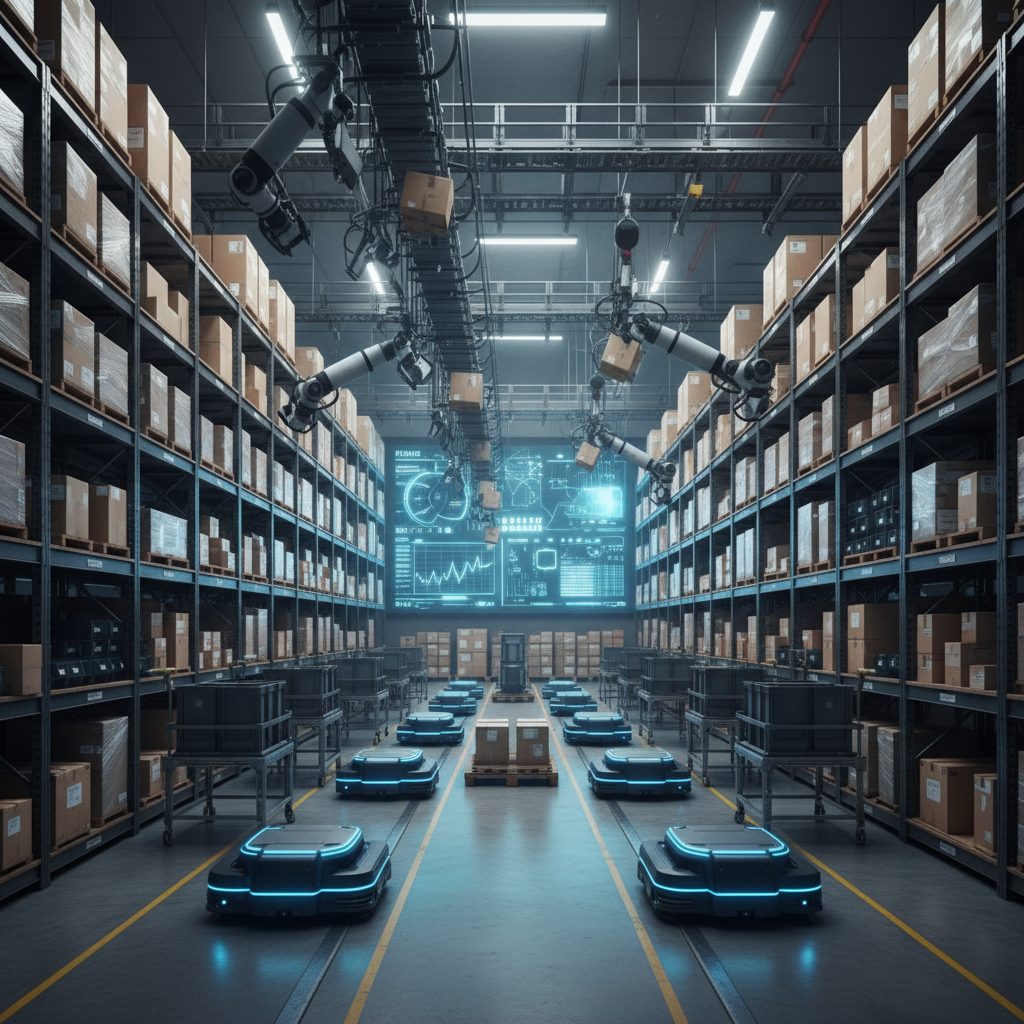
The global supply chain landscape is perpetually evolving, and a recent analysis from Gartner, Inc., highlights a significant shift occurring within warehousing operations. According to their research, warehousing has reached a pivotal moment for artificial intelligence (AI) implementation, characterized by four "globally disruptive" AI trends. This transformation is not arbitrary; it's propelled by three converging forces: the undeniable pressure of labor shortages making automation a necessity, evolving capital models that favor lower-risk entry points for technology adoption, and the maturation of AI and autonomous technologies themselves.
This confluence of factors signals a fundamental re-engineering of how goods are stored, managed, and moved, with profound implications that ripple across the entire global supply chain.
How this impacts the global supply chain
The digitalization of warehouses, particularly through advanced AI applications, is poised to fundamentally alter the mechanics of global supply chains. The immediate impact will be felt in the efficiency and speed of goods movement. AI-driven systems within warehouses can optimize picking paths, manage inventory placement with unprecedented precision, and automate tasks that traditionally consumed significant time and labor. This translates directly into faster processing times for incoming and outgoing shipments, effectively accelerating the flow of goods through critical distribution nodes.
Regarding routes, more intelligent warehouses can influence network design. With enhanced throughput and predictive capabilities, companies might optimize their distribution networks, potentially leading to more centralized, highly efficient mega-warehouses, or conversely, supporting a proliferation of micro-fulfillment centers closer to end-consumers. The increased reliability and speed at warehouse nodes will enable carriers and logistics providers to plan routes with greater certainty, reducing idle times and optimizing asset utilization. This could lead to more dynamic routing decisions that bypass congested areas, as real-time data from warehouses feeds into broader logistics planning.
Capacity within the supply chain will see a significant uplift, not necessarily through physical expansion, but through optimization. AI allows existing warehouse footprints to be utilized more effectively, maximizing storage density and operational throughput. Predictive analytics can anticipate demand peaks and allocate resources – both human and robotic – proactively, ensuring that capacity is always aligned with need. This operational agility helps mitigate bottlenecks that often plague traditional warehousing, thereby increasing the overall effective capacity of the supply chain.
Operationally, the shift is towards a more autonomous, data-driven environment. Real-time inventory accuracy, predictive maintenance for automated equipment, and AI-powered demand forecasting will become standard. This leads to fewer errors, reduced waste, and a significant improvement in order fulfillment rates and accuracy. The explicit mention of labor constraints as a driver underscores AI's role in maintaining and even enhancing operational levels despite workforce challenges, ensuring continuity and reliability in global trade.
Global financial impact
The financial ramifications of AI integration in warehousing are substantial, promising significant cost reductions and efficiency gains across the supply chain ecosystem. For shippers, the primary benefit will be a reduction in operational expenses. AI-driven optimization minimizes labor costs, reduces inventory holding costs through more accurate forecasting and faster turnover, and decreases losses due to errors or damage. Faster order fulfillment and improved accuracy also translate into higher customer satisfaction, potentially leading to increased sales and market share. While there's an initial investment in AI technology, the research notes a shift towards "lower-risk entry points" for capital models, suggesting that the barrier to adoption is becoming more manageable and the return on investment more predictable.
Carriers stand to benefit from more streamlined operations at warehouse docks. Faster loading and unloading times, driven by AI-optimized processes, mean quicker truck turnarounds and improved utilization of their fleets. This enhances efficiency, reduces fuel consumption from idling, and allows carriers to handle more volume with existing assets. Better integration between warehouse management systems and carrier scheduling can lead to more precise pickup and delivery windows, reducing waiting times and improving overall service reliability.
For global trade at large, the widespread adoption of AI in warehousing will contribute to a more fluid and responsive international commerce environment. Reduced lead times and improved reliability in distribution networks can unlock new market opportunities and enhance the competitiveness of businesses operating across borders. The overall reduction in supply chain friction, coupled with greater predictability, can lead to lower logistics costs for imported and exported goods, ultimately benefiting consumers through more competitive pricing and wider product availability. This digital transformation supports a more resilient and cost-effective global trading system.
How MGS can help navigate today's global trade environment
In an era where warehouses are becoming increasingly digital and AI-driven, a robust shipment-visibility control tower like MGS becomes an indispensable tool for operators. As AI systems within warehouses generate vast amounts of real-time data on inventory status, order fulfillment progress, and outbound shipment readiness, MGS can seamlessly integrate these critical data streams. This integration provides an unparalleled, end-to-end view of the supply chain, extending beyond the warehouse walls to encompass the entire journey of a shipment.
With MGS, operators gain the ability to proactively manage their supply chain. For instance, if an AI-powered warehouse system flags a potential delay in order processing due to an unforeseen issue, MGS can immediately alert relevant stakeholders. This early warning allows for timely intervention, such as re-routing other shipments, adjusting delivery schedules, or communicating with customers, thereby mitigating potential disruptions before they escalate. The platform transforms raw data from digital warehouses into actionable insights, enabling informed decision-making in real-time.
Furthermore, MGS enhances performance monitoring by tracking how the efficiency gains from AI implementations within warehouses translate into overall shipment lead times and on-time delivery rates. By providing clear, measurable key performance indicators (KPIs), MGS helps validate the return on investment in warehouse digitalization and identifies areas for continuous improvement. It bridges the gap between internal warehouse optimization and external supply chain execution, ensuring that the benefits of AI-driven warehousing are fully realized across the entire logistics network.
Demand–supply analysis & improvement
The advent of AI in warehousing profoundly impacts the delicate balance between demand and supply. One of the direct benefits is the significant enhancement of demand forecasting accuracy. AI-powered analytics can process vast datasets, including historical sales, market trends, seasonal variations, and even external factors, to predict future demand with greater precision. This capability directly informs warehouse operations, enabling optimal inventory levels that minimize both overstocking (reducing carrying costs and waste) and understocking (preventing lost sales and customer dissatisfaction). The result is a supply chain that is far more attuned to actual market needs.
On the supply side, the efficiency gains from AI-driven warehousing directly improve responsiveness and reliability. Faster processing, automated picking and packing, and optimized labor allocation mean that goods can be moved from storage to outbound shipping much more quickly. This agility allows businesses to fulfill orders faster and adapt more readily to sudden shifts in demand or supply chain disruptions. The explicit mention of "labor constraints" as a driver for AI adoption highlights how these technologies are crucial for maintaining consistent supply capabilities, even when human resources are scarce. AI effectively augments the workforce, ensuring that the supply chain can continue to meet demand without interruption.
Concrete improvement levers include implementing AI for dynamic demand sensing, which allows for real-time adjustments to inventory strategies. Within the warehouse, AI optimizes inventory placement for faster retrieval, automates material handling to accelerate order fulfillment, and intelligently allocates tasks to human and robotic workers for maximum efficiency. These improvements collectively create a more agile and resilient supply chain, better equipped to match dynamic demand with reliable supply.
ROI-focused resilience
Investing in AI for warehouse operations, as highlighted by the shift towards "lower-risk entry points" for capital models, presents a compelling case for ROI-focused resilience. The primary risk that AI in warehousing directly addresses, as identified in the source, is that of "labor constraints." By automating repetitive tasks, optimizing workflows, and augmenting human capabilities, AI-driven systems significantly reduce reliance on a volatile labor market. The ROI here is quantifiable: it protects against the financial losses incurred from operational slowdowns, missed delivery windows, and lost sales due to insufficient workforce capacity.
Beyond labor, AI enhances resilience by minimizing operational errors, which can be costly in terms of rework, returns, and damaged goods. Predictive maintenance for automated equipment, another AI application, prevents costly downtime by identifying potential failures before they occur. These preventative measures contribute to a more stable and predictable operational environment, safeguarding revenue streams and reducing unforeseen expenses. The investment in AI, therefore, acts as an insurance policy against various operational disruptions, ensuring business continuity and protecting profitability.
The "lower-risk entry points" suggest that the initial capital outlay for these resilience-enhancing technologies is becoming more accessible, making the cost-benefit analysis more favorable. Businesses can invest in AI solutions with a clearer path to recouping their investment through sustained operational efficiency, reduced exposure to labor market fluctuations, and improved overall supply chain reliability. This strategic investment in AI is not just about efficiency; it's about building a fundamentally more robust and adaptable supply chain capable of weathering unforeseen challenges and delivering consistent performance.
Source: DC Velocity — https://www.dcvelocity.com/editorial/featured/warehouse-digitalization-hits-inflection-point