
AI-Powered Robotics Revolutionizes E-commerce Returns: A New Era for Reverse Logistics
CEVA Logistics' deployment of AI-driven robotic systems for returns handling marks a significant leap in reverse logistics, promising enhanced efficiency and cost savings for e-commerce. This brief explores the implications for global supply chains, financial landscapes, and how advanced visibility platforms like MGS can optimize these evolving operations.
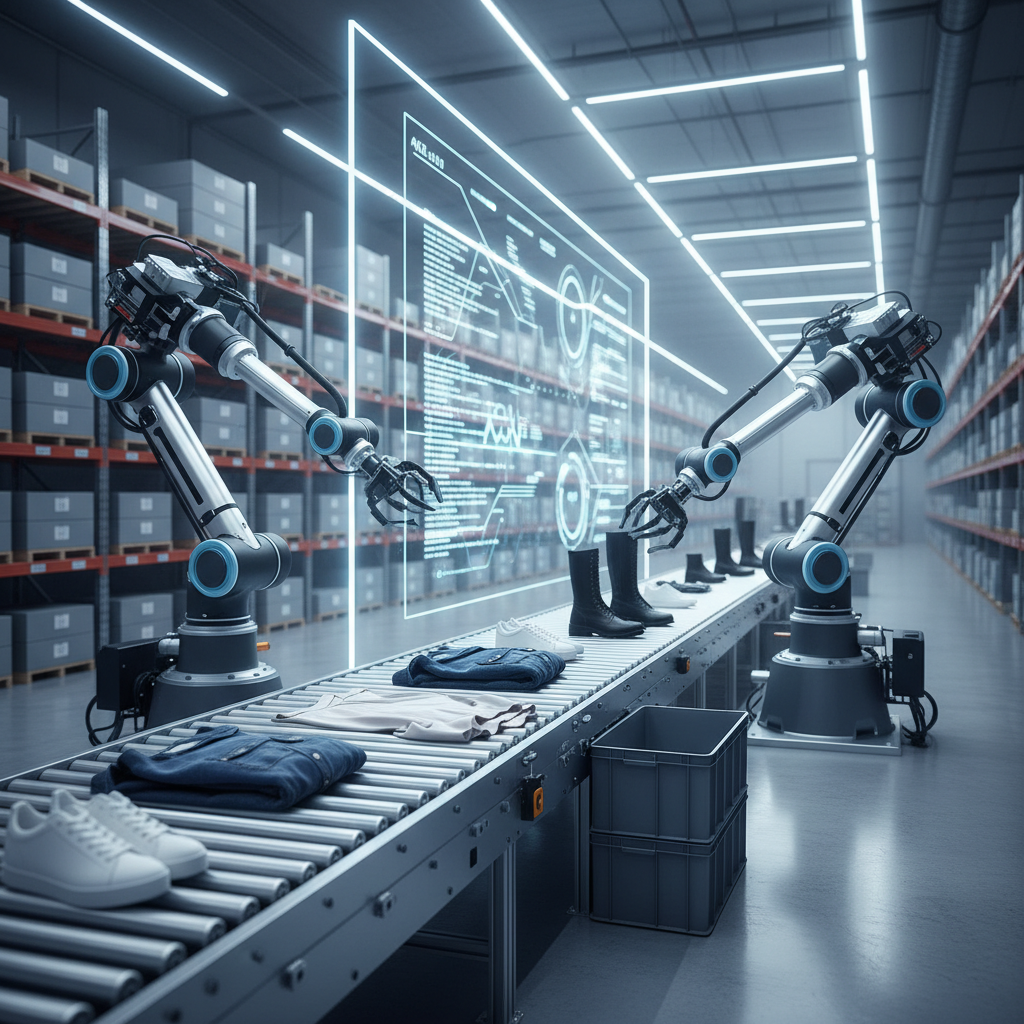
The recent deployment by CEVA Logistics of an artificial intelligence (AI)-powered, automated returns handling system represents a pivotal advancement in the often-complex world of reverse logistics. Operating in facilities in Germany and Poland, this innovative platform, utilizing Sereact's "Cortex" physical AI, is specifically designed to manage fashion and footwear returns for e-commerce giant Zalando. Its core innovation lies in its ability to autonomously grasp, identify, and sort returned items without requiring extensive pre-training for each product or fixed SKU profiles. This development, now in live operations, signals a significant shift in how the global supply chain approaches the challenges and opportunities presented by consumer returns.
How this impacts the global supply chain
This technological leap directly addresses several critical aspects of global supply chain flows, routes, capacity, and operations. Firstly, in terms of flows, the automation of returns processing fundamentally transforms the reverse logistics pipeline. Traditionally, returns are a labor-intensive bottleneck, often leading to delays in quality checks, re-stocking, and ultimately, re-sale. By automating the identification and sorting of diverse fashion items, CEVA Logistics can significantly accelerate the flow of returned goods from the customer back into inventory or appropriate disposition channels. This reduces dwell times in warehouses and minimizes the accumulation of unsaleable stock.
Regarding routes, the establishment of these advanced facilities in strategic European locations like Greven, Germany, and Świebodzin, Poland, reinforces the trend towards regionalized logistics hubs. These sites become critical nodes for consolidating and efficiently processing returns from a broad geographic area, optimizing inbound transportation routes for returned goods. This could lead to a more streamlined network design for reverse logistics, potentially reducing the need for multiple smaller, less efficient manual processing centers.
For capacity, the AI-powered robotic system dramatically increases the throughput capability for returns. Human operators are often limited by speed and consistency, especially when dealing with the sheer volume and variety of e-commerce returns. Robotics and AI offer scalable capacity, allowing logistics providers to handle peak return periods (e.g., post-holiday seasons) with greater efficiency and less reliance on temporary labor. This enhanced capacity not only improves processing speed but also frees up human resources for more complex or value-added tasks within the warehouse, optimizing overall labor utilization.
Operationally, this deployment signifies a move towards hyper-efficient, data-driven warehouse management. The system's ability to operate without per-item training or fixed SKU profiles is a game-changer for fashion and apparel, where product lines are constantly changing. This flexibility reduces setup times and operational complexity, making the system adaptable to evolving inventory. It enhances accuracy in sorting, reduces errors, and provides real-time data on return volumes and item conditions, which can feed into inventory management and demand forecasting systems. This operational efficiency translates into faster re-entry of goods into the sales cycle, reducing potential write-offs and improving overall inventory health.
Global financial impact
The financial and cost implications of this innovation are substantial for various stakeholders across the supply chain. For shippers like Zalando, the primary benefit is a significant reduction in the total cost of returns. Faster processing means returned items can be inspected, re-packaged, and made available for re-sale much quicker. This accelerates cash flow, minimizes the depreciation of returned goods (especially in fast-moving fashion categories), and reduces the need for costly storage of unprocessed items. Furthermore, a more efficient returns process contributes to a better customer experience, potentially reducing customer churn and increasing loyalty, which has long-term revenue benefits. The ability to handle returns without extensive manual intervention also lowers labor costs associated with this historically intensive task.
For carriers and third-party logistics (3PL) providers such as CEVA Logistics, this investment positions them at the forefront of logistics innovation. While there's an initial capital outlay for the robotic and AI systems, the long-term benefits include enhanced operational efficiency, reduced labor dependency, and the ability to offer premium, tech-driven services to clients. This can lead to higher margins on returns handling contracts and attract new business from e-commerce retailers struggling with their own reverse logistics challenges. The improved accuracy and speed of processing also reduce the risk of errors and associated costs, such as incorrect refunds or misdirected inventory.
At the level of trade at large, the widespread adoption of such automated returns systems could have several ripple effects. By making returns easier and more cost-effective for retailers, it lowers one of the significant barriers to entry and growth in e-commerce. This could further accelerate the shift from traditional brick-and-mortar retail to online shopping, as consumers become more confident in the returns process. The overall efficiency gains in reverse logistics contribute to a more resilient and cost-effective global supply chain, allowing resources to be allocated more effectively and reducing waste. It also sets a new benchmark for operational excellence in logistics, pushing competitors to invest in similar technologies to remain competitive.
How MGS can help navigate today's global trade environment
In an environment increasingly shaped by automation and complex logistics, a shipment-visibility control tower like MGS becomes an indispensable tool for operators. While the robotic system handles the internal processing, MGS provides the crucial end-to-end visibility that connects the physical movement of goods with the operational efficiency of automated hubs. For returns, MGS can track the journey of an item from the moment a return label is generated by the customer, through its transit back to the CEVA facility in Germany or Poland, and up to its arrival at the automated processing station. This granular visibility allows operators to:
- Anticipate Inbound Volumes: By monitoring the flow of return shipments, MGS provides real-time data on expected inbound volumes, allowing the automated system and its human supervisors to proactively adjust capacity and resource allocation. This ensures the robotic system is optimally utilized and prevents bottlenecks even before they occur.
- Optimize Forward and Reverse Logistics: MGS can offer a holistic view of both outbound deliveries and inbound returns. This enables operators to identify opportunities for consolidating shipments or optimizing routes, reducing transportation costs and environmental impact. For instance, a truck delivering goods to a region could be scheduled to pick up returns on its backhaul.
- Monitor Performance and Identify Anomalies: By integrating with warehouse management systems, MGS can correlate the arrival of return shipments with their processing times within the automated system. This allows for continuous monitoring of the robotic system's efficiency and helps identify any deviations or delays, enabling swift intervention. If a particular type of return consistently takes longer to process, MGS data can highlight this, prompting further investigation into the automated workflow.
- Enhance Inventory Accuracy: Knowing precisely when returned items are expected to arrive and when they are processed by the automated system allows for more accurate inventory planning. This is critical for e-commerce, where rapid re-stocking of returned items can significantly impact sales and customer satisfaction. MGS provides the data backbone for this real-time inventory reconciliation.
Demand–supply analysis & improvement
The story highlights a clear dynamic between the surging demand for efficient e-commerce returns and the innovative supply-side solutions emerging to meet it. The exponential growth of online shopping has created an unprecedented demand for seamless, customer-friendly, and cost-effective returns processes. Consumers now expect easy returns as a standard part of the online shopping experience, and retailers face immense pressure to manage this reverse flow without eroding profitability. This demand is further complicated by the diverse nature of products, especially in fashion, where items vary widely in size, material, and condition.
CEVA Logistics' deployment represents a significant supply-side improvement. The AI-powered robotic system supplies the capability to process a high volume of varied returns with speed and accuracy, directly addressing the challenges posed by high demand. The key improvement lever here is the system's ability to handle items without requiring per-item training or fixed SKU profiles. This flexibility is crucial for fashion e-commerce, where product catalogs are dynamic. It means the system can adapt to new trends and seasonal collections without extensive re-programming or manual setup, thereby increasing the effective supply of automated processing capacity.
Concrete improvement levers include: faster re-entry of returned goods into available inventory, reducing lost sales opportunities; optimized labor allocation, shifting human effort from repetitive sorting to more strategic tasks; and enhanced data collection on return reasons and product conditions, which can inform product development and reduce future return rates. This technological supply directly supports the growing demand for sustainable and efficient e-commerce operations.
ROI-focused resilience
The investment in AI-powered robotics for returns handling can be framed as a strategic move to build resilience with a clear return on investment (ROI). The primary resilience benefit stems from reducing dependency on manual labor for a highly repetitive and often physically demanding task. This mitigates risks associated with labor shortages, wage inflation, and operational disruptions (e.g., pandemics, strikes) that can cripple manual returns operations. By automating, CEVA Logistics ensures consistent processing capacity regardless of external labor market fluctuations.
From an ROI perspective, the investment protects against several quantified risks:
- Cost of Delayed Re-sale: For fashion items, value depreciates rapidly. Every day an item sits unprocessed in a warehouse represents lost revenue potential. The automated system's speed reduces this risk, allowing for faster re-stocking and re-sale. While specific figures aren't provided, the cost of holding inventory and the lost opportunity from delayed sales can be substantial, especially for high-volume retailers like Zalando.
- Cost of Errors and Inaccuracies: Manual sorting is prone to errors, leading to incorrect inventory counts, misdirected items, and customer service issues. The AI's accuracy minimizes these errors, reducing associated costs in re-work, investigations, and potential customer compensation. The investment in automation directly reduces the financial impact of human error.
- Cost of Scalability Challenges: During peak return seasons, manual operations often struggle to scale, leading to backlogs, increased overtime costs, and customer dissatisfaction. The robotic system provides scalable capacity, protecting against the financial penalties of inefficient peak season handling. The ability to process diverse items without pre-training further enhances this scalability, as new product lines don't require extensive system re-configuration, saving time and resources.
In essence, the investment in this technology is a proactive measure to safeguard against operational vulnerabilities and ensure consistent, cost-effective performance in the face of unpredictable market demands and labor dynamics, delivering a tangible return through efficiency gains and risk mitigation.
Source: DC Velocity — https://www.dcvelocity.com/material-handling/order-fulfillment-packing/robotic-picking-and-loading/ceva-logistics-deploys-robotic-automated-returns-handling-system