
AI Agents: The Next Frontier for Autonomous Logistics Execution
The logistics industry stands on the cusp of a transformative shift, moving beyond predictive analytics to autonomous operational execution. AI agents, capable of taking responsibility for specific tasks, are poised to redefine how global supply chains operate, promising unprecedented efficiency and resilience.
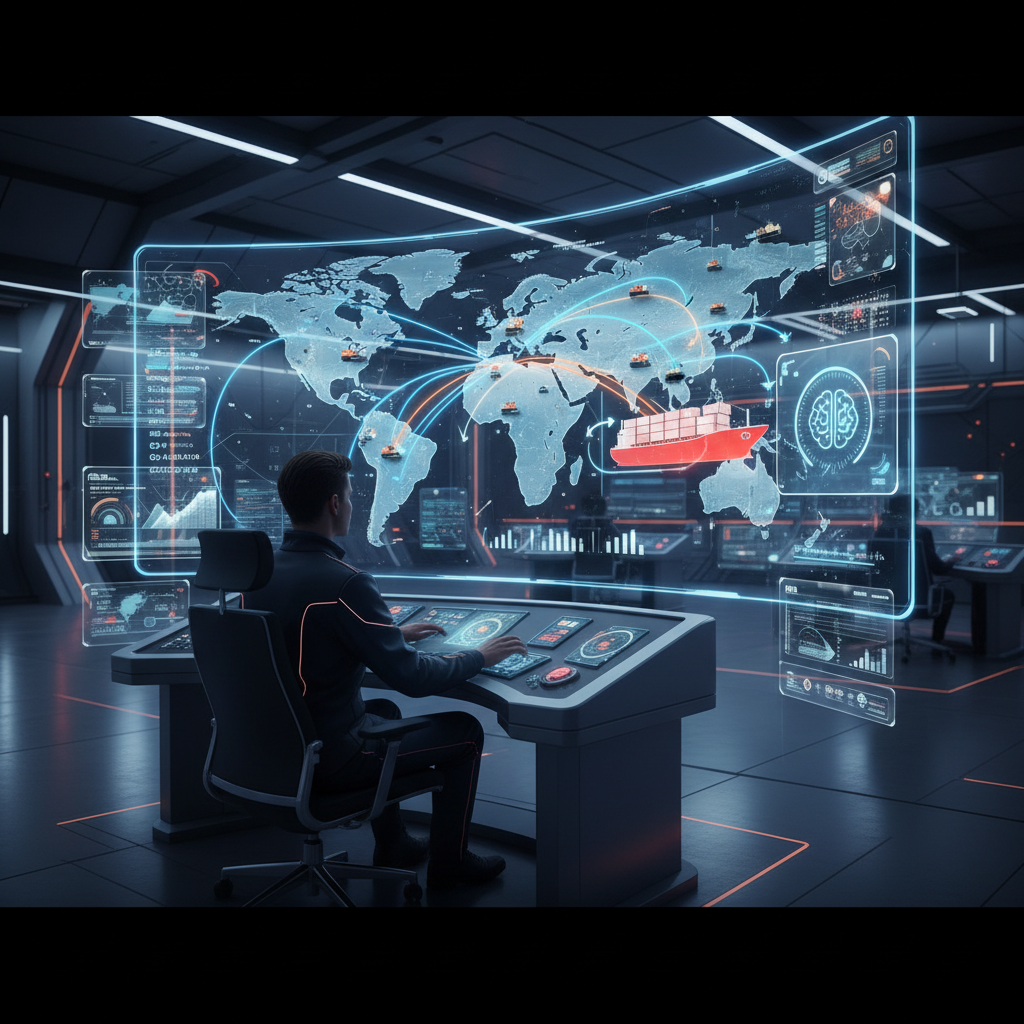
How this impacts the global supply chain
The emergence of AI agents, defined not merely as advanced chatbots but as software capable of assuming responsibility for distinct operational tasks, marks a profound evolution in global supply chain management. This development signals a shift from purely analytical tools to active, decision-making entities within the logistics ecosystem.
In terms of flows and routes, AI agents can dynamically optimize pathways in real-time. Imagine an agent monitoring global shipping lanes, weather patterns, and port congestion. Instead of simply flagging an issue for human review, this agent could autonomously reroute a vessel, adjust trucking schedules, or reallocate inventory to a different distribution center, all within pre-defined parameters and operational guidelines. This proactive, self-correcting capability significantly enhances agility, allowing supply chains to adapt to disruptions with unprecedented speed, minimizing delays and maintaining consistent flow of goods. Routes will become less static and more fluid, responding instantly to a myriad of external factors.
Regarding capacity utilization, these agents offer a powerful lever for optimization. They can analyze historical data and real-time demand signals to ensure that trucks are fully loaded, containers are optimally packed, and warehouse space is utilized to its maximum potential. By taking responsibility for tasks like load planning, scheduling, and even equipment allocation, AI agents can drastically reduce empty miles, improve turnaround times at ports and depots, and ensure that valuable assets are always deployed efficiently. This translates to a more productive use of existing infrastructure and transport modes, potentially alleviating pressure on strained capacity in peak seasons or during unexpected surges in demand.
For operations, the impact is revolutionary. AI agents can automate repetitive, rule-based tasks that currently consume significant human effort. This includes everything from order processing and documentation generation to customs pre-filing and freight payment reconciliation. By offloading these "bounded pieces of operational work," human operators are freed to focus on higher-value activities such as strategic planning, complex problem-solving, and managing exceptions that fall outside agent parameters. The result is a more streamlined, error-reduced, and faster operational tempo across the entire supply chain, from first mile to last. This shift also implies a greater degree of standardization and adherence to best practices, as agents execute tasks consistently.
Global financial impact
The financial implications of AI agents in logistics are substantial, promising significant cost reductions and efficiency gains across the board for shippers, carriers, and the broader trade landscape.
For shippers, the primary financial benefit will likely come from reduced landed costs and improved service reliability. By optimizing routes, capacity, and operational processes, AI agents can minimize transit times, reduce fuel consumption through more efficient planning, and decrease demurrage and detention charges by expediting port and terminal operations. The automation of tasks like documentation and compliance can also reduce administrative overhead and the risk of costly errors or penalties. Furthermore, enhanced visibility and proactive problem-solving by agents can lead to fewer stockouts, better inventory management, and ultimately, a more predictable and cost-effective supply chain.
Carriers stand to gain immensely from optimized asset utilization and operational efficiency. AI agents can ensure that trucks, ships, and aircraft are consistently operating at or near full capacity, reducing empty backhauls and improving scheduling adherence. This directly impacts fuel efficiency, maintenance cycles, and overall operational expenditure. Automated scheduling and dispatching can lead to significant labor cost savings and more efficient allocation of human resources. The ability of agents to dynamically price services based on real-time market conditions and available capacity could also open new revenue opportunities and improve yield management. Reduced administrative burden associated with booking, tracking, and billing will further contribute to a healthier bottom line.
For trade at large, the widespread adoption of AI agents could lead to a more fluid, resilient, and cost-effective global exchange of goods. Lower logistics costs for individual shipments translate to more competitive pricing for products, potentially stimulating trade volumes. Reduced lead times and increased reliability can enhance market access for businesses and improve consumer satisfaction. While there will be initial investment costs in developing and integrating these AI agent systems, the long-term return on investment is expected to be significant, driving overall economic growth by making global supply chains more robust and efficient. The reduction in manual touchpoints also inherently reduces the potential for human error and associated financial losses.
How MGS can help navigate today's global trade environment
As AI agents increasingly take responsibility for operational work within logistics, the need for overarching visibility and intelligent oversight becomes paramount. This is precisely where a shipment-visibility control tower like MGS plays a critical, enabling role, transforming from a data aggregator into the central nervous system for an increasingly autonomous supply chain.
While AI agents excel at executing bounded tasks, human operators still require a comprehensive understanding of the entire supply chain to ensure these agents are performing as intended, to intervene when unforeseen exceptions arise, and to align automated actions with broader strategic objectives. MGS provides this single pane of glass, offering real-time, end-to-end visibility across all shipments, regardless of the underlying AI agent managing specific legs or tasks.
Consider a scenario where multiple AI agents are optimizing different parts of a global journey – one agent managing ocean freight booking, another handling customs documentation, and a third orchestrating last-mile delivery. MGS integrates the data streams from all these agents, presenting a unified, real-time picture of every shipment's status, location, and projected arrival. This allows operators to monitor the collective performance of their AI agent fleet, identify potential bottlenecks or deviations that even individual agents might miss, and gain insights into overall supply chain health.
Furthermore, MGS empowers operators to set the parameters and guardrails within which AI agents operate. If an agent proposes a rerouting decision, the control tower can display the financial implications, estimated time savings, and potential risks, allowing a human operator to validate or override the decision if necessary. In cases of critical disruptions that exceed an agent's pre-programmed capabilities, MGS provides the platform for human intervention, enabling rapid communication, collaborative problem-solving, and manual adjustments to agent instructions or direct operational changes.
By providing comprehensive data aggregation, predictive analytics, and a centralized platform for human-in-the-loop decision-making, MGS ensures that the power of AI agents is harnessed effectively and safely. It transforms the complex orchestration of autonomous logistics into a manageable and transparent process, allowing businesses to maximize the benefits of AI automation while maintaining strategic control and resilience in a dynamic global trade environment.
Source: Logistics Viewpoints — https://logisticsviewpoints.com/2026/10/12/ai-agents-are-coming-for-logistics-execution/